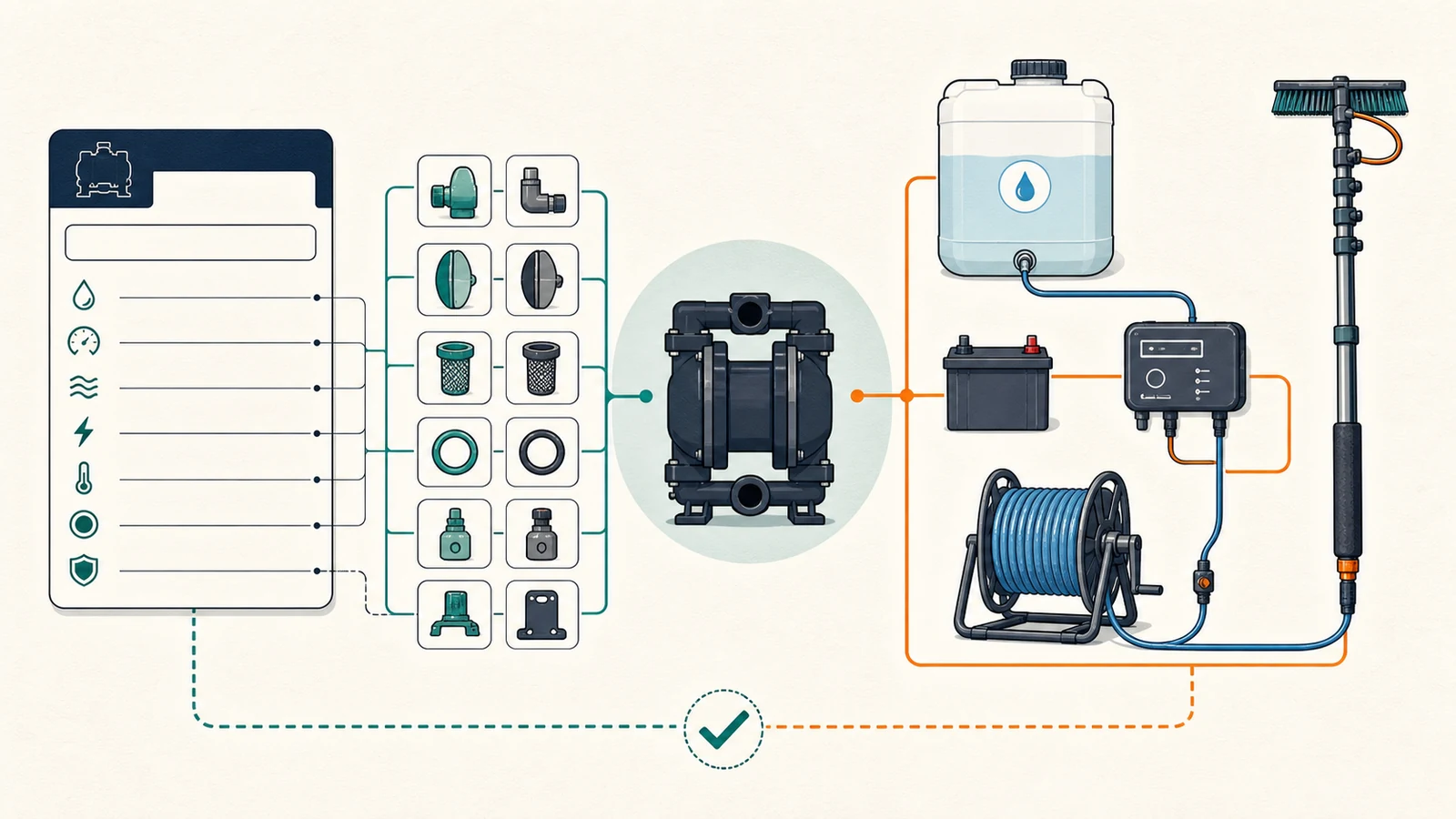
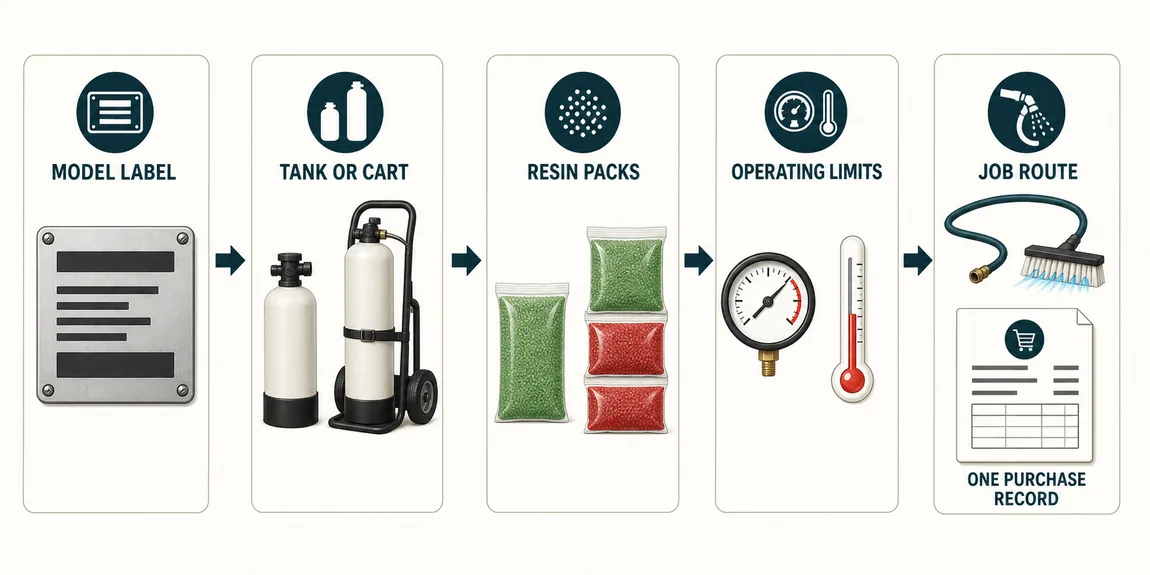
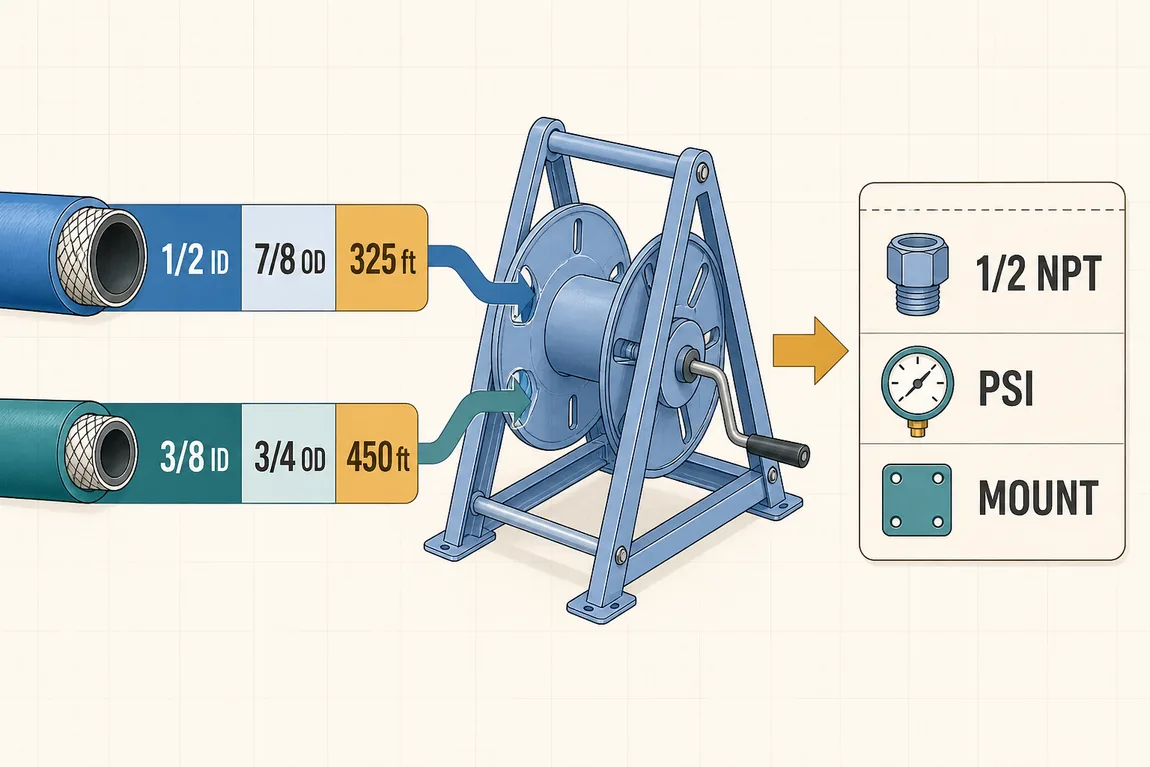
A 5/8-inch hose does not own a GPM number. The source, valve, hose, fittings and other water demand that were present when you timed the fill own the number. Change that route and you have a different measurement.
That distinction matters before a pure-water system or garden-hose booster enters the order. An average chart may describe a broad hose class, but it cannot tell you what one job-site tap will deliver through the feed line you plan to use.
Measure a known volume at the point the next piece of equipment will actually receive. Time more than one fill, calculate GPM = gallons × 60 ÷ seconds, and write the complete route beside every result. Record pressure on a separate line. The finished number is evidence for an exact system comparison, not a universal pass.
Decide which flow the next purchase needs
Two measurements can both be accurate and still answer different questions. A short, nonrestricting capture route at the tap describes source potential at that point. A test at the end of the intended supply hose, reel, valve, fittings and other feed components describes what reaches the system inlet before the system is connected.
Do not average those two values together. Name the decision first, then preserve the configuration that answers it.
| Decision question | Measurement point and configuration | Record with the reading | Honest output |
|---|---|---|---|
| What can this exact source provide? | The intended tap or valve with the shortest practical capture hose that does not introduce a smaller passage than the line being evaluated | Address or site, outlet identity, valve state, capture-hose ID, known volume, fill times, date and simultaneous demand | DIRECT_SOURCE_POTENTIAL |
| What reaches the pure-water system through the planned feed? | End of the actual garden hose or inlet whip after the intended valve, splitter, fittings, reel and feed-side filters; system still disconnected | Every component in order, hose ID and length, valve states, fill times and separate pressure condition | ASSEMBLED_FEED_DELIVERY |
| Did one restriction change the route? | Same point before and after one documented valve, filter, bib, fitting or hose change | Both configurations, one changed item, comparable demand and all readings | RETEST_AFTER_RESTRICTION_CHANGE |
| What is available while the property is using water? | Same intended feed point during the relevant shared-demand condition | Other outlets or systems running, time of day, route, repeats and any variation | SHARED_DEMAND_CONDITION |
This page begins before the complete water-fed pole system guide compares filtration, delivery and brush-end output. S086 supplies one of that guide’s field inputs. It does not choose DI versus RO/DI, declare a system sufficient or predict water at the brush.
Turn fill time into one route value
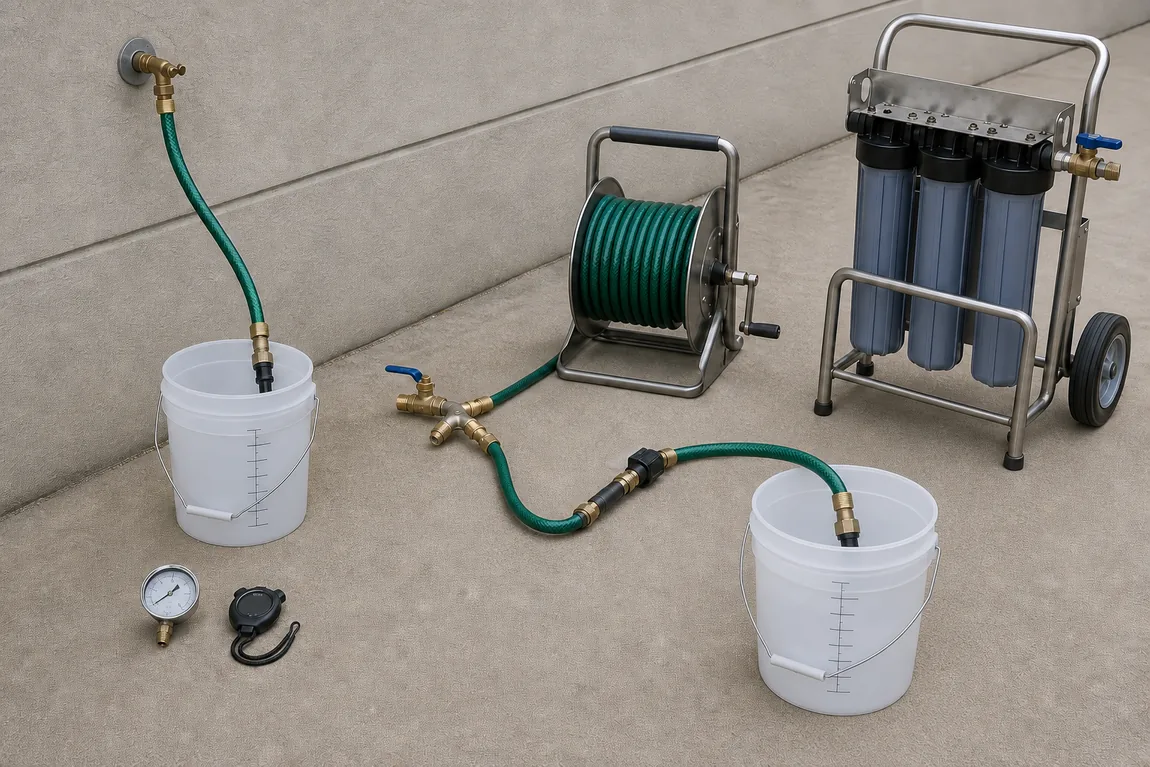
Use a container with a volume mark you have established from a known quantity. A molded bucket label or nominal capacity is not enough if the line you stop at is unclear. Secure the hose so it cannot leave the container, provide a controlled drain path, and keep water away from cords, panels, outlets and other electrical equipment. If the location cannot support that safely, do not improvise the test there.
The current Alabama Cooperative Extension flow-measurement guide uses a calibrated five-gallon mark, starts the valve and timer together, stops at the mark, and converts the fill time to minutes before dividing volume by time. The current Oregon State Extension publication gives the same arithmetic directly in seconds:
GPM = known volume in gallons × 60 ÷ fill time in seconds
If five gallons reaches the mark in 45 seconds, the arithmetic is 5 × 60 ÷ 45 = 6.67 GPM. That is an example of the calculation, not a claim about a typical hose or an acceptable system feed.
Repeat the fill without changing the point, route or demand condition. Keep every time and calculated value instead of recording only the most favorable run. A tight group of readings supports a repeatable observation for that condition. A wide spread is useful too: it says the source or test state is changing and should be investigated before one number reaches a purchase record.
Write down what opened the timing window and what ended it. A person starting a phone timer after water is already moving can create a different result from a coordinated valve-and-timer start. Consistency matters more than pretending the last decimal place is exact.
A compatible flow meter can replace bucket timing when its range, fittings and instructions suit the route. Alabama Extension describes that alternative, but the meter does not remove the need to record its position, the components before it and other water use. An unnamed meter reading is no more portable than an unnamed bucket result.
Every restriction belongs in the test
For a direct-source test, the capture hose should not be the narrowest object in the path. Alabama Extension warns that a smaller test hose can restrict the reading and that some hose bibs or faucets restrict flow despite their nominal fitting size. The direct test therefore needs the outlet identity, valve state and capture-hose inside diameter—not just “3/4-inch connection.”
For the assembled-feed test, do the opposite: keep the planned restrictions in place. Record the actual hose inside diameter and length, reel, shutoff, splitter, backflow device if present, quick connects, reducers, elbows, feed-side filters and the final inlet adapter. The site’s garden-hose quick-connect guide owns the thread, gender, seal and mating-family decision. This measurement records those exact objects only because they are part of the tested flow path.
Write the route as one physical line:
source → valve state → splitter or backflow device → hose ID and length → reel → each fitting or filter → measurement point → known volume → repeated times → GPM values → simultaneous demand → date
When you suspect one object, compare before and after changing only that object while the remaining conditions stay as close as practical. Alabama Extension uses before-and-after flow measurements to evaluate restrictions such as a dirty filter or hose bib. The transferable lesson is the paired comparison, not a universal diagnosis. If the source demand, test point and hose all change at once, the difference cannot be assigned to one fitting.
Other water use belongs on the same line. The extension guide notes that available flow falls as more systems draw from the same supply. A quiet-building reading may describe maximum available source flow; a reading taken with the relevant shared load may better describe the job condition. Neither should impersonate the other.
Pressure is a separate line, not a conversion
A pressure-gauge reading and an open-discharge bucket test do not answer the same question. Record where the gauge was attached and whether water was stopped or moving through a named configuration when you read it. Do not type PSI into a generic converter and treat the result as measured garden-hose GPM.
The equipment manual decides which pressure and flow conditions matter. The current UNGER HydroPower RO S manual, for example, lists a 1–6 bar input-pressure range and a 10 bar maximum operating pressure for that exact system. It also says water output depends on temperature, hose length and hose diameter and presents output under a stated measurement setup. Those facts belong to HydroPower RO S; they are not a specification for every DI tank, RO/DI cart, hose or pump.
This creates a precise handoff. Put the measured feed GPM, separate pressure reading and full route next to the named system’s current input requirements and test conditions. If the manufacturer publishes only a pressure range, ask what flow or operating evidence it requires for the intended configuration. If the public documents do not close the question, the result is owner review—not an inferred threshold.
Low or variable output can come from the source, the assembled feed, the treatment system or the delivery path after it. S086 stops at the inlet record. The garden-hose booster pump guide starts only after the source pressure and flow, required system duty, restrictions and downstream limits are known. A disappointing bucket result does not select a pump by itself.
Carry the measurement into the equipment decision
The finished record can be read without reopening a calculator:
[site and source] → [direct or assembled measurement point] → [complete route and valve states] → [known-volume mark] → [all fill times and GPM values] → [other water demand] → [pressure point and water-moving state] → [exact downstream system and current requirement owner] → [date] → [outcome].
There are four useful endings. Use MEASURED_ROUTE_FLOW when the point, configuration and repeated values are stable enough to enter the exact-system comparison. Use RETEST_AFTER_RESTRICTION_CHANGE when one documented change needs a paired measurement. Use PRESSURE_AND_FLOW_DIAGNOSTIC when readings vary or the system requires an operating condition the current test did not reproduce. Use SYSTEM_OWNER_OR_PUMP_REVIEW when the exact equipment requirement is missing, the measured condition conflicts with it or a booster duty still has to be proved.
The number should travel with the route that produced it. Once separated from that route, it becomes the same kind of average this page was designed to replace.