A starter kit can contain twelve pieces and still be missing the one item that stops the first paid job. It may include three squeegee channels but no replacement rubber, supply a scraper without a surface decision, or add an extension pole without proving which tools lock onto it.
Build professional window cleaning tools around the jobs you will accept. Separate the reusable core from consumables and spares, then add job-specific equipment only when the route requires it. “Complete” should mean the loadout can finish the defined work and return ready for the next job.
Start with the jobs you will actually accept
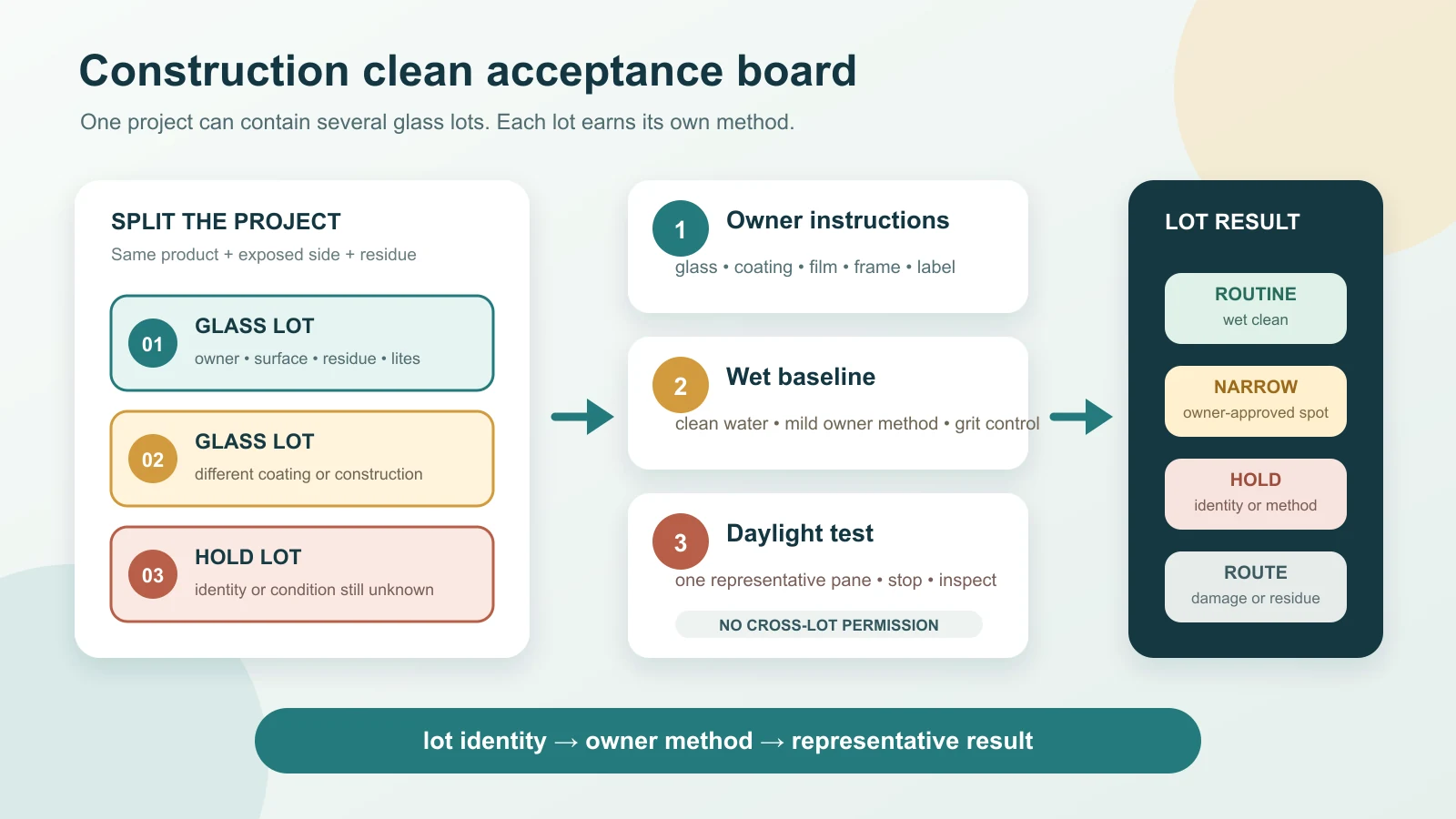
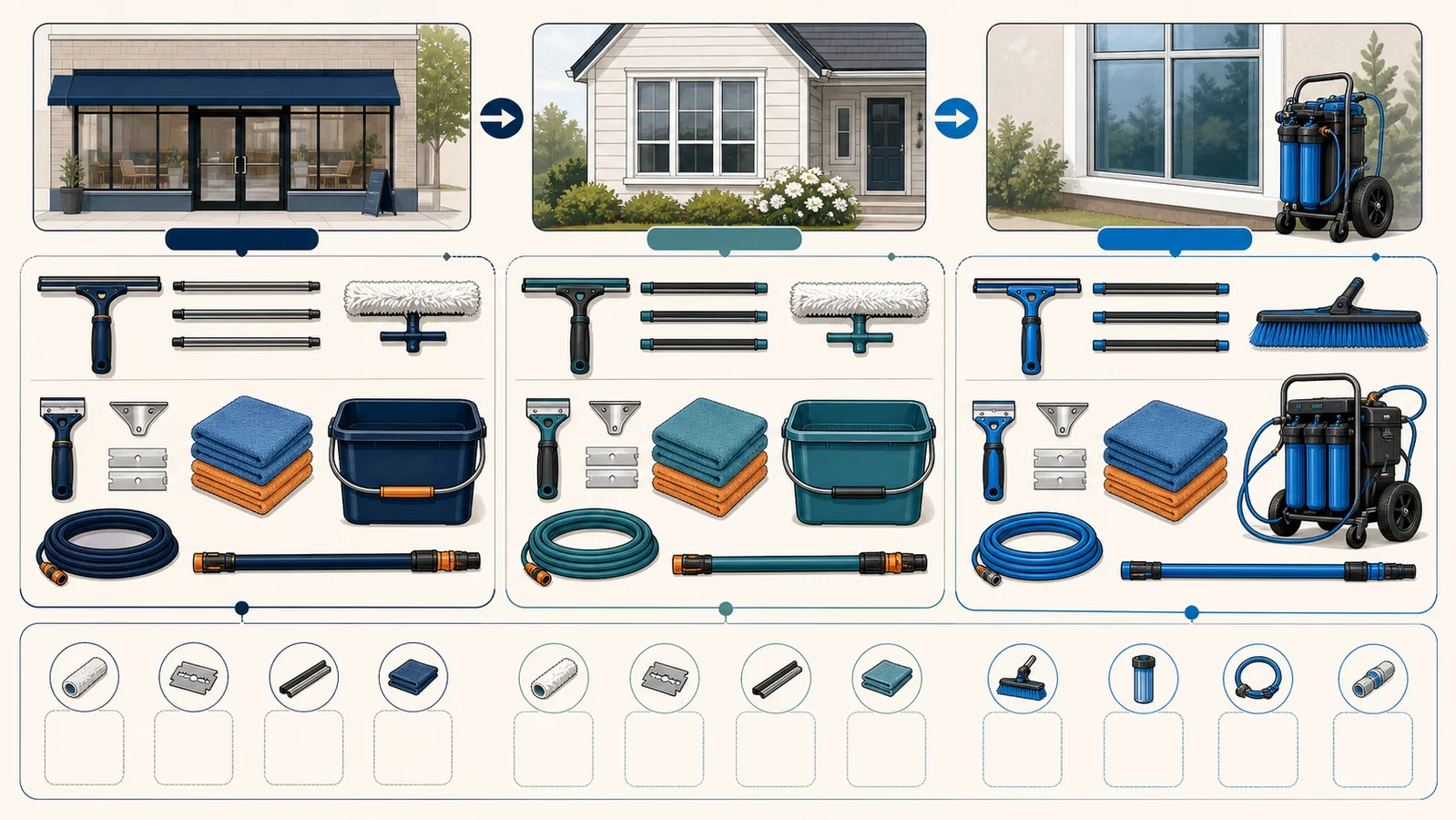
Write three job cards before comparing kits.
Storefront maintenance usually needs a compact traditional stack that can move quickly between repeated panes: washer, squeegee, appropriate channels, bucket or controlled solution container, detailing towels and a way to carry wet tools. Access, public foot traffic and the glass condition still change the plan.
Residential first cleans add frames, tracks and deposits that routine glass maintenance may not encounter. That can add dedicated detailing cloths, frame or track tools and a carefully controlled debris-removal path. A scraper is not automatically appropriate for every pane, coating or contaminant; use the exact tool and surface instructions and stop when compatibility is unresolved.
Ground-based pure-water exterior work adds filtration, monitoring, hose, water-fed pole, brush and connection decisions. It is not an oversized traditional starter kit. The water and reach systems need their own evidence and maintenance owners.
Anything outside those cards remains outside the current loadout. A taller building, difficult roofline, overhead hazard or access method that requires different controls is not solved by adding a longer item to the cart.
Build the traditional glass-cleaning core
The reusable core has roles, not a magic piece count.
The washer assembly combines a T-bar and sleeve sized for the work. It carries solution to the glass and agitates ordinary soil. Record how the sleeve is removed, cleaned and replaced; a spare sleeve can matter more than a second handle.
The squeegee assembly combines handle, channel and rubber. Current manufacturer kits show why these are separate decisions. Ettore’s named starter kit includes several channel widths and replacement rubber, while IPC’s Kristalset lists 10-, 14- and 18-inch channels with replacement rubber. Those are facts about those packages, not universal ideal sizes. Choose widths around the panes and route you actually service, and confirm that the channel, handle and rubber belong to the same system.
The liquid and carrying layer includes a bucket or controlled container plus whatever holster or bag keeps clean and wet tools separated. Capacity should fit the route without becoming an unmanaged load. Towels also need distinct roles: wet frame work, detailing edges and keeping finished glass away from contaminated cloths.
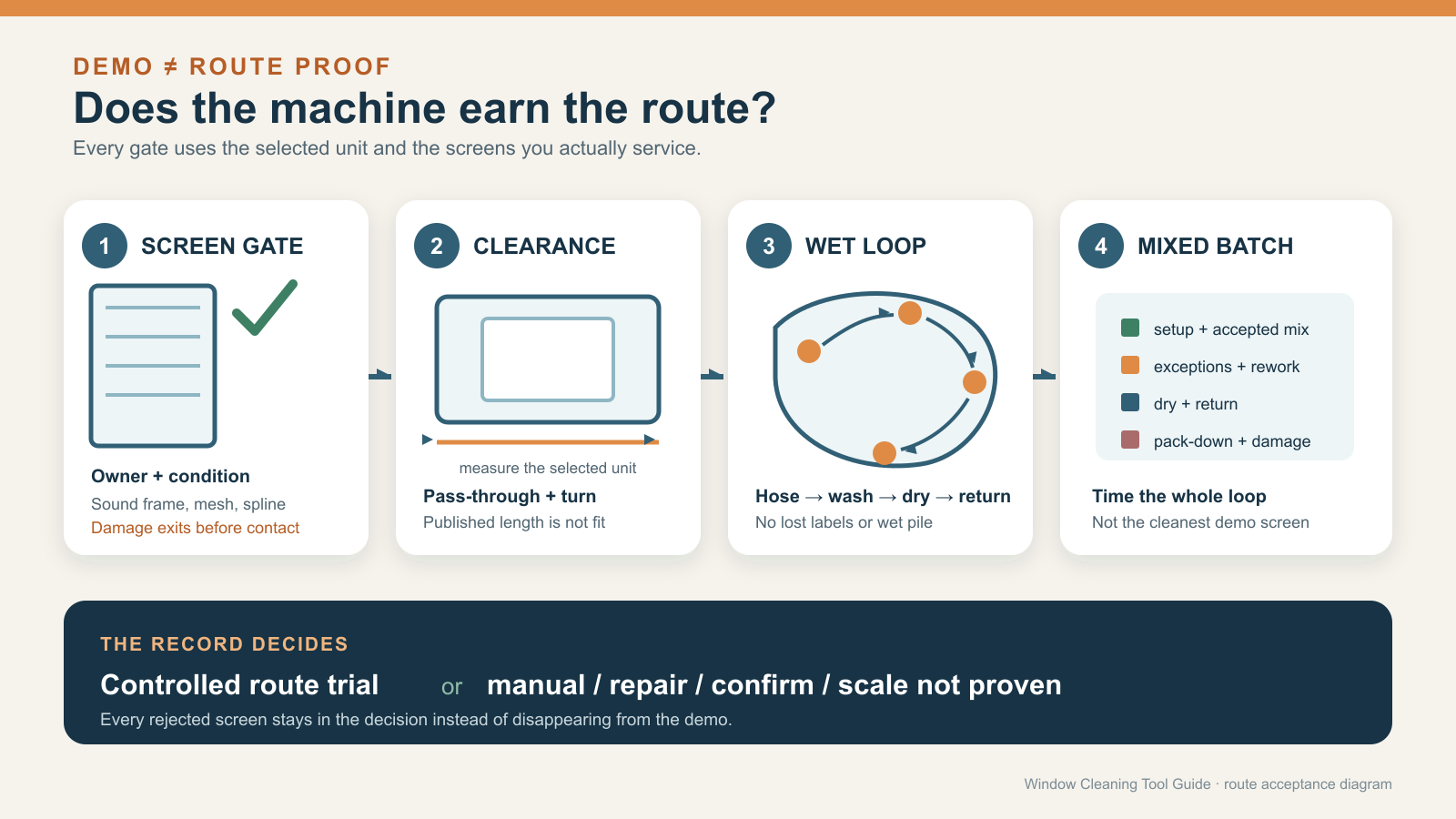
The replacement layer keeps the reusable tools working: rubber, sleeves, clips, towels and any manufacturer-specified wear parts. A starter purchase without this layer may finish a demonstration and still fail a route after one damaged edge or contaminated sleeve.
First cleans add removal and replacement stock
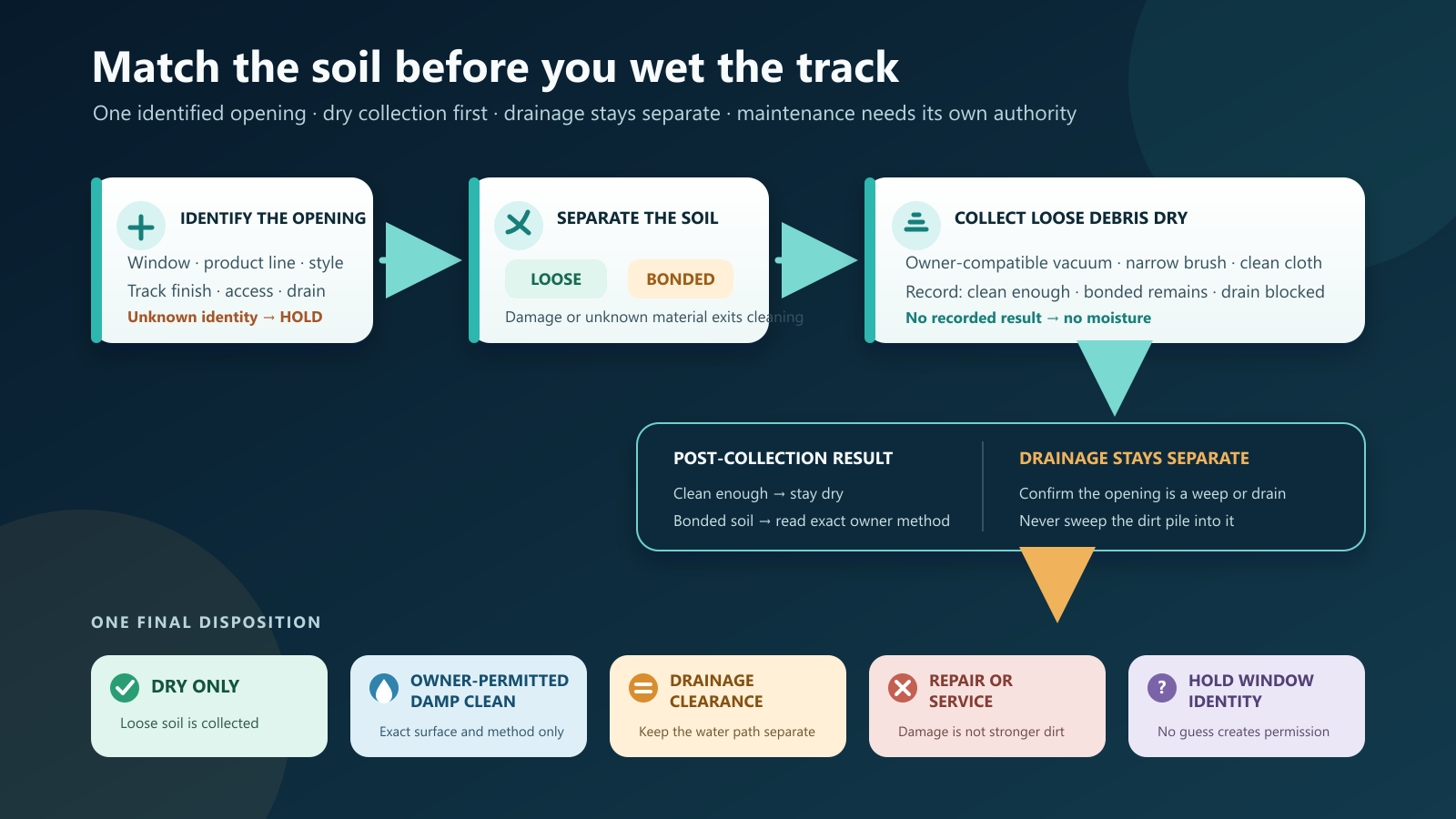
First cleans often change the surface question before they change the squeegee. Adhesive, paint-like debris, mineral deposits and construction residue are not interchangeable. Identify the material and the glass or coating before choosing a removal method.
Current Unger, Ettore and IPC kits include scraper or blade components in some named packages. Inclusion is not permission to use a blade on every surface. Keep the guard, blade condition, storage and exact manufacturer instructions with the tool. If the glass or coating compatibility or contaminant is uncertain, stop that removal step rather than treating a sharp tool as the default.
Create a separate first-clean pouch. It can hold the accepted scraper system and protected replacement blades, non-scratching pads approved for the intended surface, dedicated towels, track or detail brushes and disposal or protection items required by the job. The separation makes the scope visible: routine storefront work does not automatically inherit every aggressive-removal option.
This is also where quoting and equipment meet. If a first clean requires repeated restoration steps, unusual deposits or access outside the base card, the job may need a different price, method or specialist capability. The starter stack should reveal that boundary, not hide it.
Reach work creates another equipment system
A traditional extension pole can extend a compatible washer or squeegee for suitable ground-based work. Confirm the locking interface, tool angle, permitted extension and actual standing area. Do not assume that an Acme thread, cone or click-lock from one line secures every tool from another.
A water-fed pole changes more than the attachment. It adds source-water measurement, treatment, output monitoring, delivery hose, brush jets, fittings, transport and maintenance. Use the water-fed pole guide to specify working reach, material and brush-end compatibility. Use the complete water-fed system guide when filtration and brush-end delivery still need to be matched.
Do not buy both branches merely to make the starter stack look comprehensive. Add the branch supported by accepted jobs, evidence and operating capacity. Work that requires another access method remains outside the current system until its own training, equipment and responsibility are established.
Audit a bundle by what can stop the job
Compare kits against this matrix instead of the product count.
| Operating role | What the bundle must identify | Common omission to expose | Hold when |
|---|---|---|---|
| Wash | T-bar, sleeve, attachment and cleaning or replace path | Spare or washable sleeve | Parts do not belong to one documented assembly |
| Squeegee | Handle, channels, rubber and fit | Replacement rubber or route-appropriate width | Channel or rubber compatibility is assumed |
| Detail | Clean towels separated by role | Enough clean stock for the route | Contaminated cloths must be reused on finished glass |
| Carry | Bucket or container, wet-tool holder and transport | Separation for wet, sharp and clean items | Tools cannot be secured or kept serviceable |
| First clean | Exact removal tool, guard, instructions and accepted surface | Protected replacement parts and surface decision | Coating, debris or permitted method is unknown |
| Ground reach | Pole, lock or adapter, angle and accepted standing zone | Proof that each tool secures to the pole | Access depends on an uncontrolled position |
| Pure water | Treatment, monitor, hose, pole, brush and maintenance path | Consumables, meters or connectors | It is sold as one unexplained “system” |
A bundle passes only for the job card it can close. An Ettore or IPC kit can provide a well-defined traditional base, yet the exact contents still need comparison with the route’s towel, replacement, carrying and access needs. A separate pure-water cart can be appropriate later without making the first traditional kit incomplete today.
Pack the route, not the catalog photo
Assign every item a home before the first job. Keep dry replacement rubber, clean towels and protected blades away from wet sleeves and dirty detailing cloths. Secure channels so their working edges are not damaged in transit. Give hoses and poles a transport position that does not crush fittings or send contaminated water through the clean-tool area.
Set a replenishment trigger that reflects observable condition rather than a fixed purchase ritual. Replace rubber when the edge no longer performs to the current manufacturer’s or use standard; retire damaged blades and sleeves; wash or quarantine contaminated towels; restock before the route lacks a clean replacement. The operator should be able to see which item owns the next stop.
Record compatibility beside the item. A short note such as “14-inch channel—handle family X—rubber profile Y” is more useful than a brand-only bin. For pole attachments, record the exact adapter and permitted tool. For pure-water components, record hose and fitting identities rather than “universal.”
Freeze three containers before adding products
Finish the first loadout as three owned groups:
- Reusable core: washer assembly, squeegee assemblies, carrying system, accepted extension interface and durable detail tools.
- Refill and replacement stock: rubber, sleeves, clean towels, protected blades and model-specific wear parts.
- Conditional job modules: first-clean pouch, track or frame tools, or the separately documented pure-water system.
Write the accepted job card on each conditional module. If a new job cannot be completed by those groups without an undocumented surface decision, access method or compatibility assumption, hold the job or design the new capability before buying around the gap.
The Starter Tools library will collect the narrower bundle and high-window decisions as they become public. The operating stack is ready when every accepted job has a complete path and every wear item has a replacement owner—not when the product photo looks full.