
The tallest number in a product name is rarely the whole reach decision. Real working height depends on operator position, pole angle, obstacles and how much overlap the extended sections retain. Material also matters: a lighter, stiffer pole may be easier to control at height, while a shorter or mixed-material setup can make better sense for lower work and tighter transport.
This section separates those choices into practical checks: actual glass height, collapsed length, section design, brush and jet configuration, hose routing, fittings, replacement parts and the output available from the water system. Compatibility deserves the same attention as headline reach.
Choose the page that matches the uncertainty in front of you. If a job cannot be reached and controlled from a defensible ground-based position, stop before treating a longer pole as the automatic answer.
Water-fed pole guides
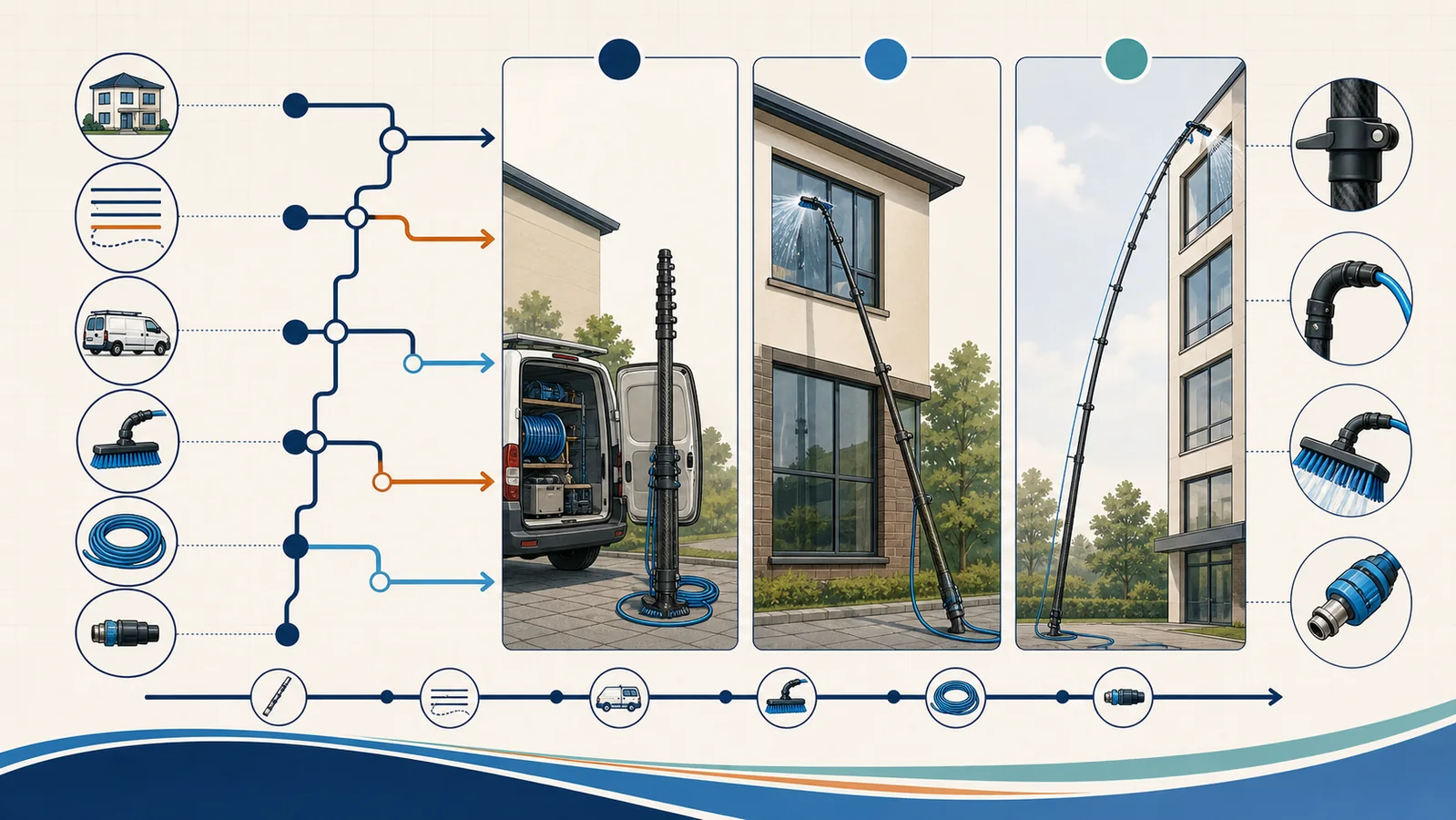
Water-Fed Pole Guide: Choose Working Reach, Material and Brush
Measure highest glass, setback and transport space, then compare pole material, stiffness, collapsed length, brush, hose and connectors before buying.
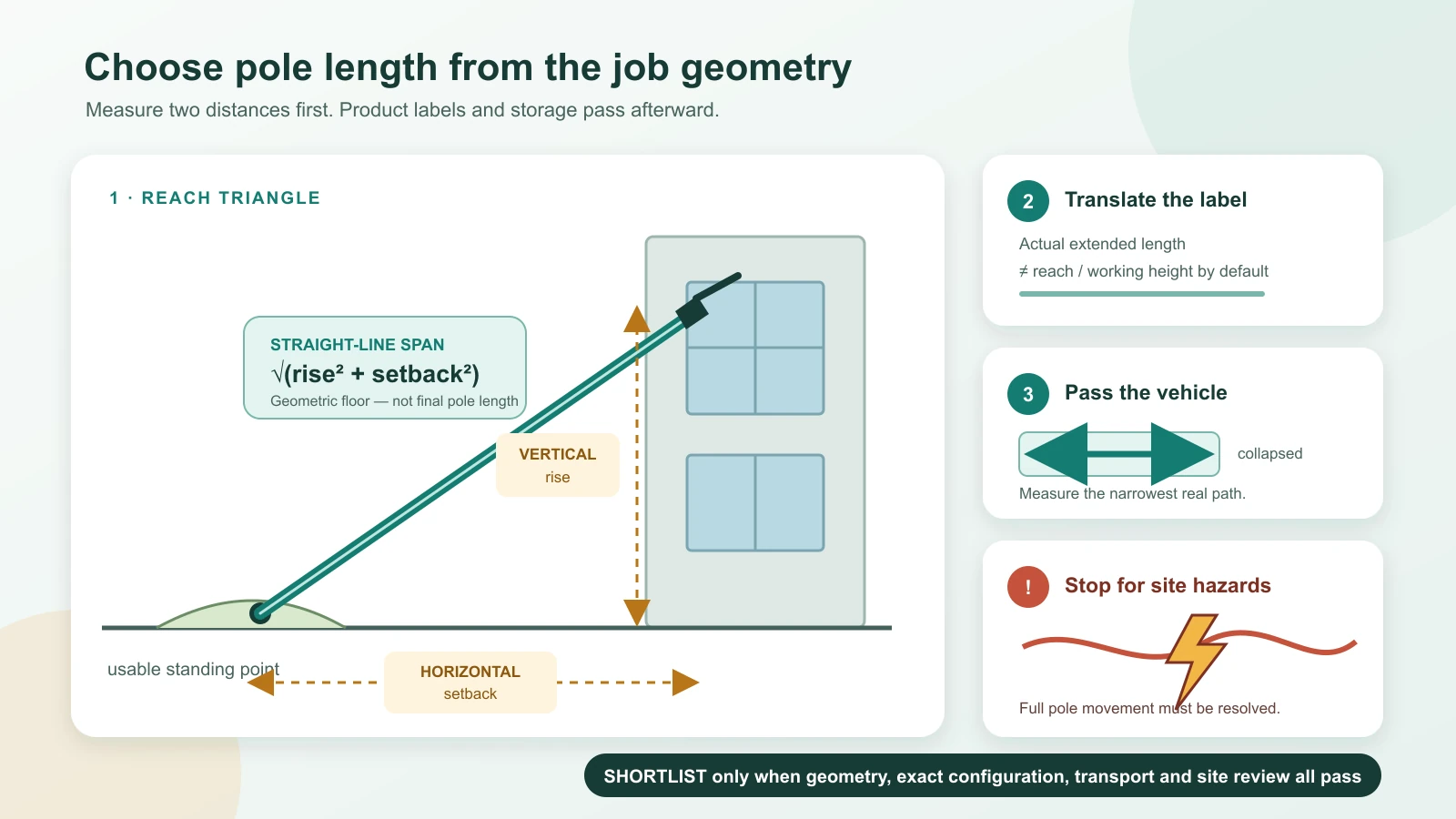
Choose Water-Fed Window Cleaning Pole Length From Height and Setback
Use target height, ground setback, actual extended length and collapsed size to rule out poles that only fit on the product page.
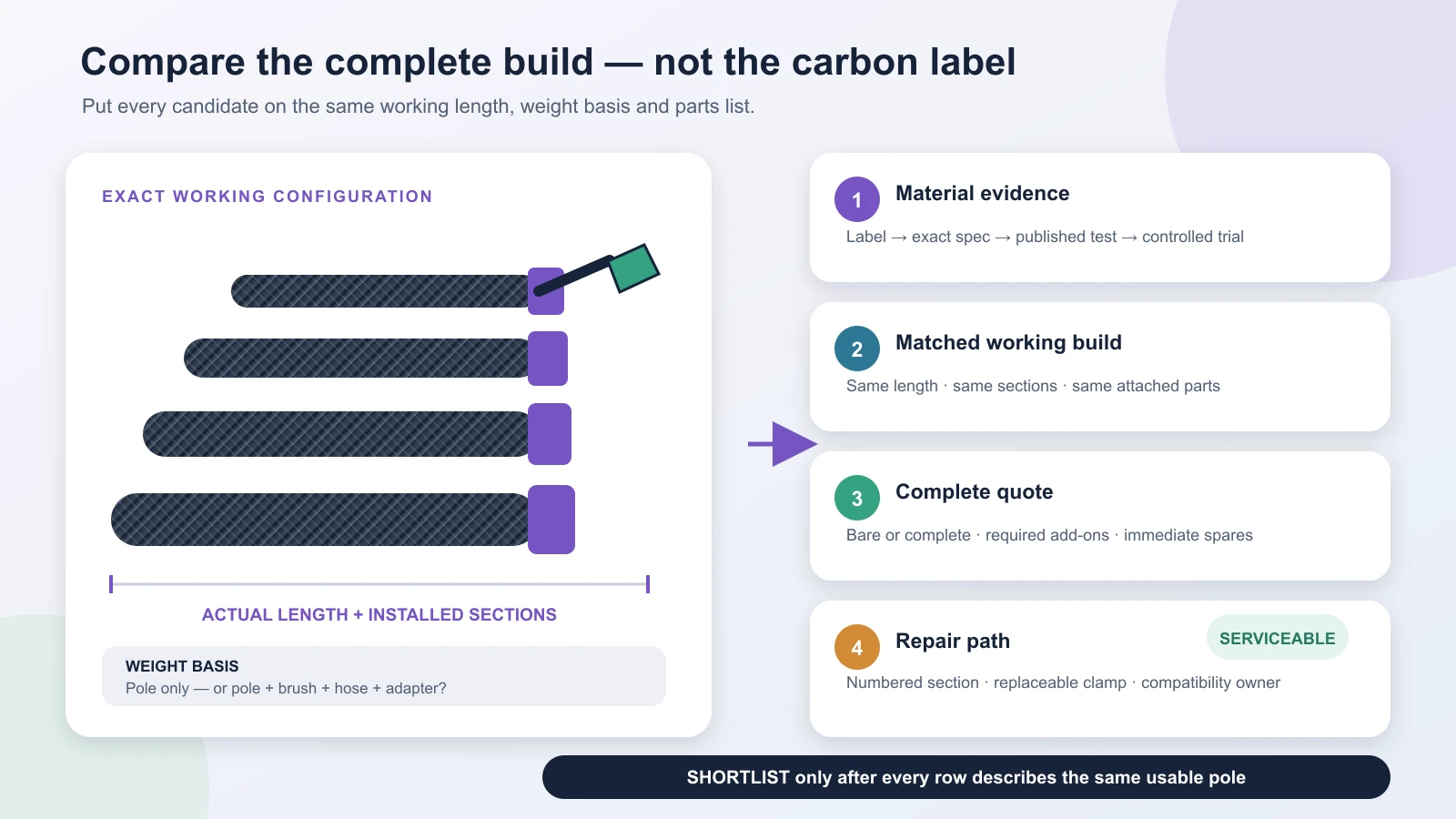
Carbon Fiber Window Cleaning Pole: Compare the Complete Build
Normalize actual length, pole-only weight, sections, included parts, repair options and material claims before paying for a carbon label.
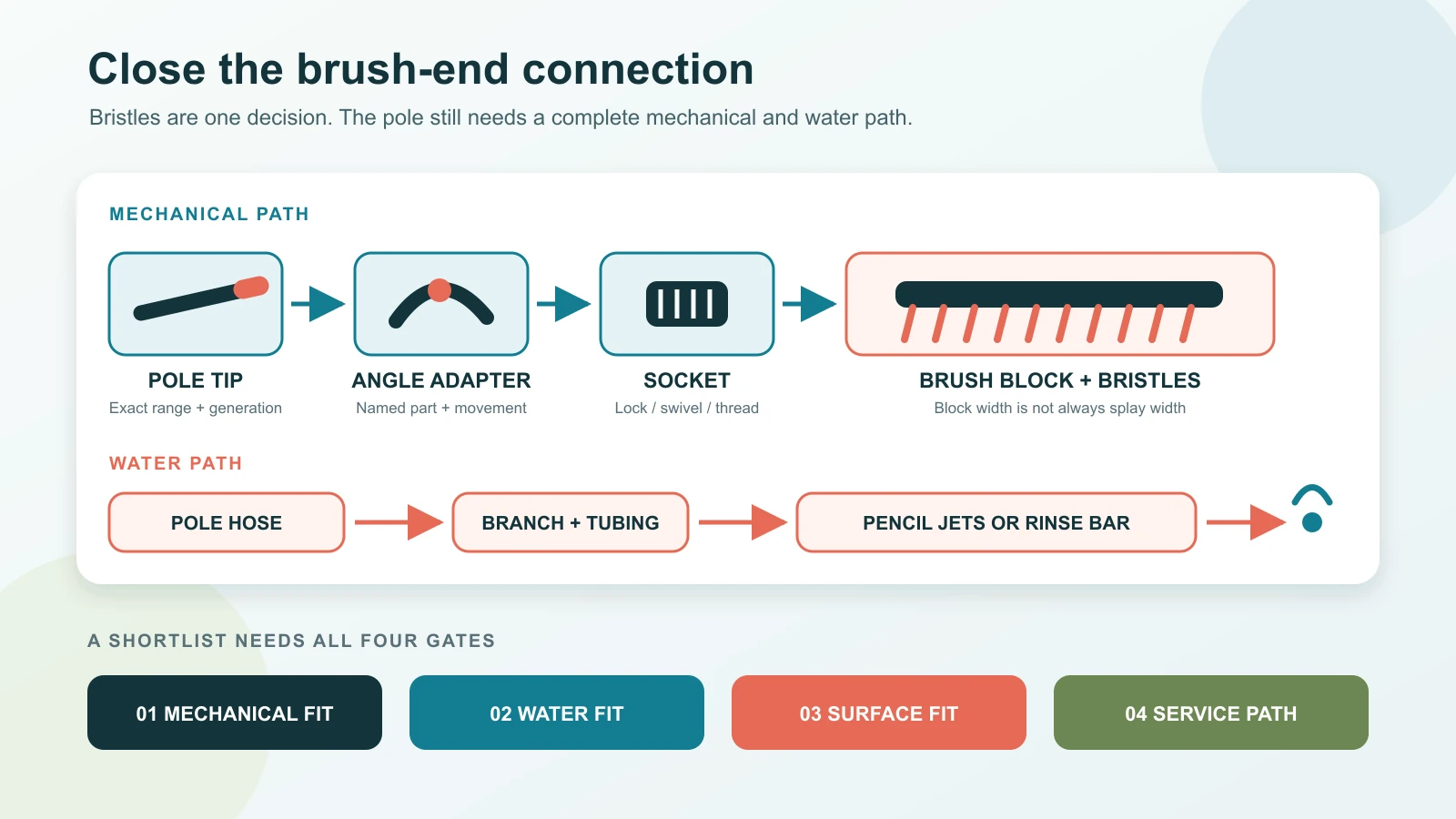
Water-Fed Pole Brush Guide: Check the Connection Before Bristles
Trace socket, angle adapter, jet or rinse-bar feed, hose size, brush width and service parts before assuming a water-fed pole brush fits.
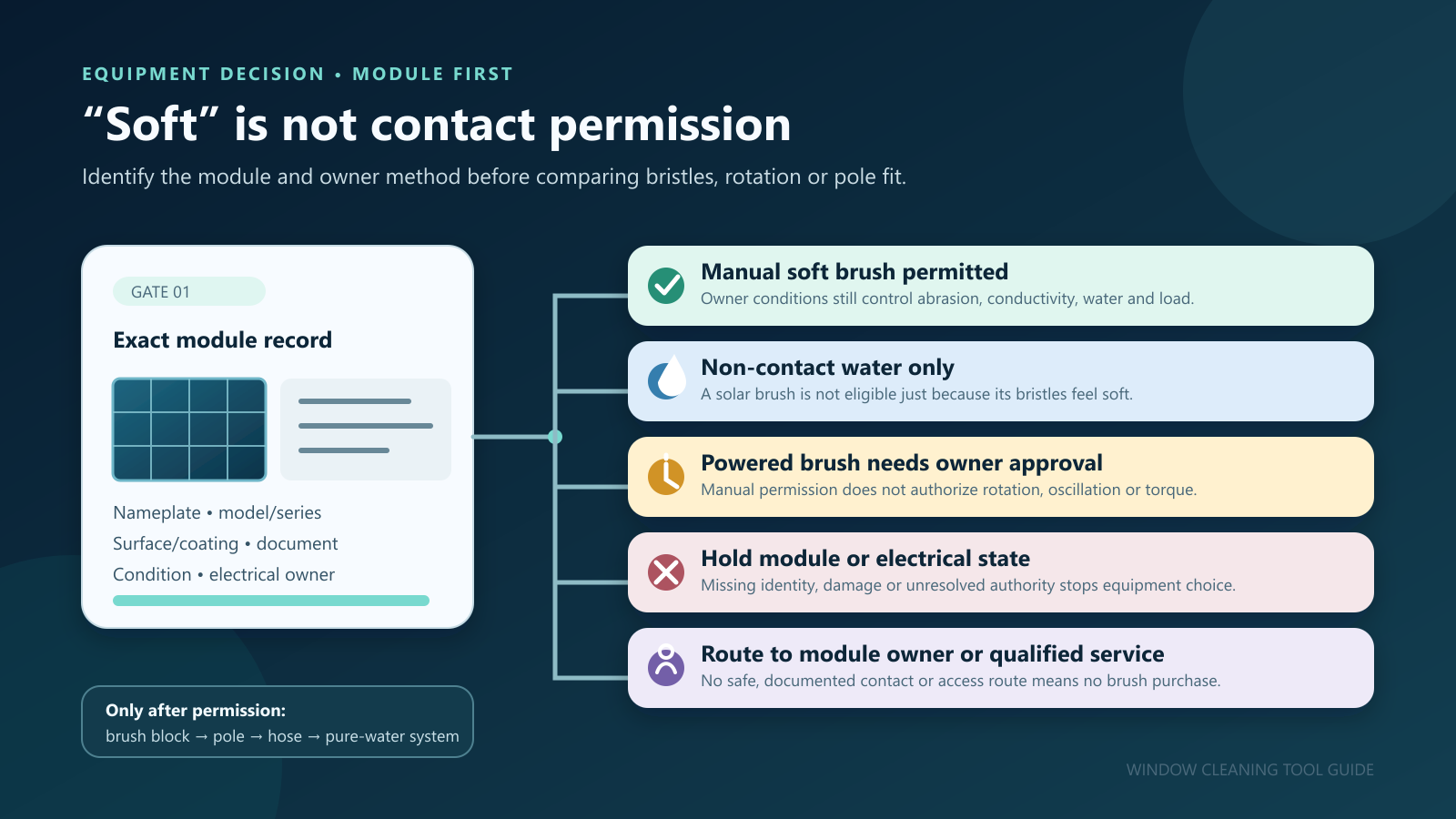
Soft Brush for Solar Panel Cleaning: Check the Module Manual First
Match a solar cleaning brush to the exact module manual, coating, contact method and load boundary before choosing bristles, rotation or a pole.
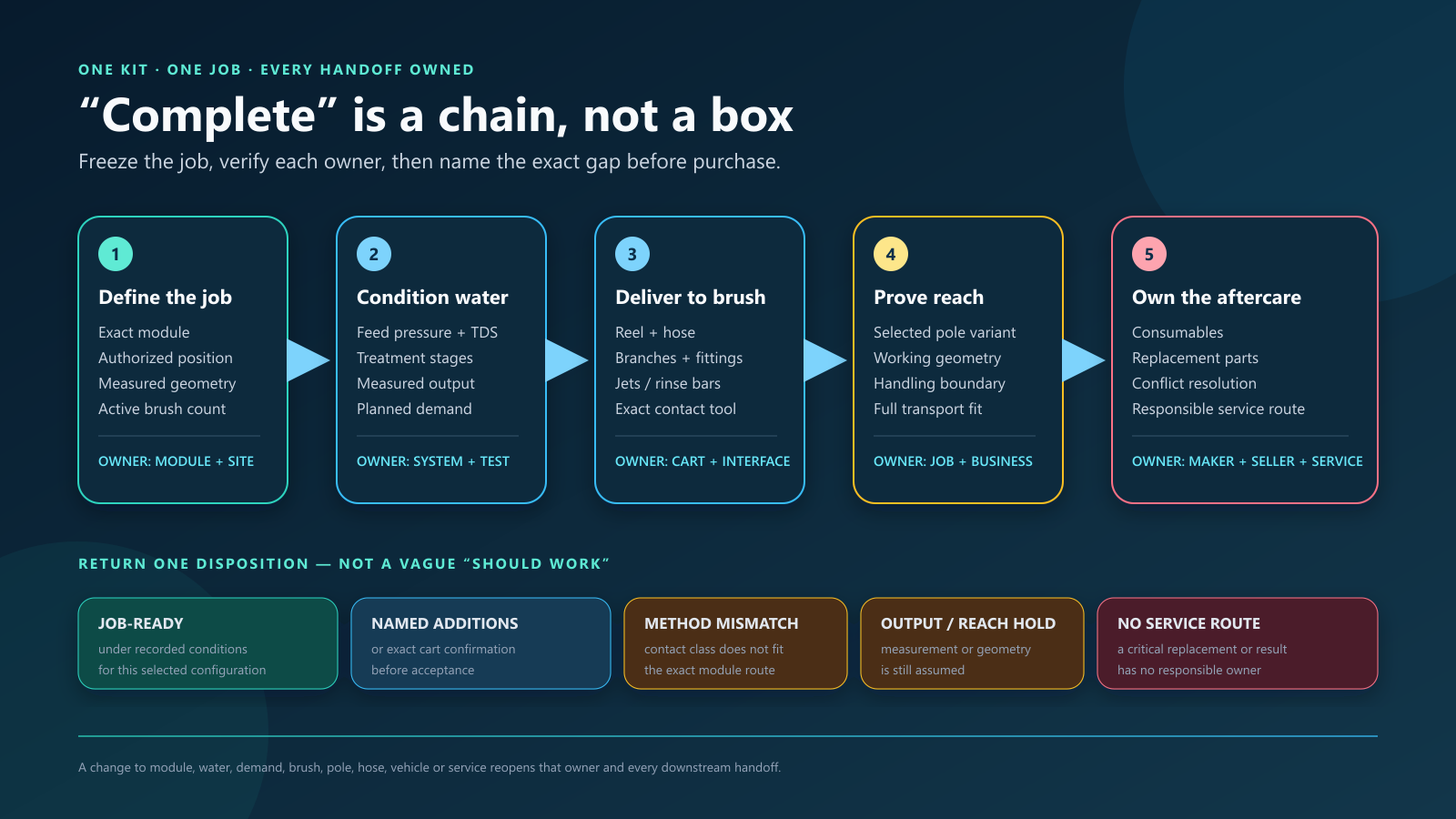
What a Solar Panel Cleaning Kit Still Needs Before the First Job
Trace module permission, water treatment, measured flow, brush and pole interfaces, hose reach, transport and service gaps before calling a solar kit job-ready.