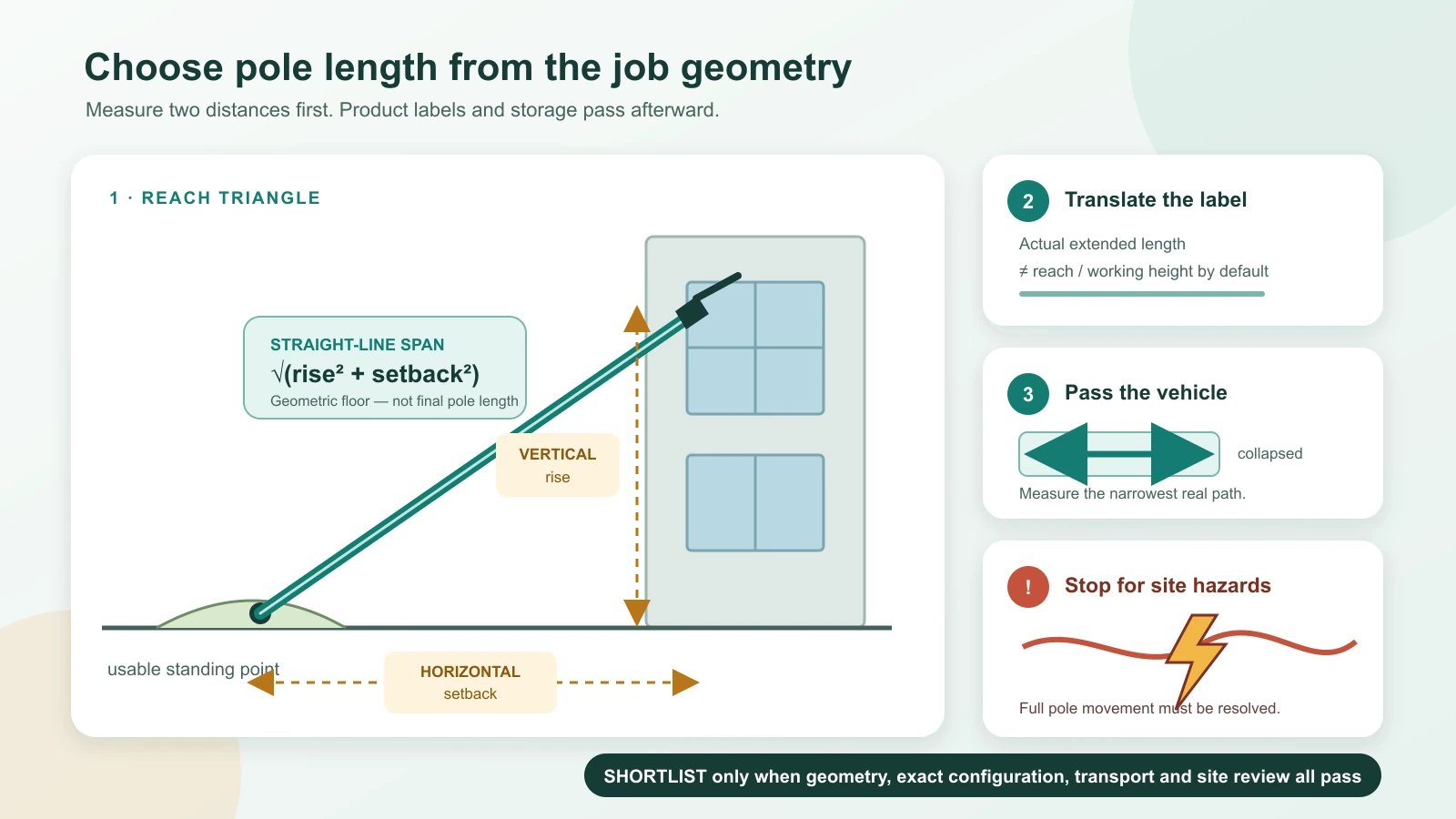
Choose Water-Fed Window Cleaning Pole Length From Height and Setback
Use target height, ground setback, actual extended length and collapsed size to rule out poles that only fit on the product page.
 windowcleaning
Use target height, ground setback, actual extended length and collapsed size to rule out poles that only fit on the product page.
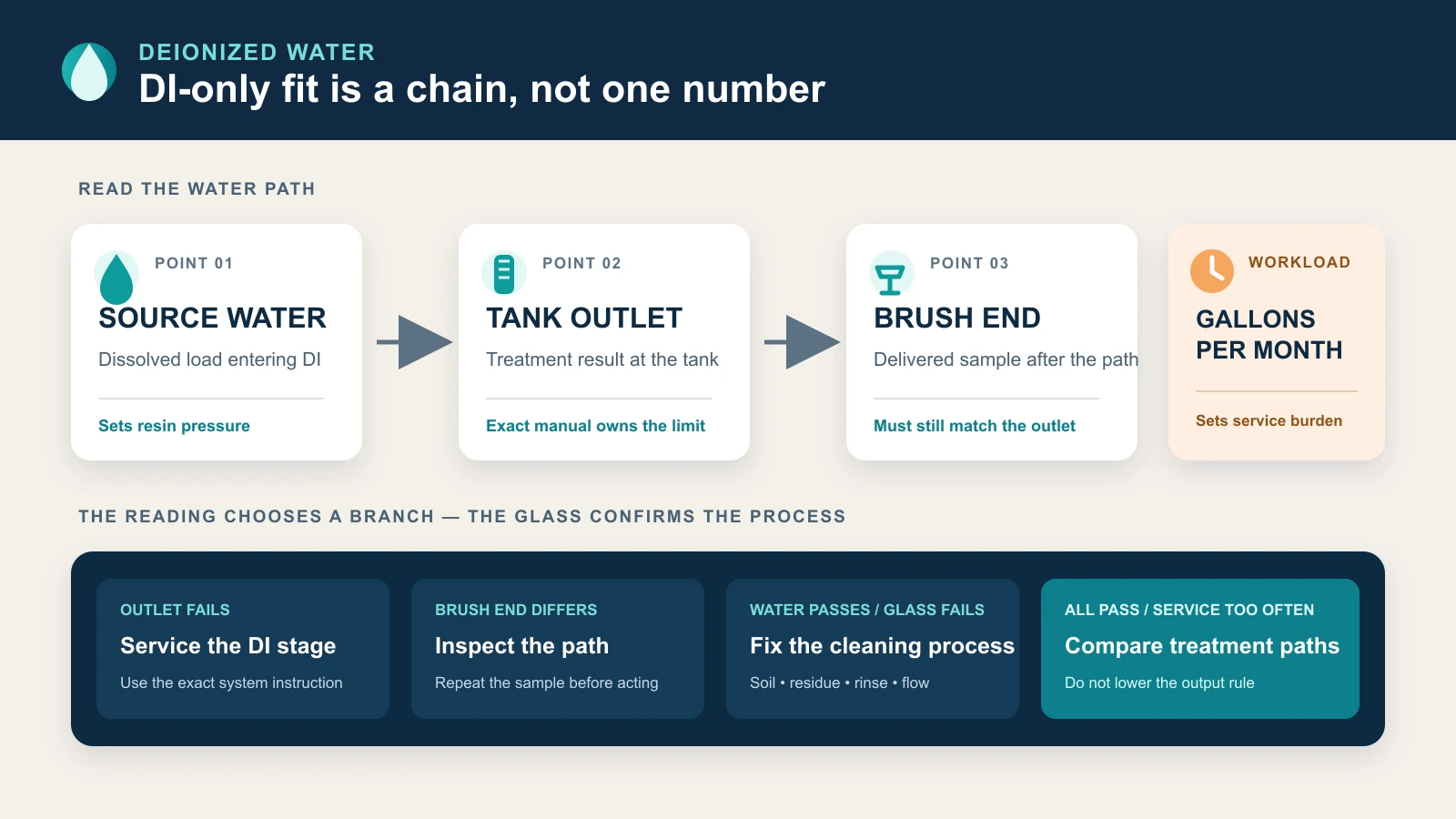
Separate what a TDS meter proves from what it cannot, then use source water, monthly gallons and outlet-to-brush readings to decide whether DI-only fits.
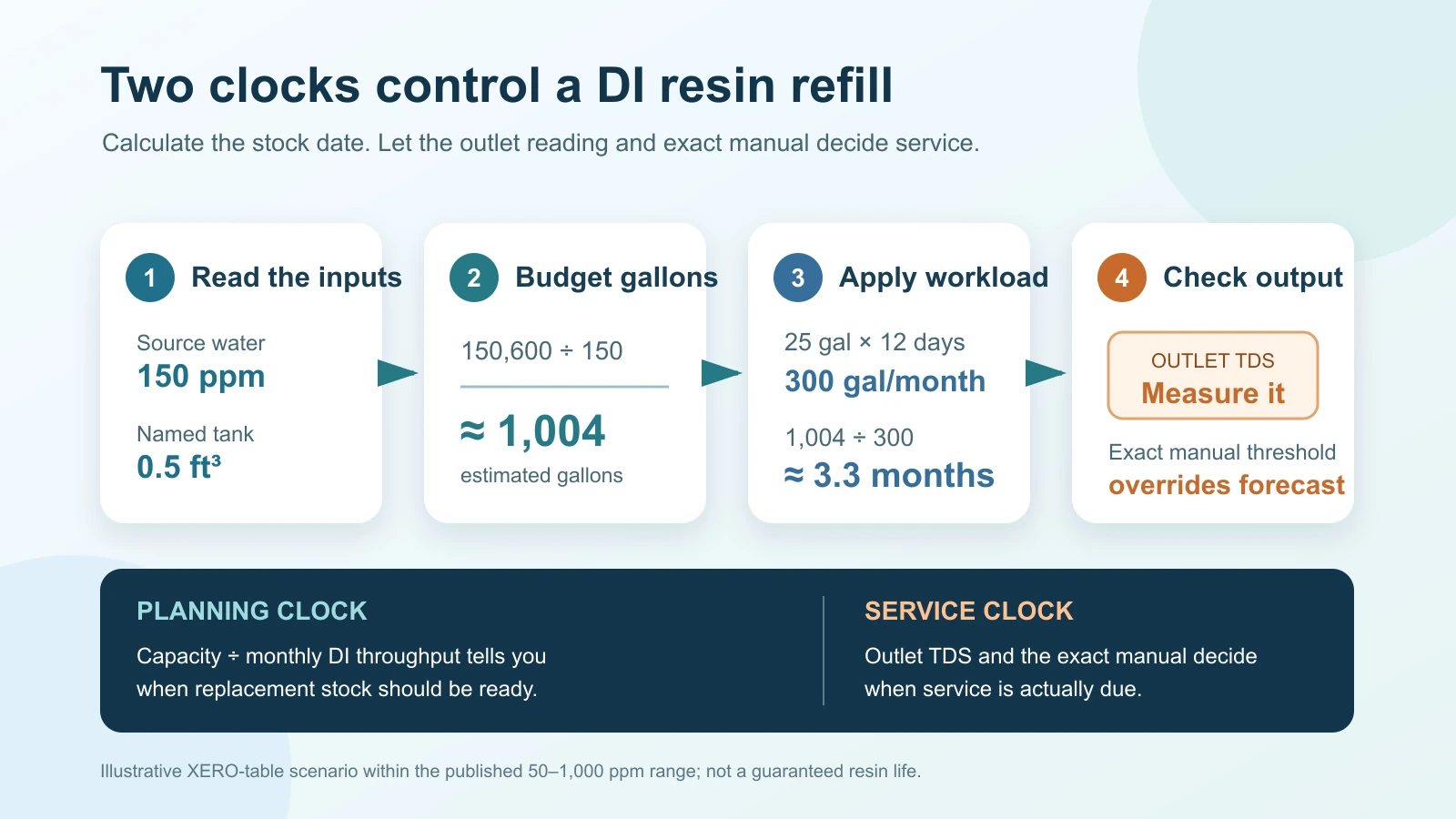
Use source-water TDS, 0.5- or 1.0-ft³ capacity and monthly gallons to estimate a refill interval—then let measured output TDS override the forecast.
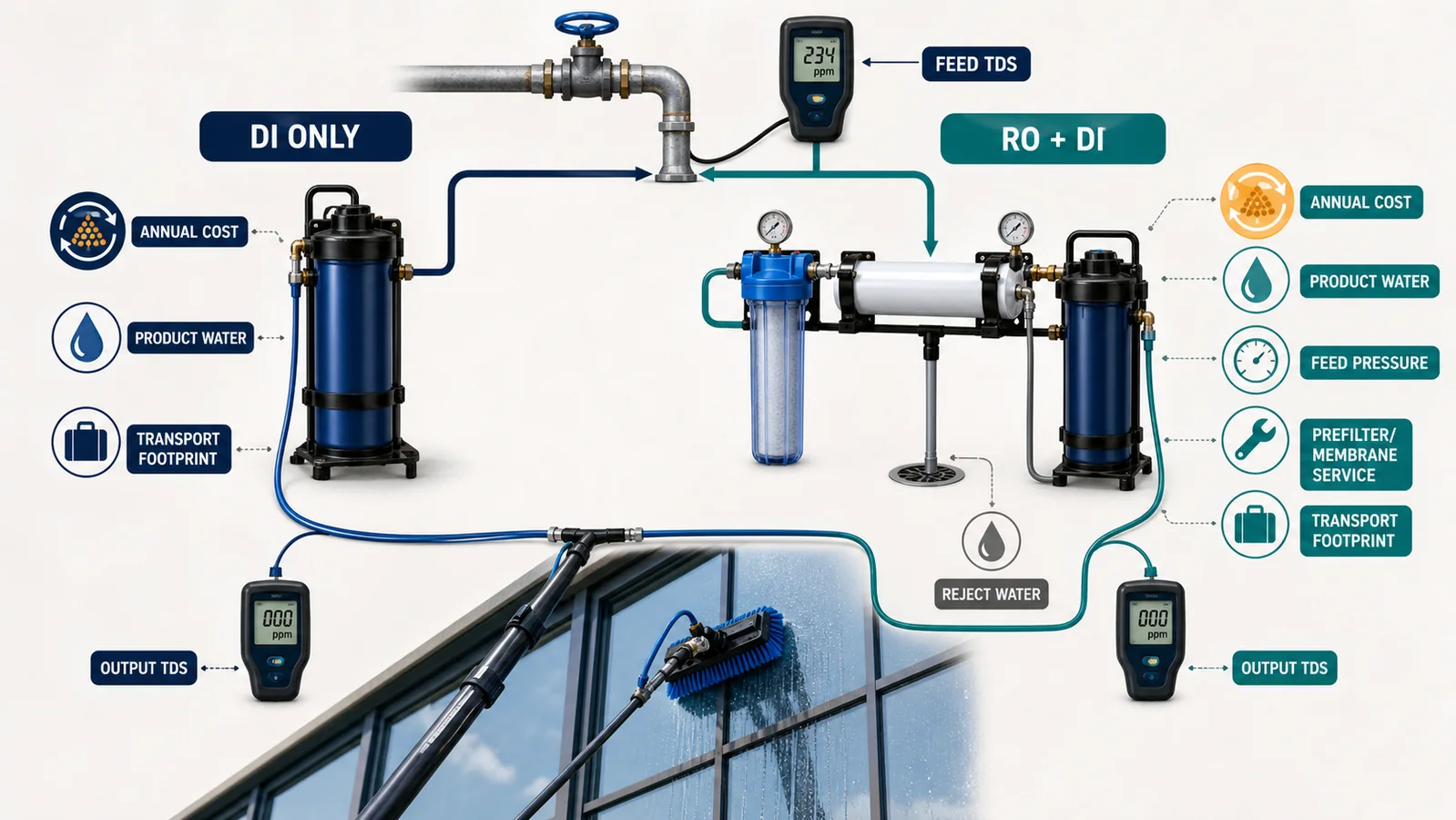
Compare DI-only with RO/DI using feed TDS, measured resin yield, product-water demand, pressure, reject water and full annual operating cost.
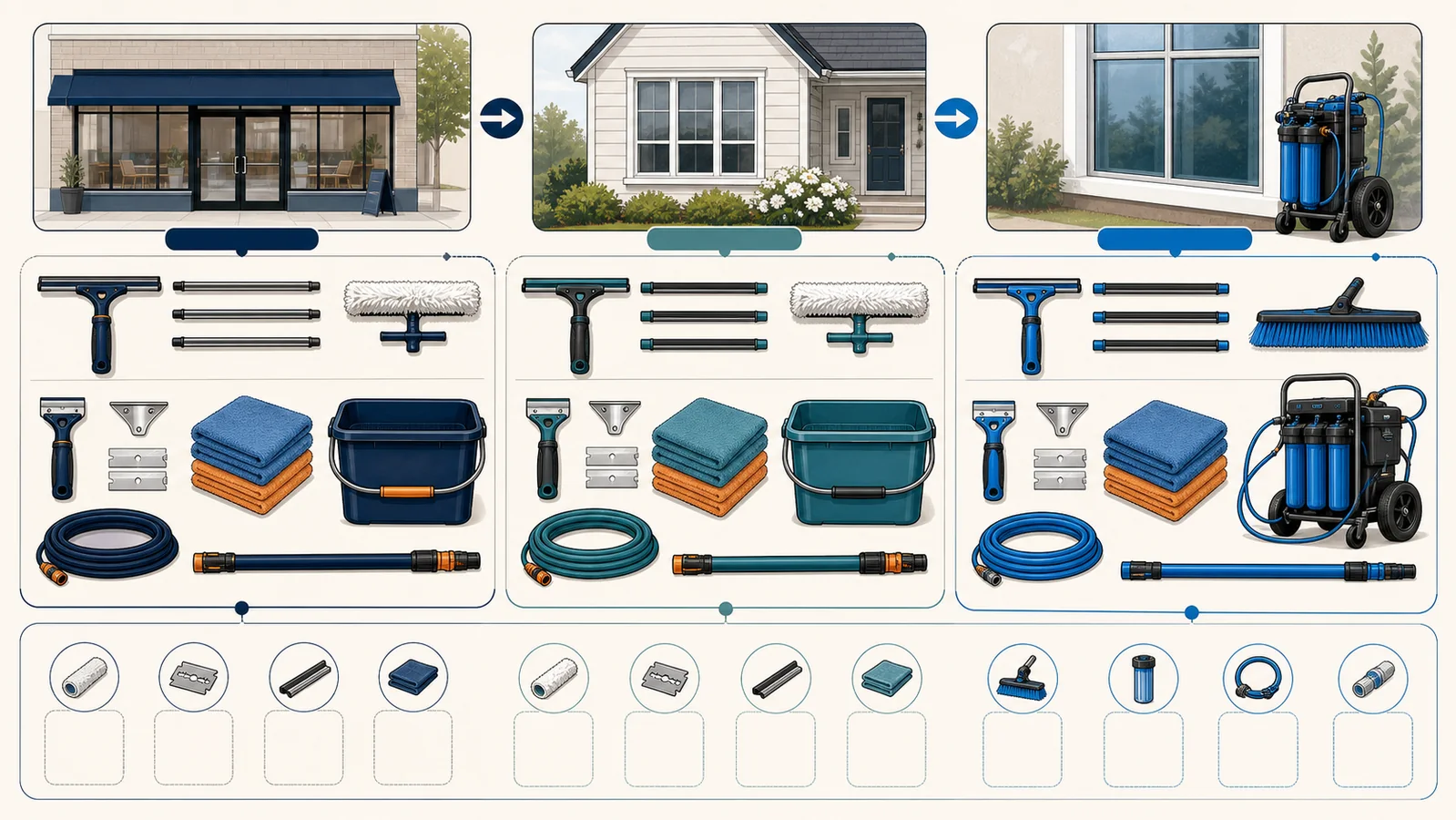
Build a job-ready window cleaning tool stack by storefront, first-clean and pure-water work; expose consumables, replacements and access gaps kits omit.
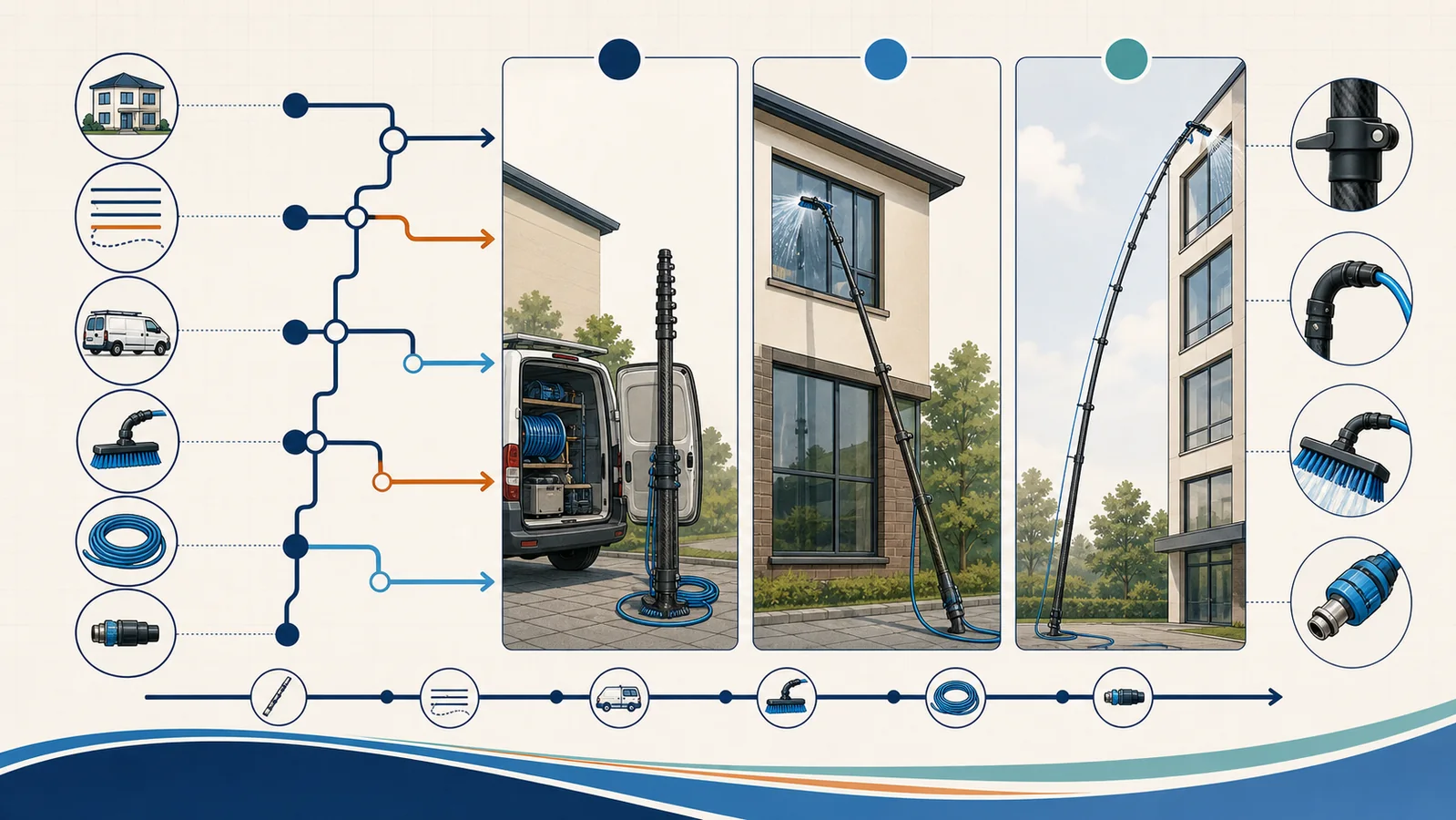
Measure highest glass, setback and transport space, then compare pole material, stiffness, collapsed length, brush, hose and connectors before buying.
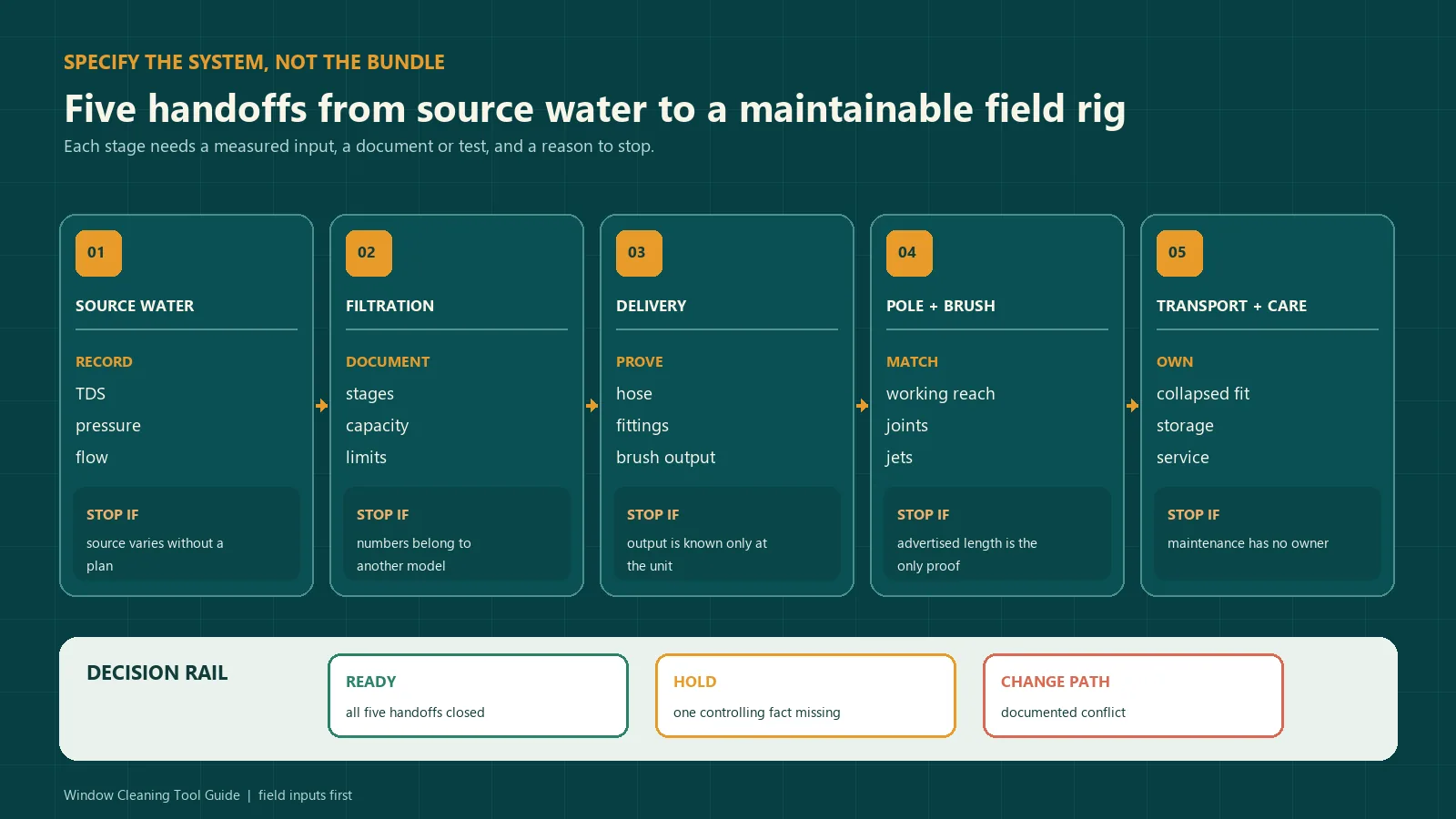
Use source-water TDS, daily gallons, brush-end output, working reach and transport limits to specify a complete water-fed pole system before buying.