
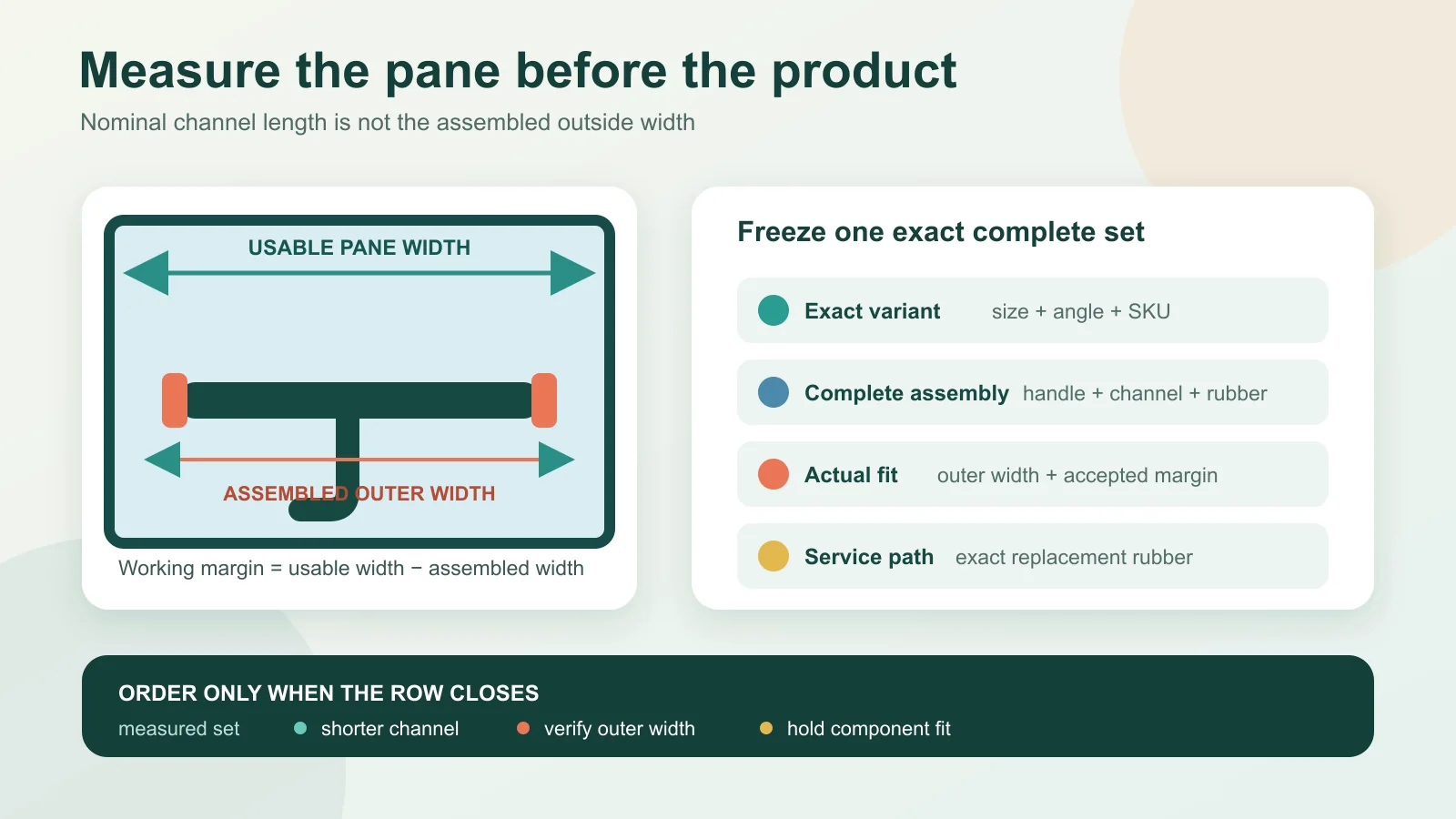
Measure the Pane Before Buying a Window Cleaning Squeegee
Use pane width, assembled channel width, component fit and replacement rubber evidence to choose one serviceable professional window squeegee.
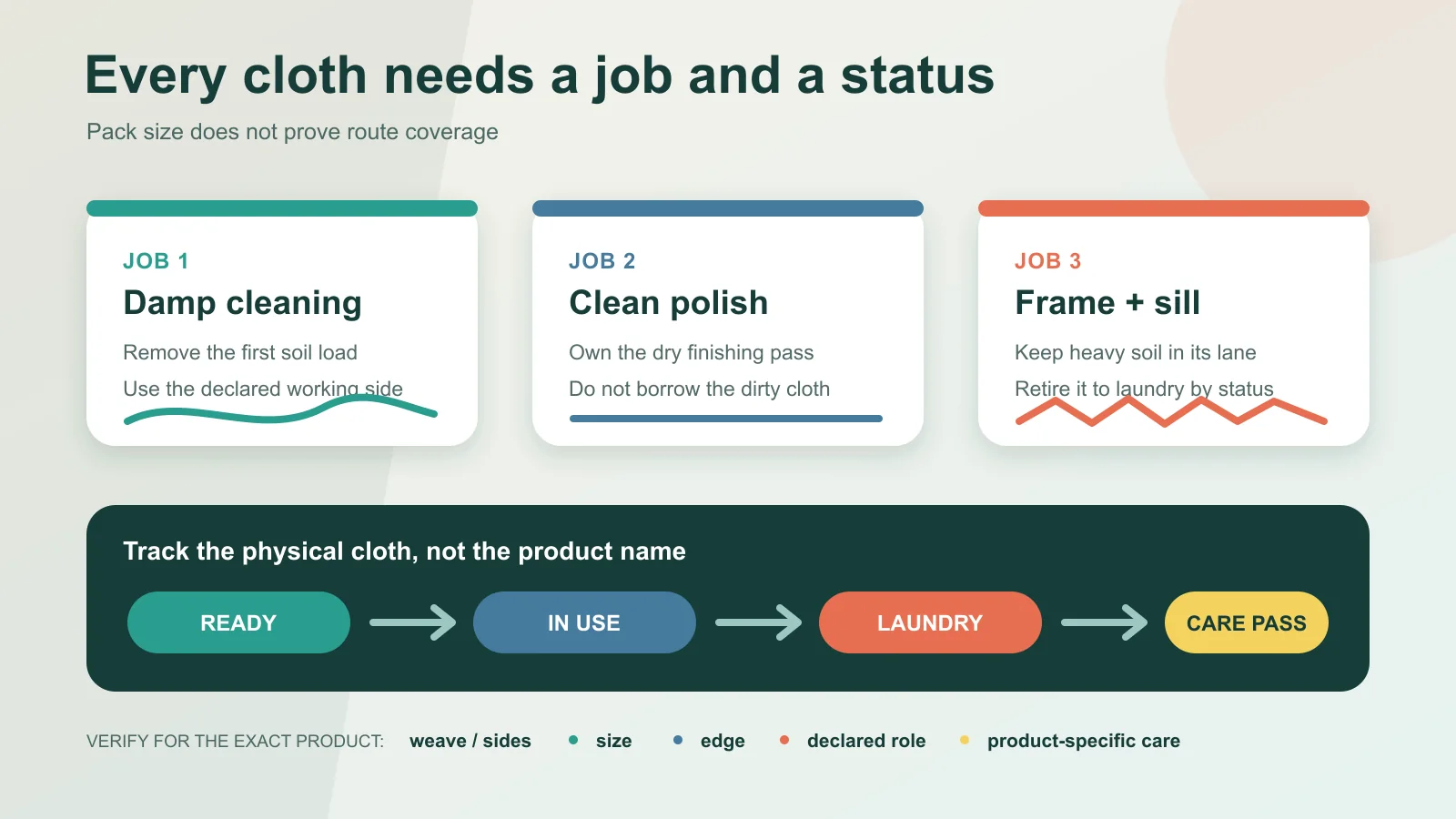
Buy Window Cleaning Microfiber Cloths by Job, Not by Pack Size
Match weave, size, edge and care instructions to damp cleaning, dry polishing and dirty frame or sill work before buying microfiber cloths.
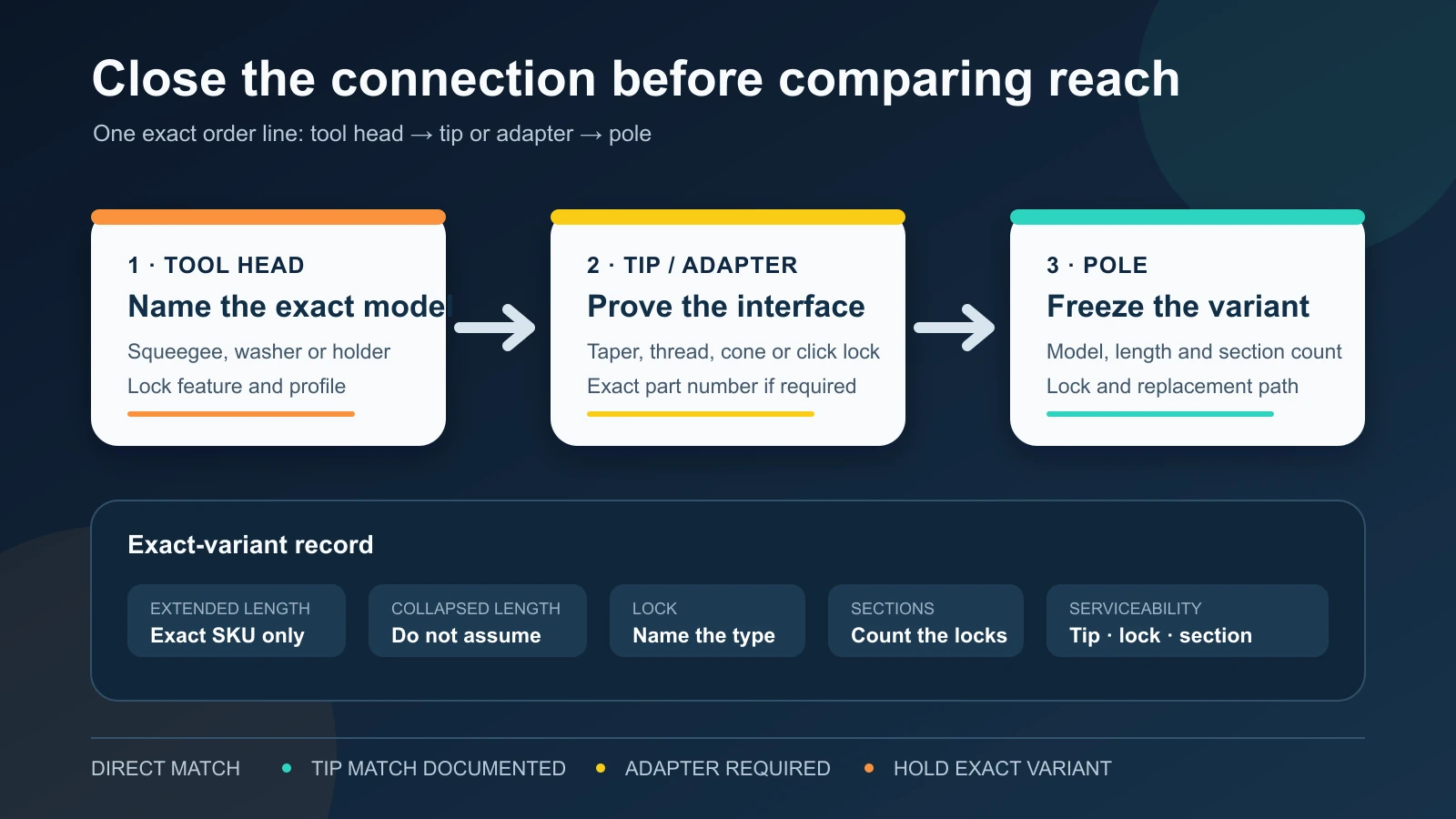
Choosing a Window Cleaning Extension Pole Starts at the Tool Tip
Match the exact tool head, tip or adapter, collapsed and extended length, lock and replaceable parts before buying a window cleaning extension…
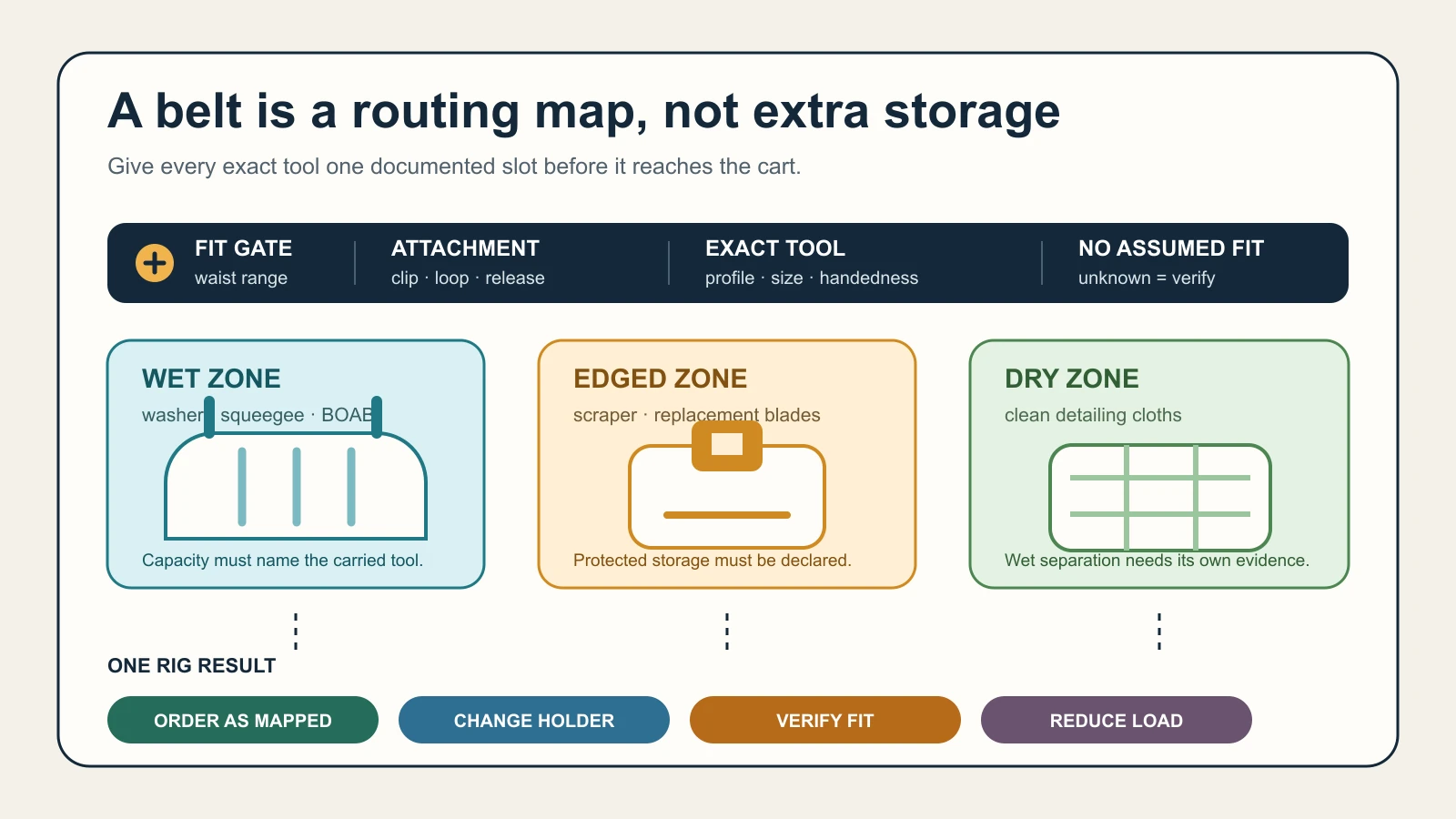
Window Cleaning Tool Belt Setup: Check Every Slot Before You Buy
Map your squeegee, washer, scraper, towels and BOAB to exact holders, moisture zones and attachment checks before ordering a window cleaning tool…
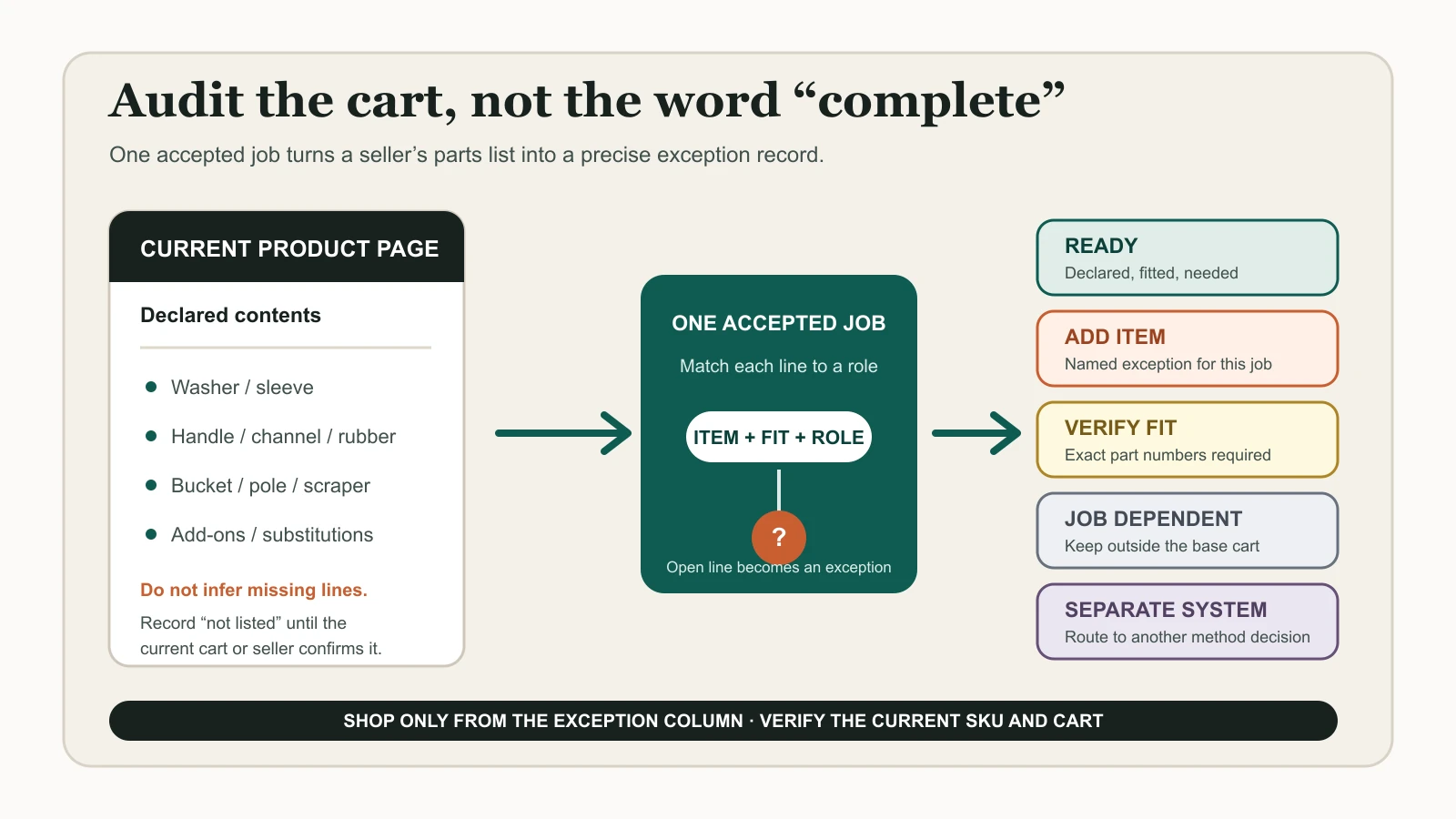
Window Cleaning Starter Kit: Check What the Bundle Leaves Out
Audit pole connections, replacement rubber, cloths, carrying gear and job-specific add-ons before calling a window cleaning starter kit complete.
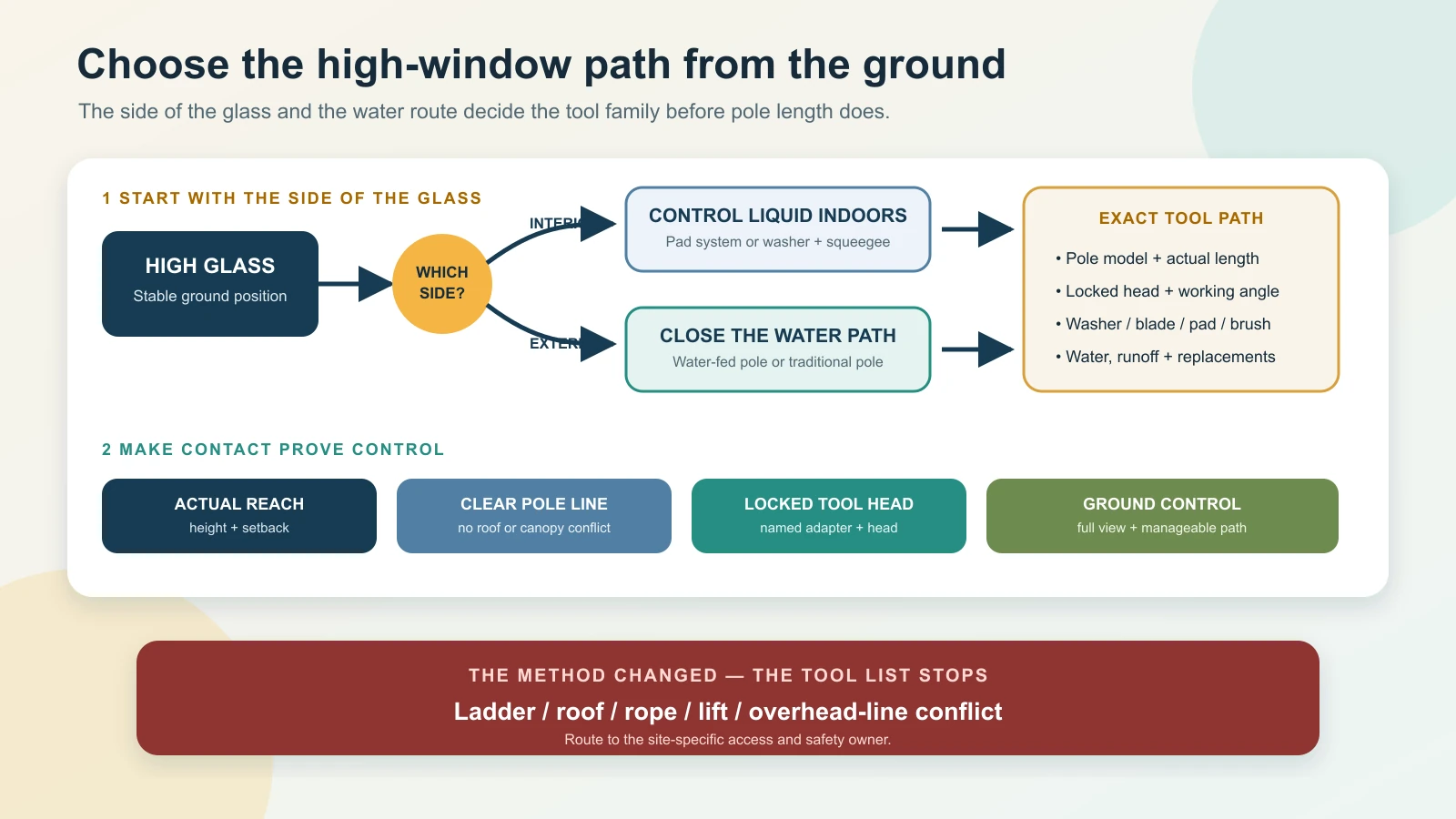
Window Cleaning Tools for High Windows: Ground-Based Options First
Choose an indoor pad, washer-and-squeegee pole or water-fed system by glass side, reach, obstruction and water route—then know when ground access ends.
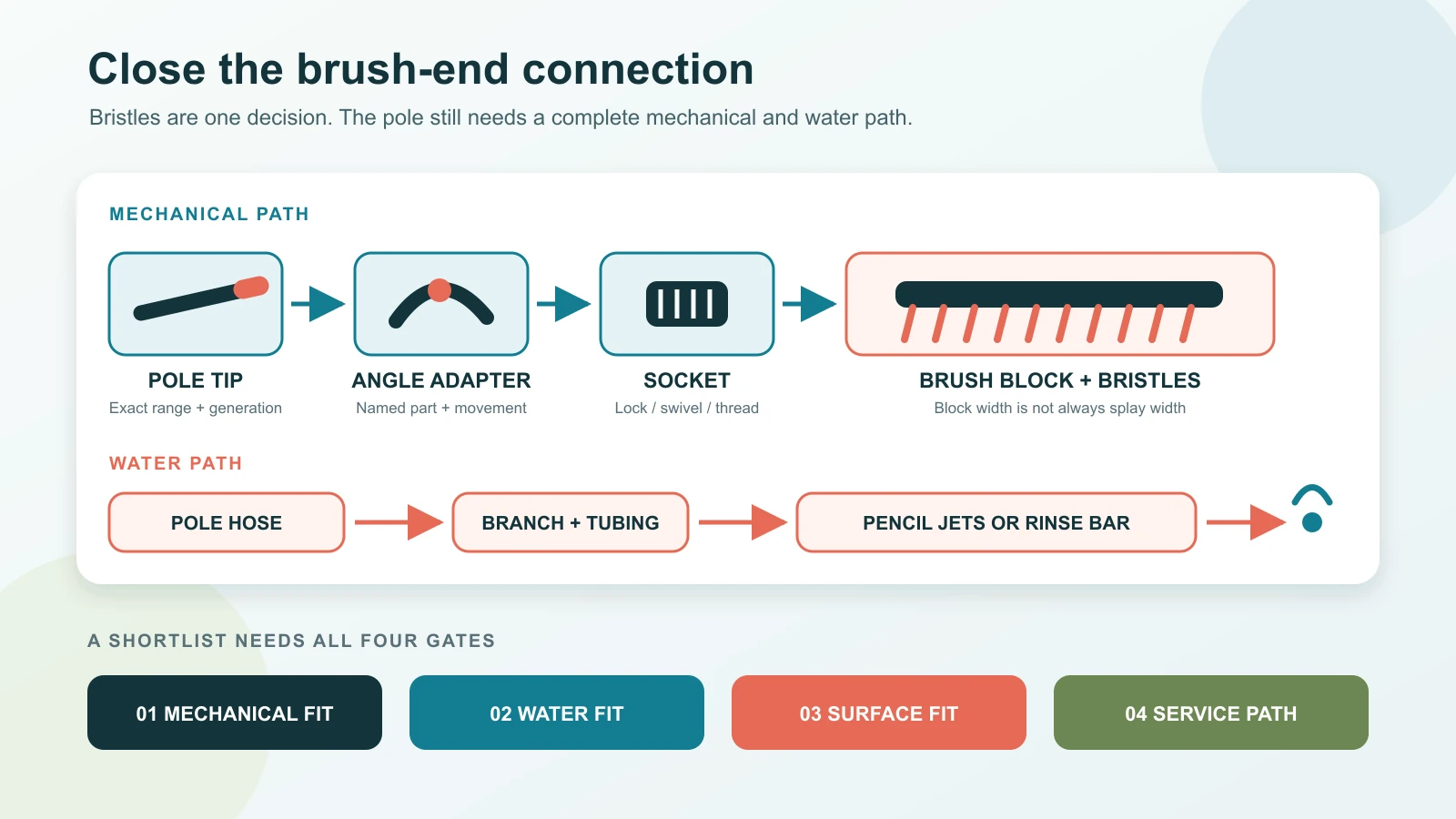
Water-Fed Pole Brush Guide: Check the Connection Before Bristles
Trace socket, angle adapter, jet or rinse-bar feed, hose size, brush width and service parts before assuming a water-fed pole brush fits.

Carbon Fiber Window Cleaning Pole: Compare the Complete Build
Normalize actual length, pole-only weight, sections, included parts, repair options and material claims before paying for a carbon label.
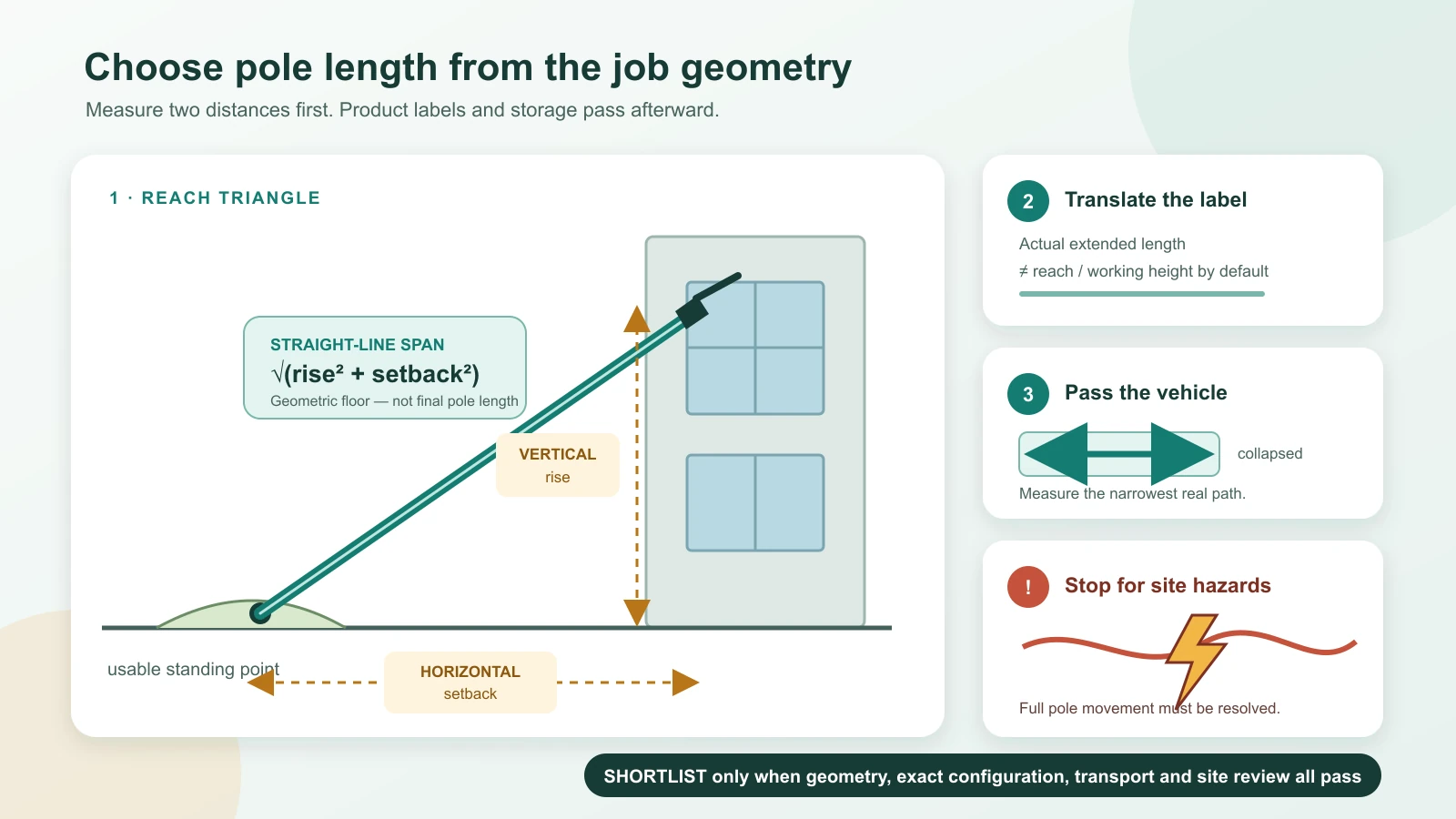
Choose Water-Fed Window Cleaning Pole Length From Height and Setback
Use target height, ground setback, actual extended length and collapsed size to rule out poles that only fit on the product page.
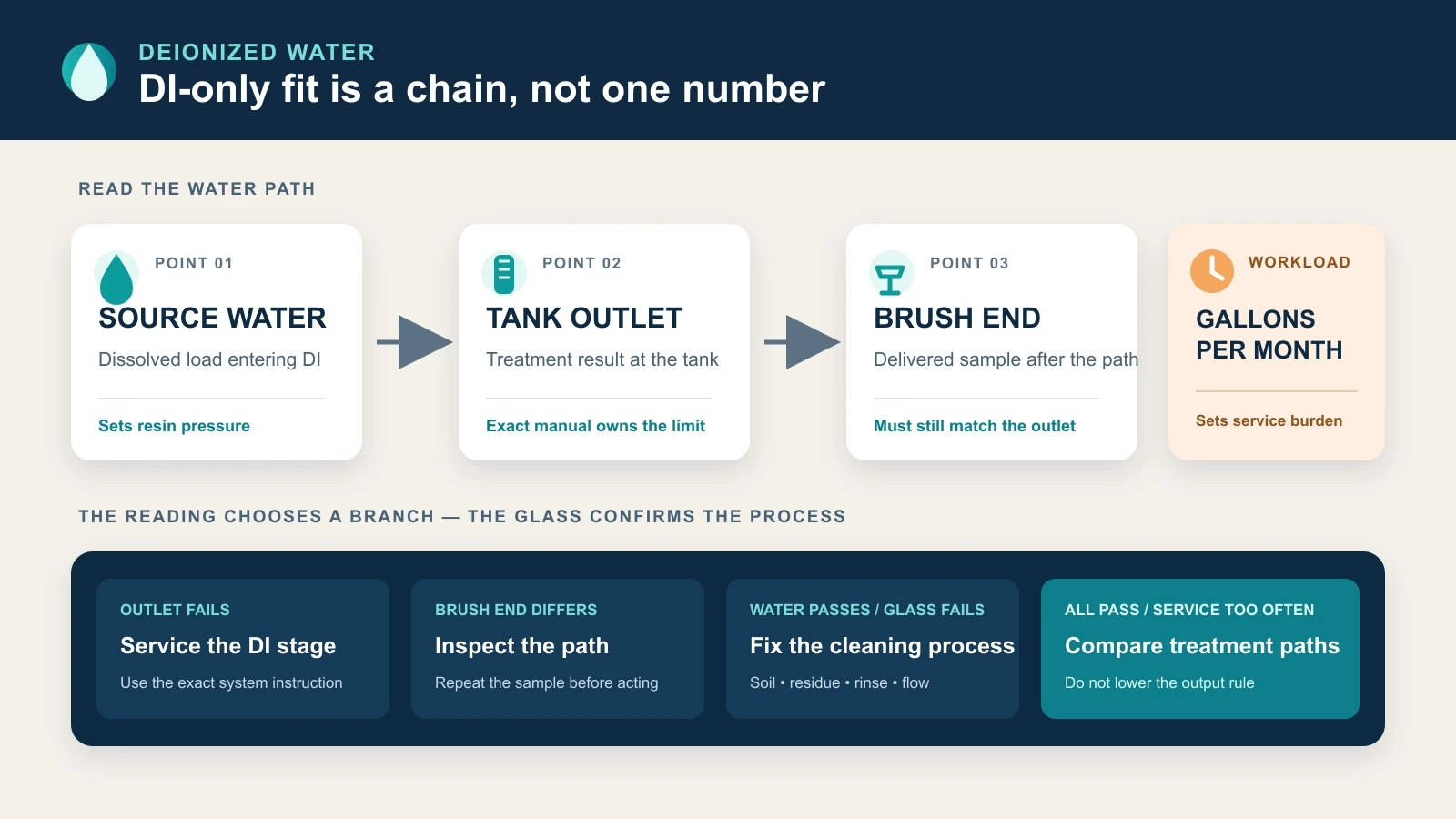
Deionized Water Window Cleaning: When DI-Only Fits the Workload
Separate what a TDS meter proves from what it cannot, then use source water, monthly gallons and outlet-to-brush readings to decide whether…
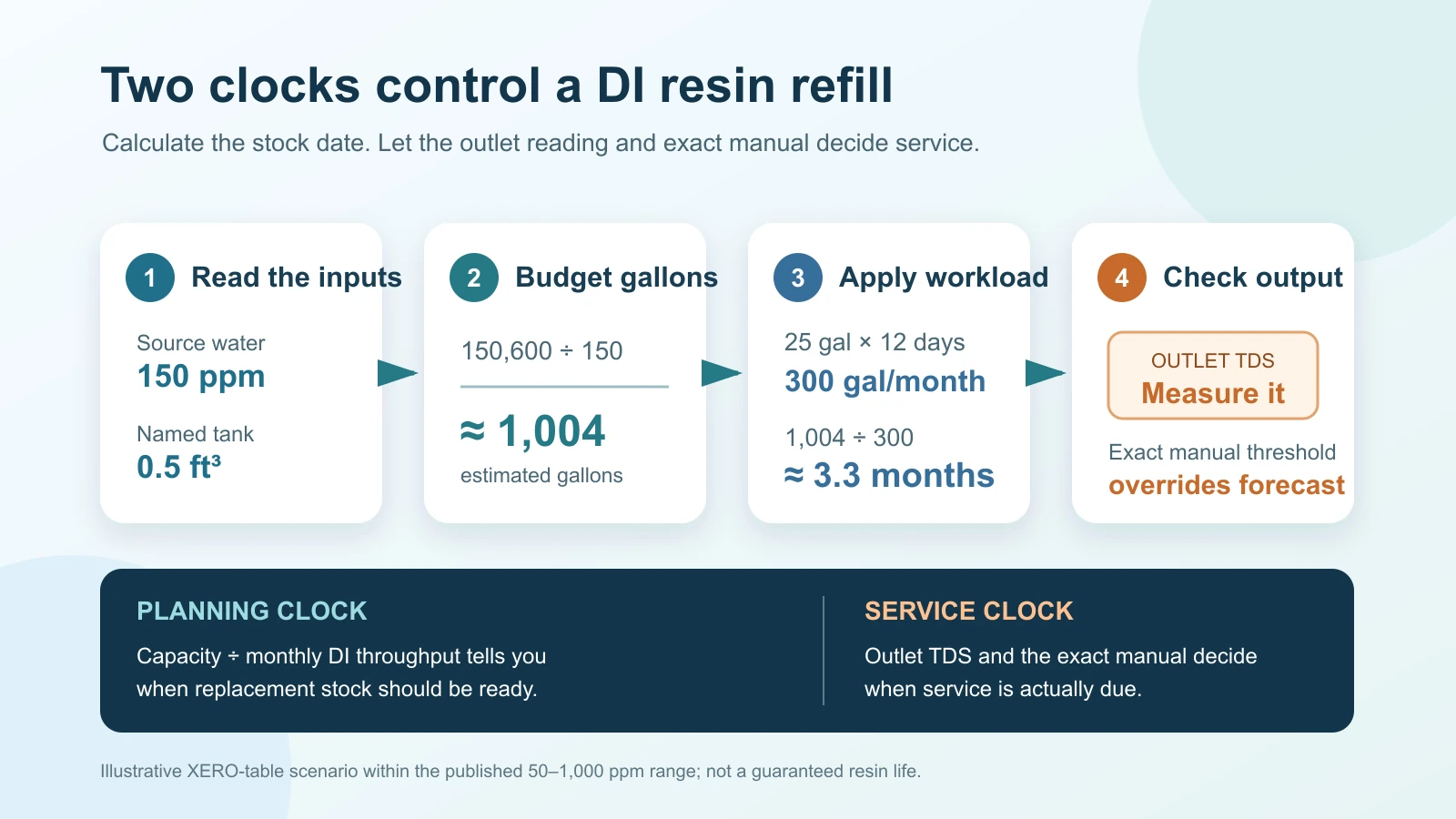
DI Tank Resin Life: Estimate Service Interval Before a Refill
Use source-water TDS, 0.5- or 1.0-ft³ capacity and monthly gallons to estimate a refill interval—then let measured output TDS override the forecast.
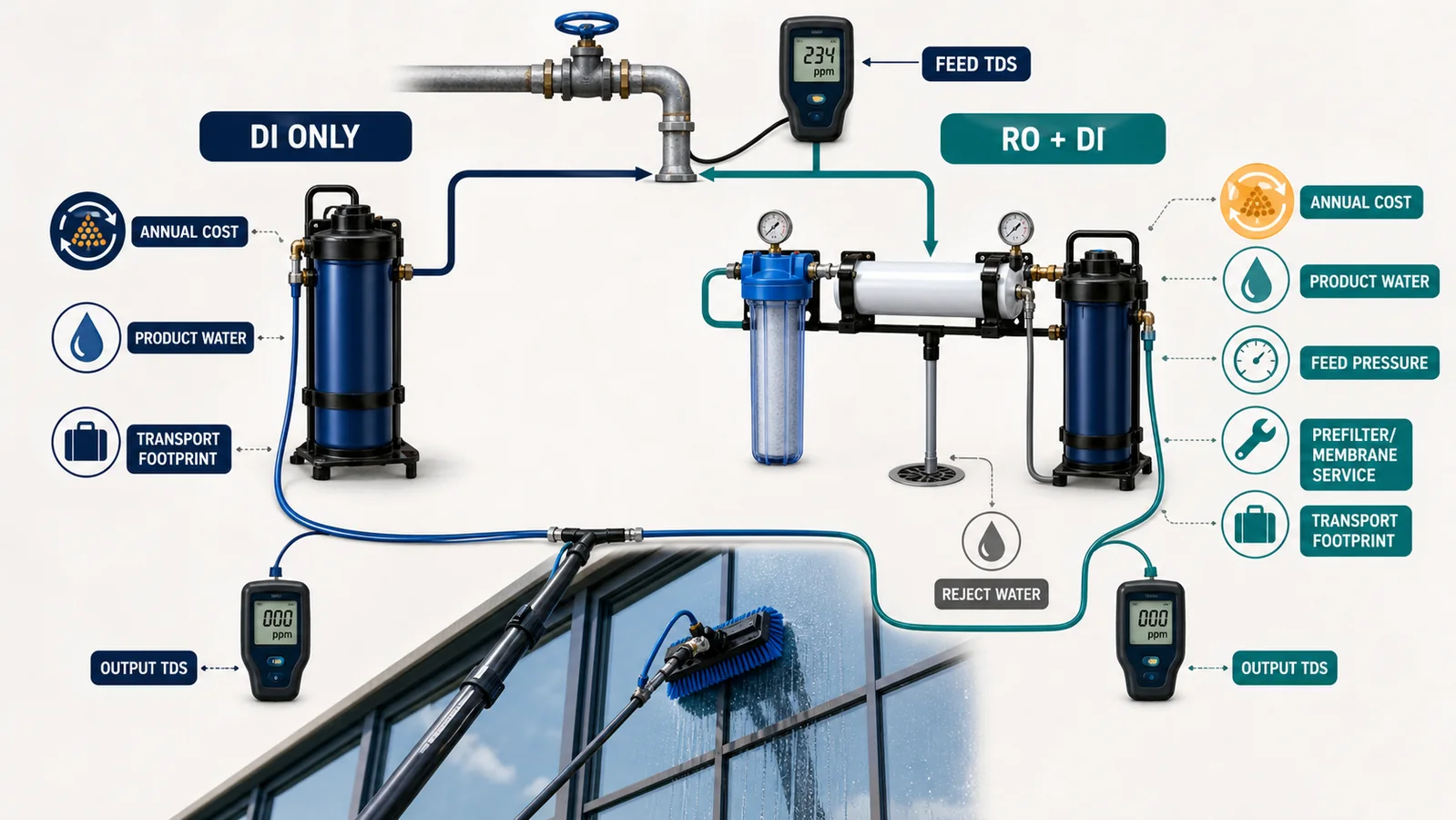
Reverse Osmosis for Window Cleaning: When RO Before DI Pays
Compare DI-only with RO/DI using feed TDS, measured resin yield, product-water demand, pressure, reject water and full annual operating cost.