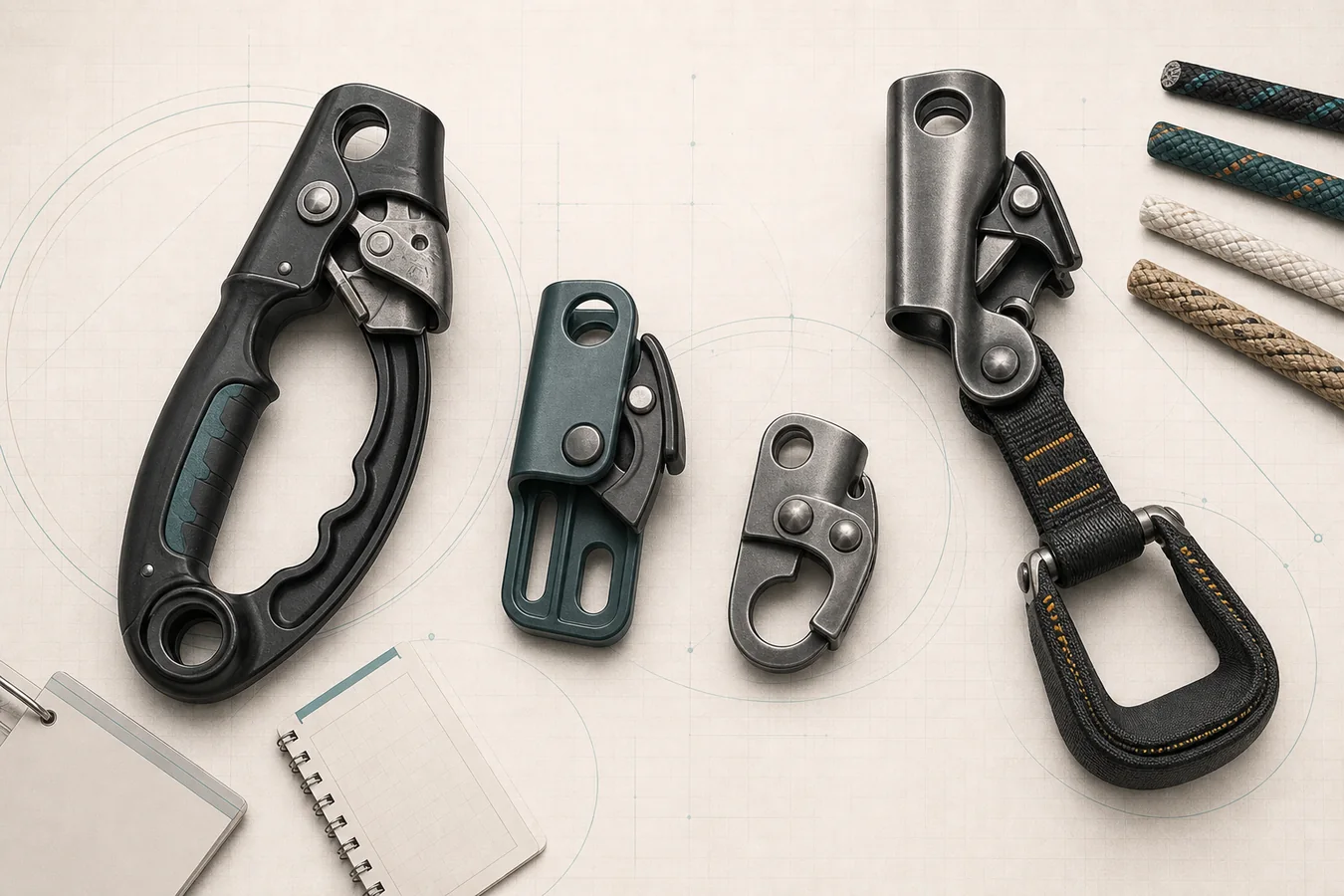
A rope-ascender catalog can put four different jobs in one row. A handle, chest clamp, compact clamp and foot device may all touch the same broad product category, but they do not own the same place in an authorized system.
The fastest useful answer is to name the required role before opening a product page. Is the planned device a handled ascender, a chest ascender, a compact clamp for a specifically authorized ascent or progress-capture role, or foot assistance used with other named equipment? Then preserve the exact manufacturer, model, region and current instructions; the named rope and its construction, diameter and condition; the left/right or size variant; and the manufacturer’s PPE or non-PPE statement.
If the plan contains only “buy an ascender,” it is not ready for a SKU. The site’s roof-harness and complete-system decision owns the earlier work-method and system gate. This page starts after that owner has identified an ascent or haul/rescue need; it does not create the plan from a shopping category.
The first unresolved role, rope or protection field should cancel the comparison. Price, weight and a familiar cam shape become useful only after those records agree.
Four shapes in one category do four different jobs
The product noun is too broad to be the first order line. Current manufacturer pages separate at least these roles:
- Handled ascender: a handled rope clamp whose stated role is rope ascent. The purchase record still needs the exact side variant and every system interface named by the current instructions.
- Chest ascender: a ventral or chest rope clamp. Its body position is part of the device’s identity; it is not a smaller handled model.
- Compact clamp: a small rope clamp may carry more than one manufacturer-stated role. Petzl’s BASIC, for example, is described for fixed-rope ascent or progress capture in a hauling system. The authorized plan must select the relevant role before the model enters comparison.
- Foot ascender: an assistance device used with other named rope clamps. It does not inherit the chest, handled, backup or fall-protection job because it shares the word “ascender.”
Those roles can appear beside each other on a specialist rope-ascender category. That is useful commercial context, not compatibility evidence. A category page cannot know the buyer’s rope, harness interfaces, backup system, training record or rescue owner.
The role should therefore be written as a sentence supplied by the responsible system owner: “This authorized plan requires this device to perform this named function.” If that sentence changes when a different product is clicked, the catalog is choosing the work plan backward.
The rope ranges overlap; the product contracts do not
Current Petzl pages make the overlap visible without making the models interchangeable.
| Current model | Manufacturer-stated role | Rope compatibility | Variant or status field that must stay attached |
|---|---|---|---|
| ASCENSION | Handled rope clamp for rope ascents | 8-13 mm | Left- or right-handed; 165 g; page lists model-specific certifications |
| CROLL | Chest rope clamp | S: 8-11 mm; L: 8-13 mm | S is 85 g; L is 140 g; size changes the rope channel and exact reference |
| BASIC | Compact clamp for fixed-rope ascent or progress capture in a hauling system | 8-11 mm | 85 g; the selected role and current instruction set remain separate fields |
| PANTIN CLICK | Foot ascender used with named companion clamps | 7-13 mm | Right- or left-foot; 120 g; manufacturer explicitly states it is not PPE |
These are current US model facts, not a ranking. A 10 mm rope falls inside all four published ranges, yet the table still contains four different roles, three kinds of variant field and one explicit non-PPE boundary. Diameter removes one possible rejection; it does not choose the product.
The same caution applies to certification strings. Preserve the exact standard and model wording from the current page or technical notice, but do not turn a familiar standard number into permission for an unrecorded system, interface or job. The Petzl Professional Catalog 2026 is useful for keeping model families and references distinct. It is not an approval of a mixed cart.
Rope identity also extends beyond millimeters. Manufacturer, model or family, construction and current condition remain part of the record. A rope that is contaminated, glazed, cut, abraded, heat affected or of unknown history does not become acceptable because its nominal diameter sits inside the table. The site’s rope-protector decision owns the separate contact and edge threat when an approved rope may meet a building surface.
Side and size belong on the purchase record
Variant names are easy to treat as fulfillment details. Here they change the exact object being requested.
ASCENSION currently has left- and right-handed references. PANTIN CLICK has right- and left-foot references. CROLL uses S and L references with different published rope ranges and weights. BASIC has one current model reference on the page reviewed. None of those naming systems transfers to the others.
This is why “Petzl ascender for 11 mm rope” is not a usable line item. It omits whether the owner asked for a handled, chest, compact or foot role; it omits side or size; and it conceals whether the selected product is presented as PPE, non-PPE or a device with a role that still needs another system owner.
Record the manufacturer’s exact reference or SKU only after the role, region and current instructions agree. A retailer may abbreviate a model name, combine variants on one page or retain an older image. The manufacturer’s current page and technical notice own the model meaning; the responsible employer or qualified owner owns its place in the system. If the cart and those owners describe different variants, keep the order on hold rather than “fixing” the difference after delivery.
Color is a useful example of a non-decision field. ASCENSION’s current variants include color options, but a color match cannot repair a wrong side, role, rope record or system interface. The purchase record should keep identity fields because they identify the exact object, while refusing to let an easy visual match overrule a functional mismatch.
The foot ascender reveals the category’s biggest mistake
Petzl’s current PANTIN CLICK page says the foot device is used with CROLL, ASCENSION or ASCENTREE rope clamps and states plainly that the PANTIN is not an item of PPE. That one sentence is more important to the purchase than its broad 7-13 mm rope range.
The correct result is not “foot ascenders are unsafe.” It is narrower: this product owns a foot-assist role under its current manufacturer scope, and it cannot be assigned a PPE, backup or fall-arrest role that the manufacturer does not give it. The selected system still needs its own working line, harness and connectors, along with the independent backup or fall-protection owner required by that authorized plan.
Do not transfer the word “backup” from another compact clamp or generic guide. When the plan calls for a rope grab or moving fall-arrest component, the rope-grab, lifeline and lanyard decision owns that exact compatibility record. Likewise, an ascender does not reverse roles and become a descent-control device; the rope-descender decision keeps the descent model, rope and control function under their own owners.
This boundary also protects purchasing language. “Add a foot ascender for efficiency” is incomplete because it still needs the authorized companion system, exact foot variant, rope identity and current instructions. “Use this foot ascender as the backup” is a product-role conflict and should be rejected, not polished into a softer recommendation.
Let one role card cancel the wrong products
A compact purchase record should work by subtraction. Write these fields before comparing weight or price:
- Authorized role and owner: the exact ascent, chest, compact progress-capture or foot-assist function stated by the responsible plan.
- Exact device identity: manufacturer, model/reference, region and current instructions.
- Exact rope record: manufacturer/family, construction, diameter and current condition.
- Variant and status: left/right hand, left/right foot or S/L size as applicable; exact PPE/certification or non-PPE wording.
- System remainder: harness, lanyard or foot-loop and connectors as applicable; working line; independent backup or fall-protection system; anchorage; inspection/history; training; rescue and tool control.
An exact handled candidate survives only when the authorized plan asks for that handled role and the model, side, rope and interfaces all agree. An exact chest or compact candidate survives only under its recorded chest, ascent or progress-capture function and exact size/range. A foot-assist-only candidate survives only as the companion role its current owner states.
Reject a product when the role, rope range, model, side/size or PPE status conflicts with the record. Hold the purchase when the plan owner, rope identity, current instructions, system interfaces, inspection history, training or rescue responsibility is unknown. Neither outcome is a failed comparison; both prevent a plausible-looking component from inventing the missing system around itself.
Attach the surviving role card to the professional window-cleaning equipment plan. If the line item can no longer be described without “generic,” “equivalent,” “either side” or “should fit,” the useful decision is still a rejection or a named-owner hold.