
A pure-water system should be chosen from the feed water and the work month, not from the number of filter stages printed on a product page. A DI-only path can be compact and simple, but its operating cost changes sharply with source-water TDS and water use. RO/DI adds equipment and setup, yet may reduce the load placed on resin when the route demands more water.
Use this section to keep the full chain visible: prefiltration, membrane or DI capacity, output rate, water-quality monitoring, hose and pole demand, refill access, transport and planned maintenance. Published capacity tables are useful starting points, not guarantees of field life.
Begin with the guide or calculator that answers the largest unknown. Then verify the exact manufacturer limits and replacement schedule for the configuration you are considering.
Pure-water system guides
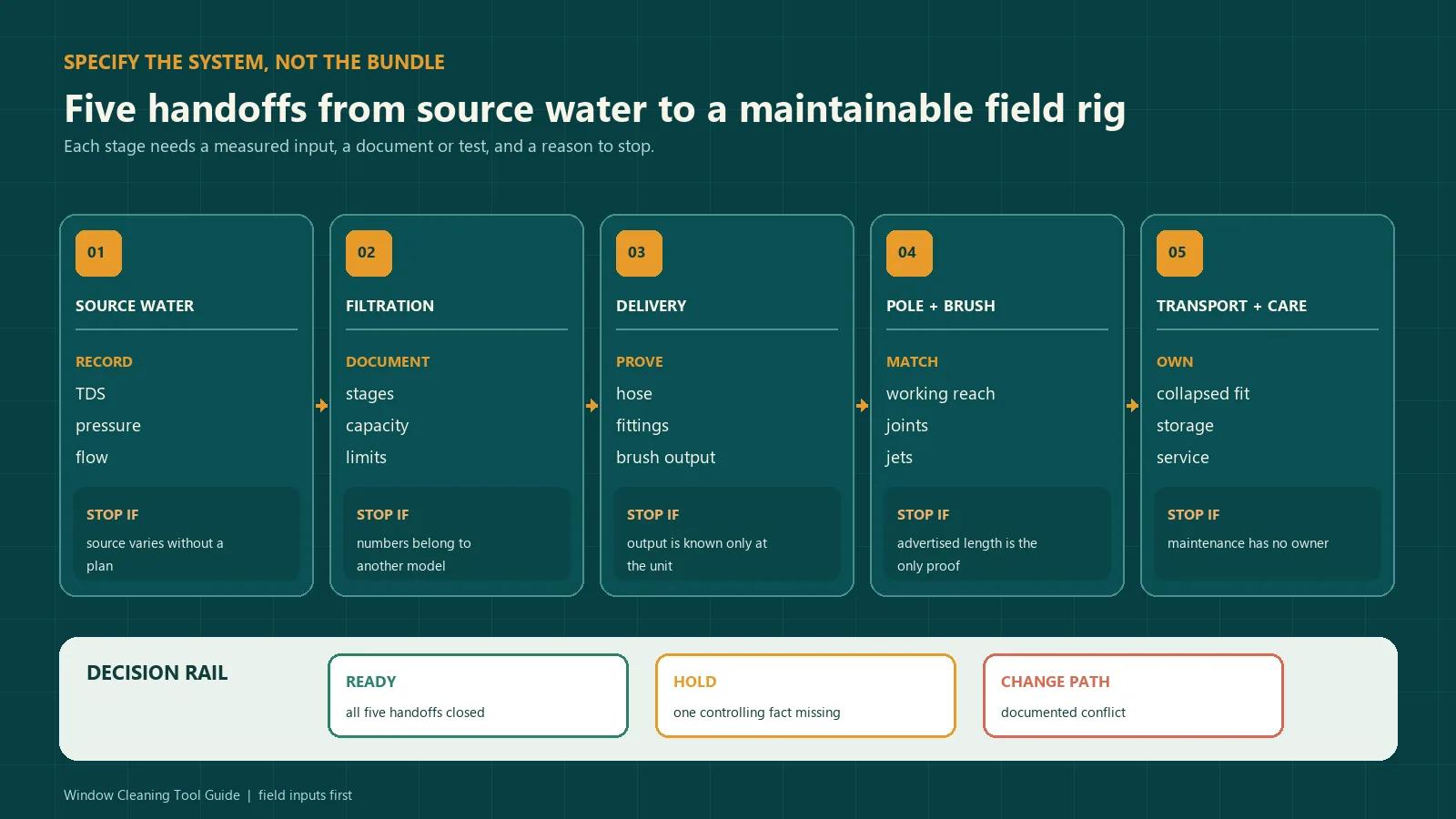
Water-Fed Pole System Guide: Match Filtration, Flow and Reach
Use source-water TDS, daily gallons, brush-end output, working reach and transport limits to specify a complete water-fed pole system before buying.
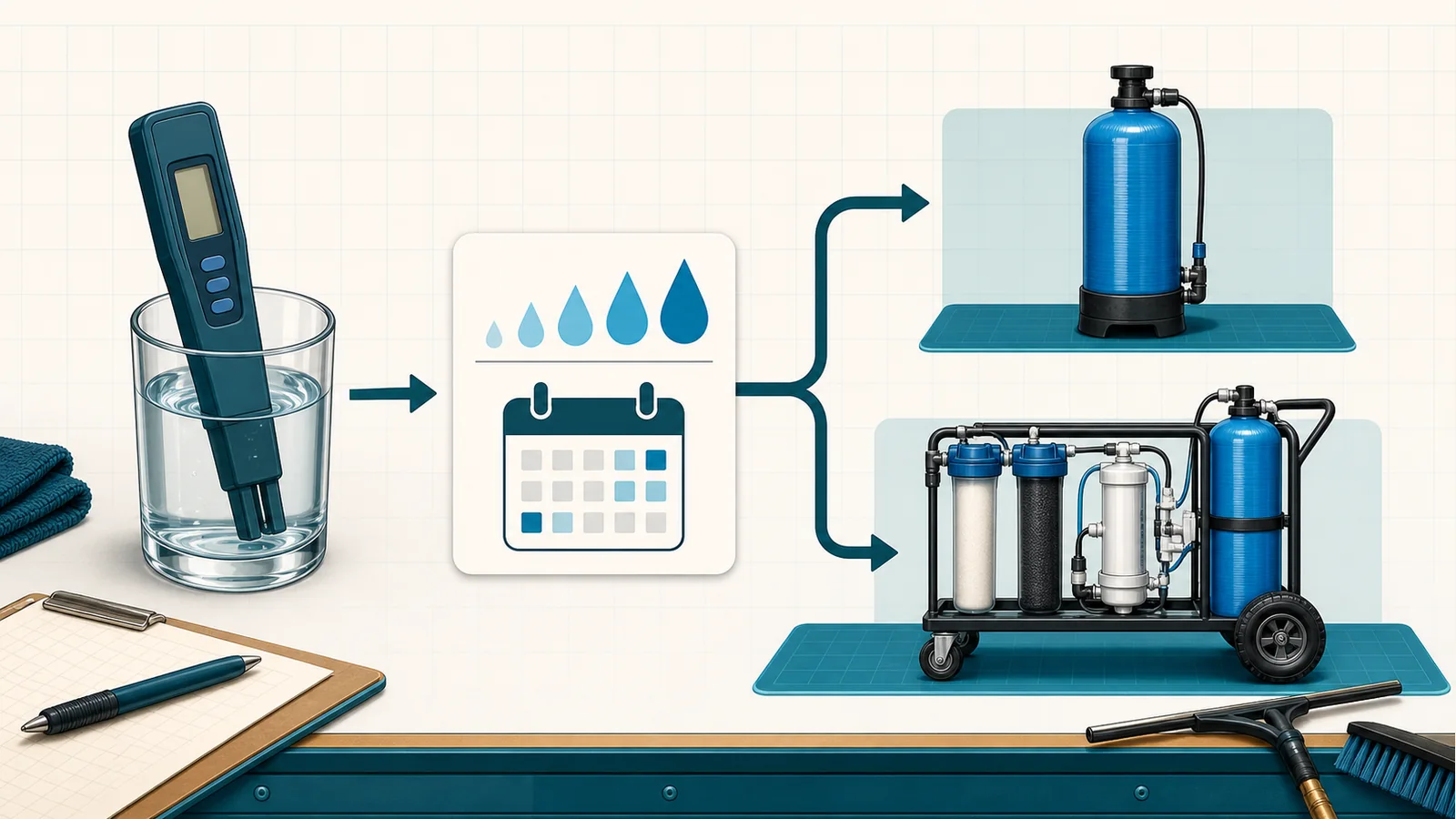
Pure Water Window Cleaning System Selector: DI or RO/DI?
Enter source-water TDS, DI vessel size and monthly demand to estimate capacity, see the arithmetic and decide when RO/DI deserves comparison.
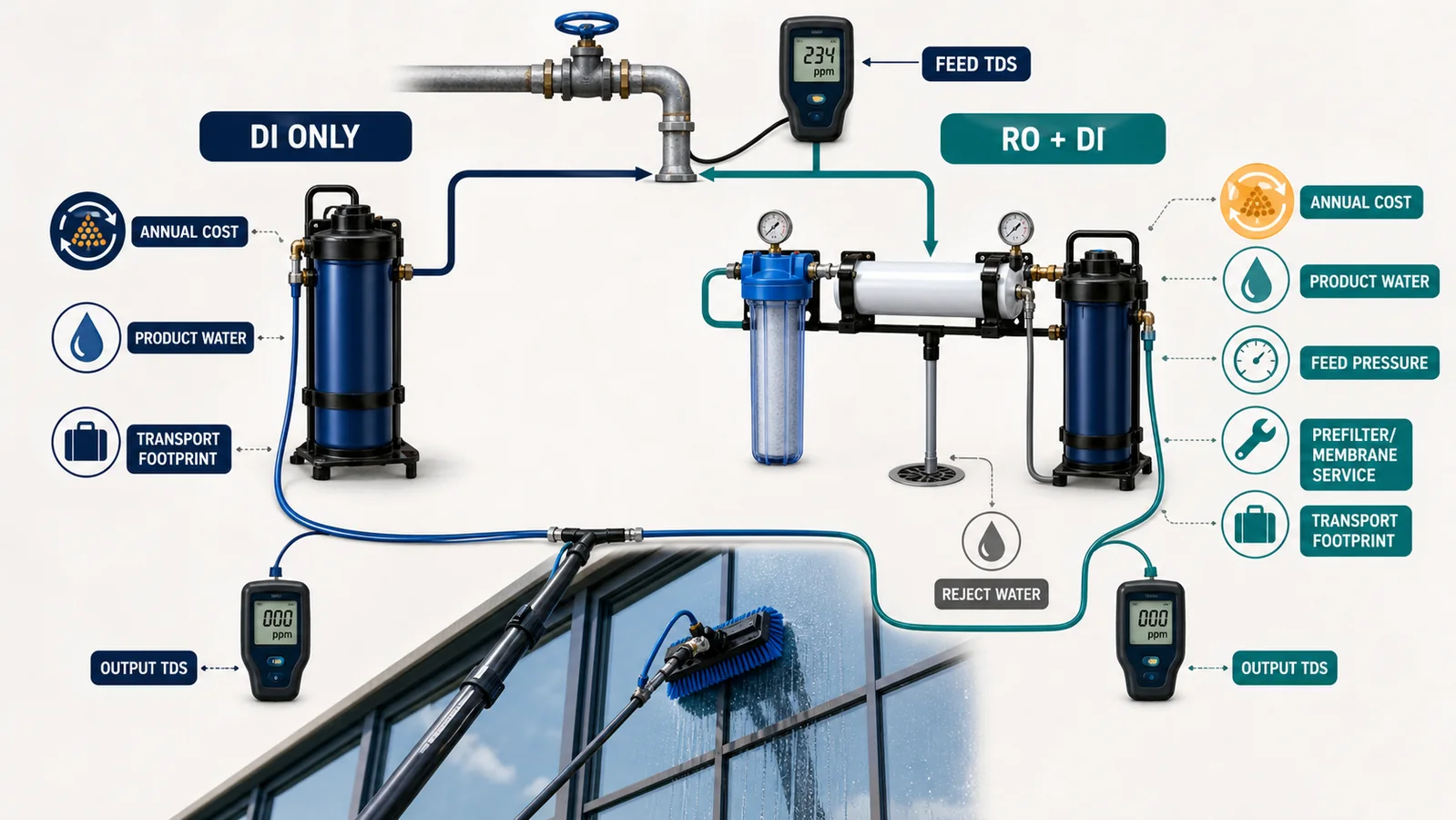
Reverse Osmosis for Window Cleaning: When RO Before DI Pays
Compare DI-only with RO/DI using feed TDS, measured resin yield, product-water demand, pressure, reject water and full annual operating cost.
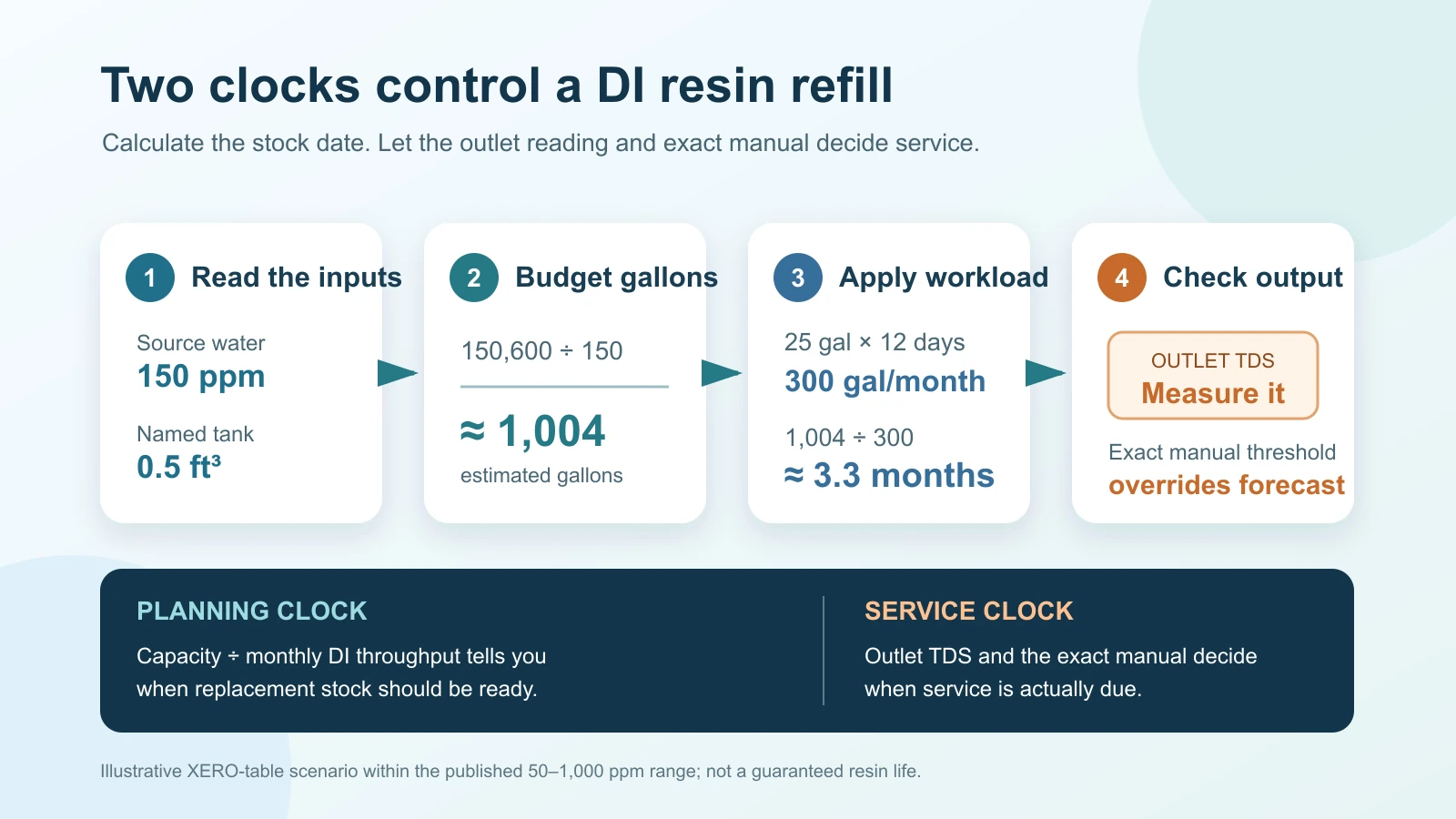
DI Tank Resin Life: Estimate Service Interval Before a Refill
Use source-water TDS, 0.5- or 1.0-ft³ capacity and monthly gallons to estimate a refill interval—then let measured output TDS override the forecast.
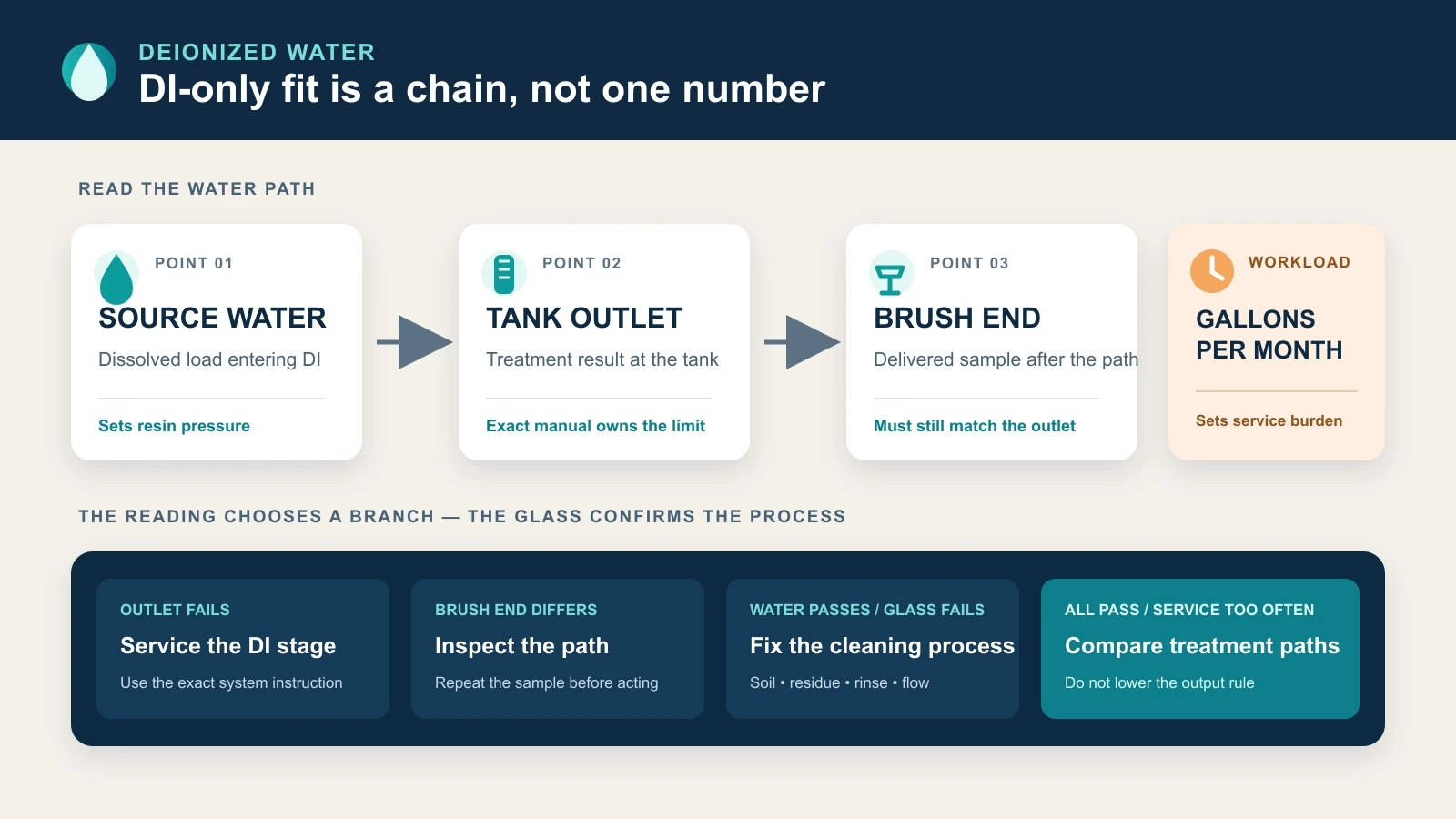
Deionized Water Window Cleaning: When DI-Only Fits the Workload
Separate what a TDS meter proves from what it cannot, then use source water, monthly gallons and outlet-to-brush readings to decide whether DI-only fits.
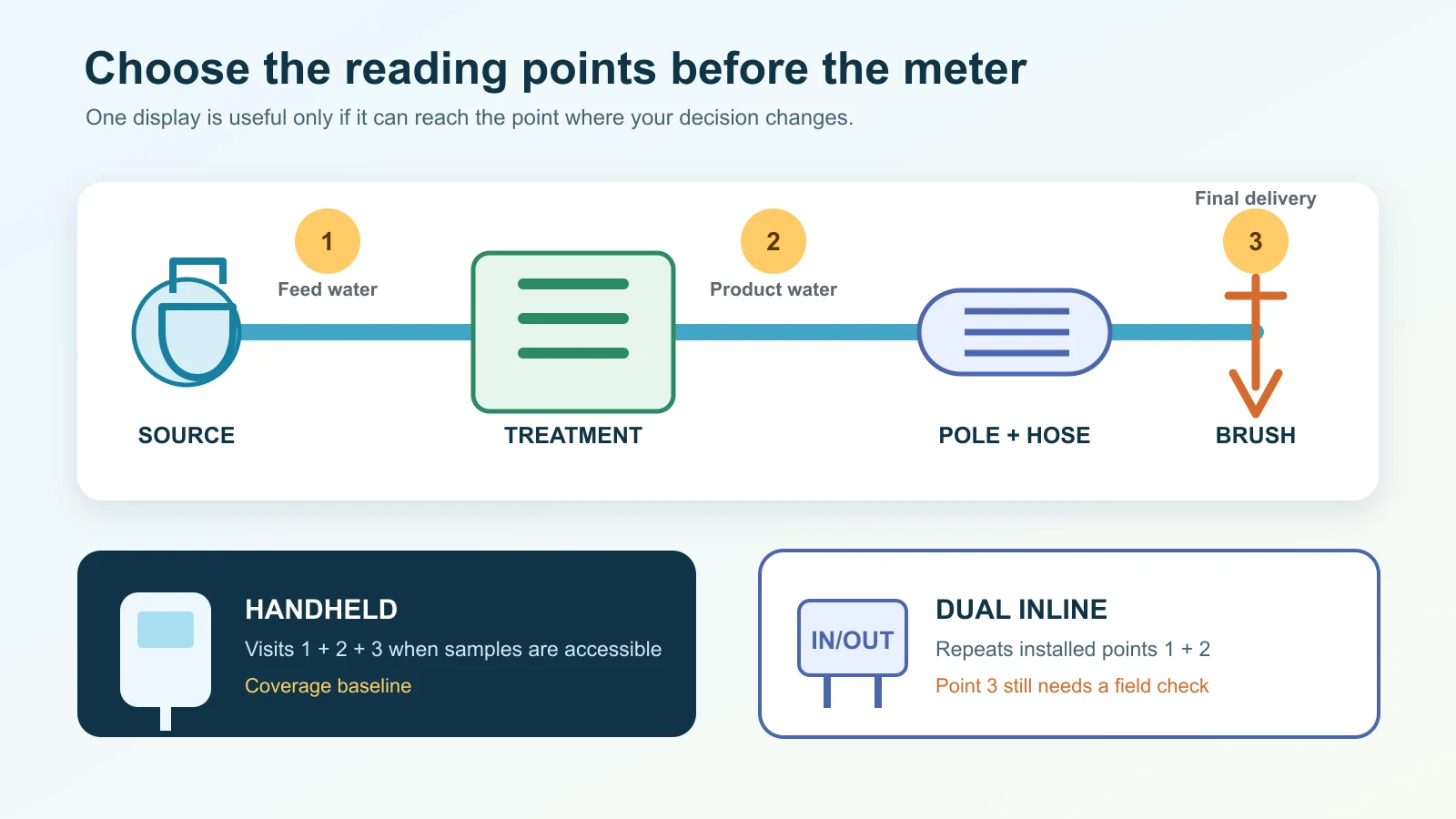
Choose a TDS Meter for Window Cleaning by Measurement Point
Map feed, product-water and brush-end readings before choosing a handheld or inline TDS meter. Compare low-end resolution, scale and calibration.
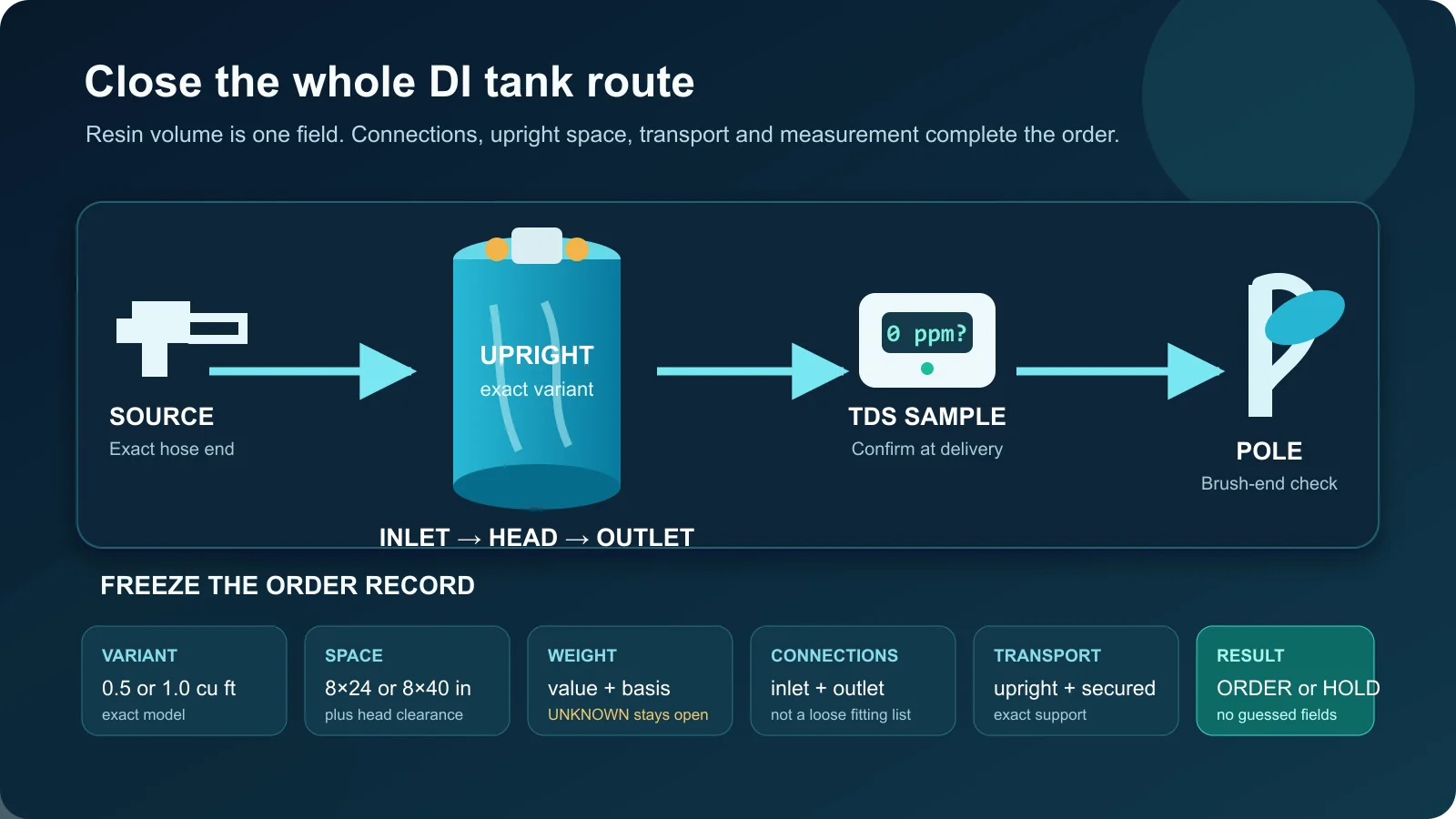
Specify the Whole Deionized Water Tank Before You Order
Choose a DI tank by confirming the system path, exact vessel, fittings, upright space and route transport—without mistaking volume for output.
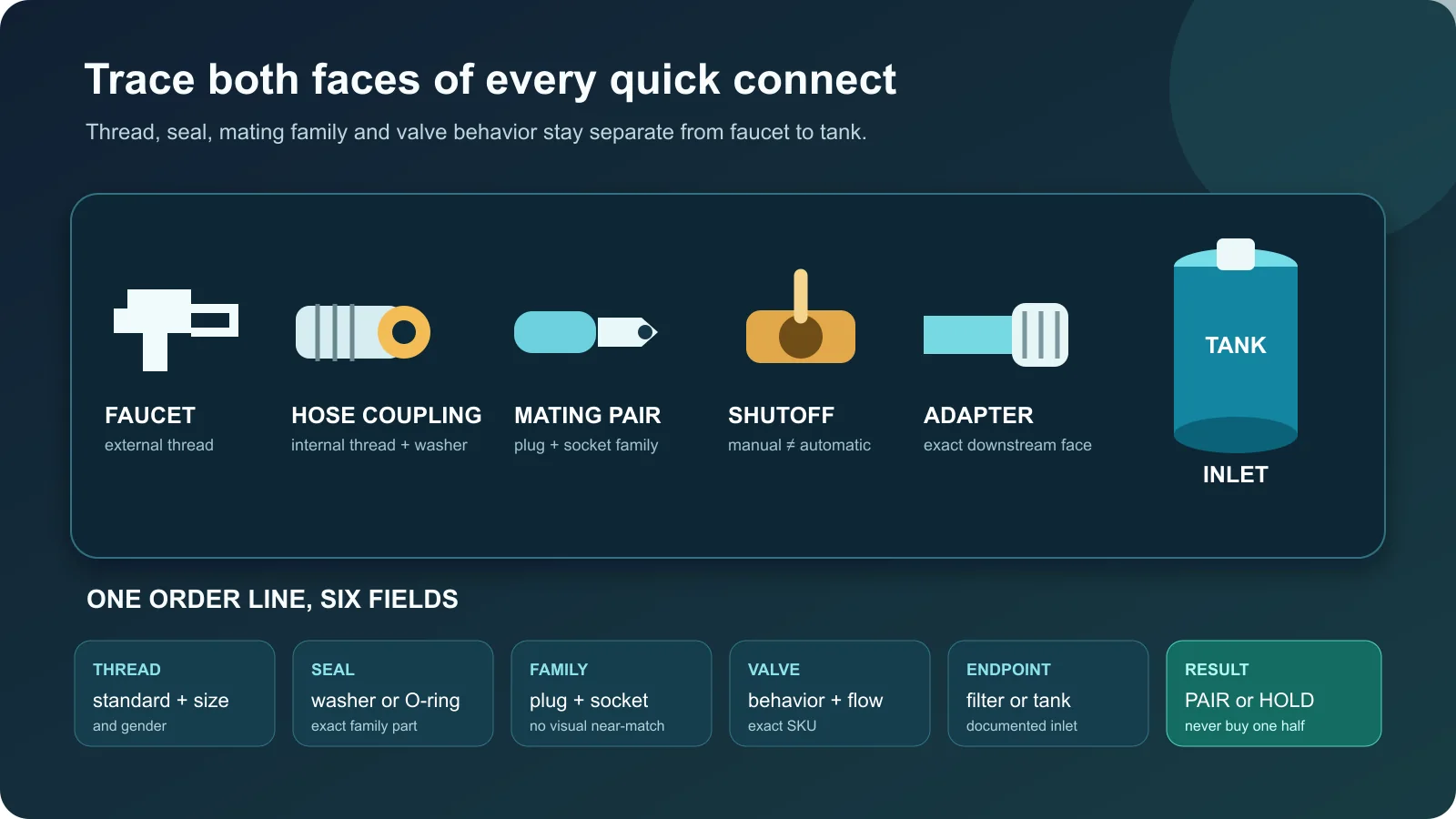
Trace Garden Hose Quick Connect Fittings From Faucet to Tank
Record thread standard, gender, seal, mating family and valve behavior so a garden-hose quick-connect chain reaches the tank without guessed adapters.
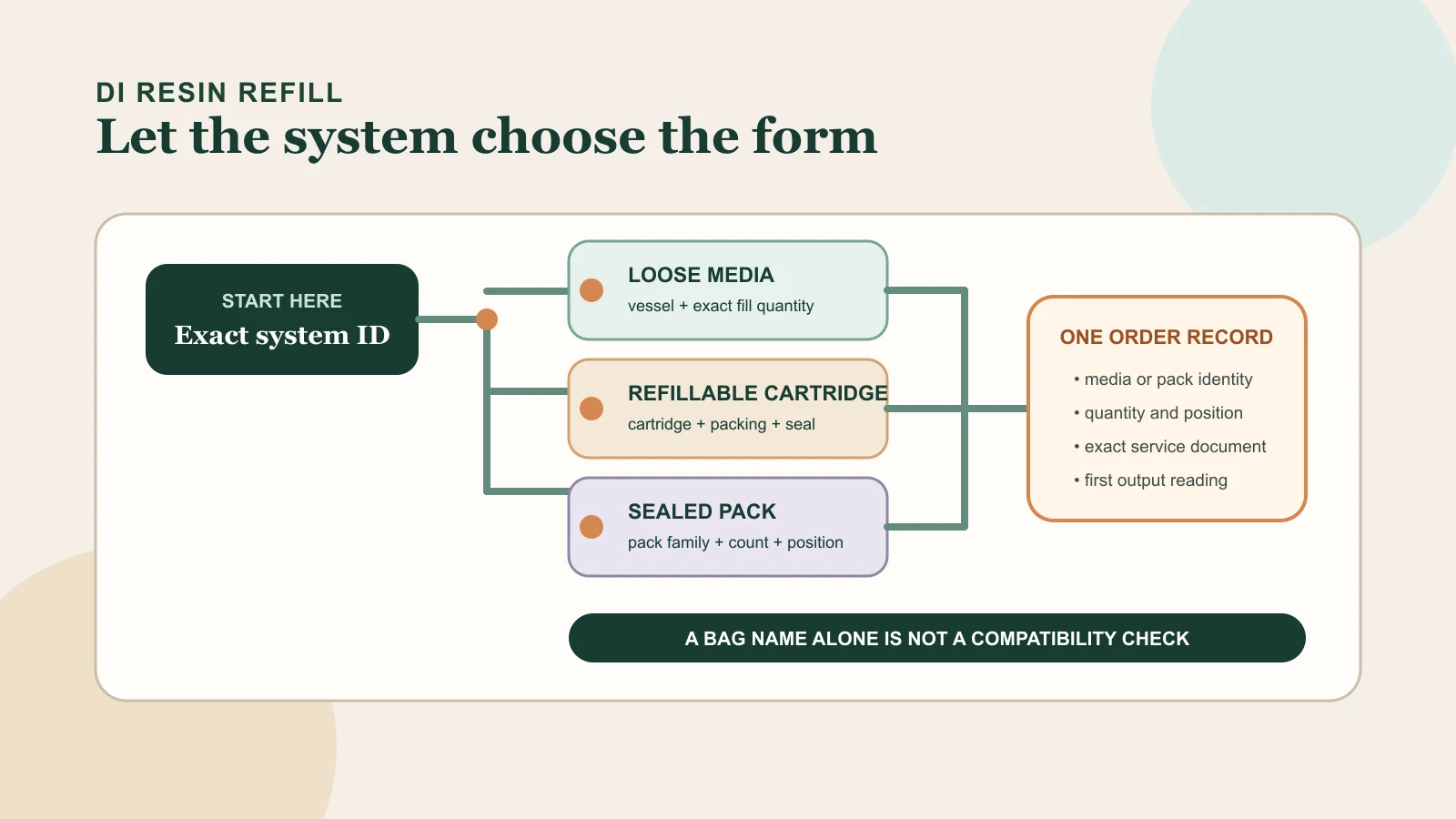
DI Resin Refill Starts With the Vessel, Not the Bag
Match loose DI resin, a refillable cartridge or a sealed pack to the exact system, then close quantity, service instructions and the first output reading.
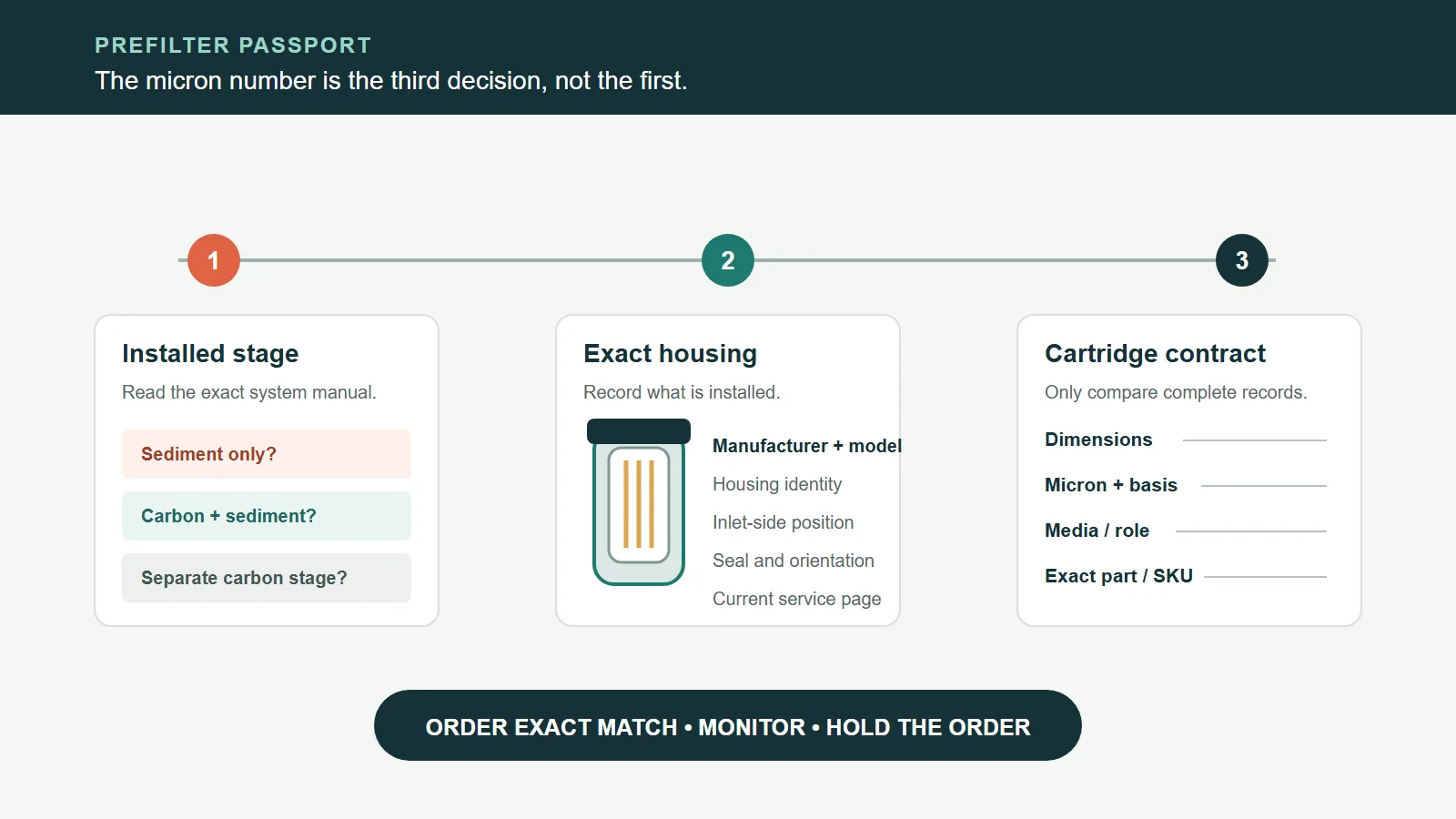
Sediment Filter Cartridge: Match the Housing Before the Micron Rating
Confirm the system stage, housing, cartridge size, micron basis and orientation before replacing a sediment filter in a pure-water window-cleaning setup.
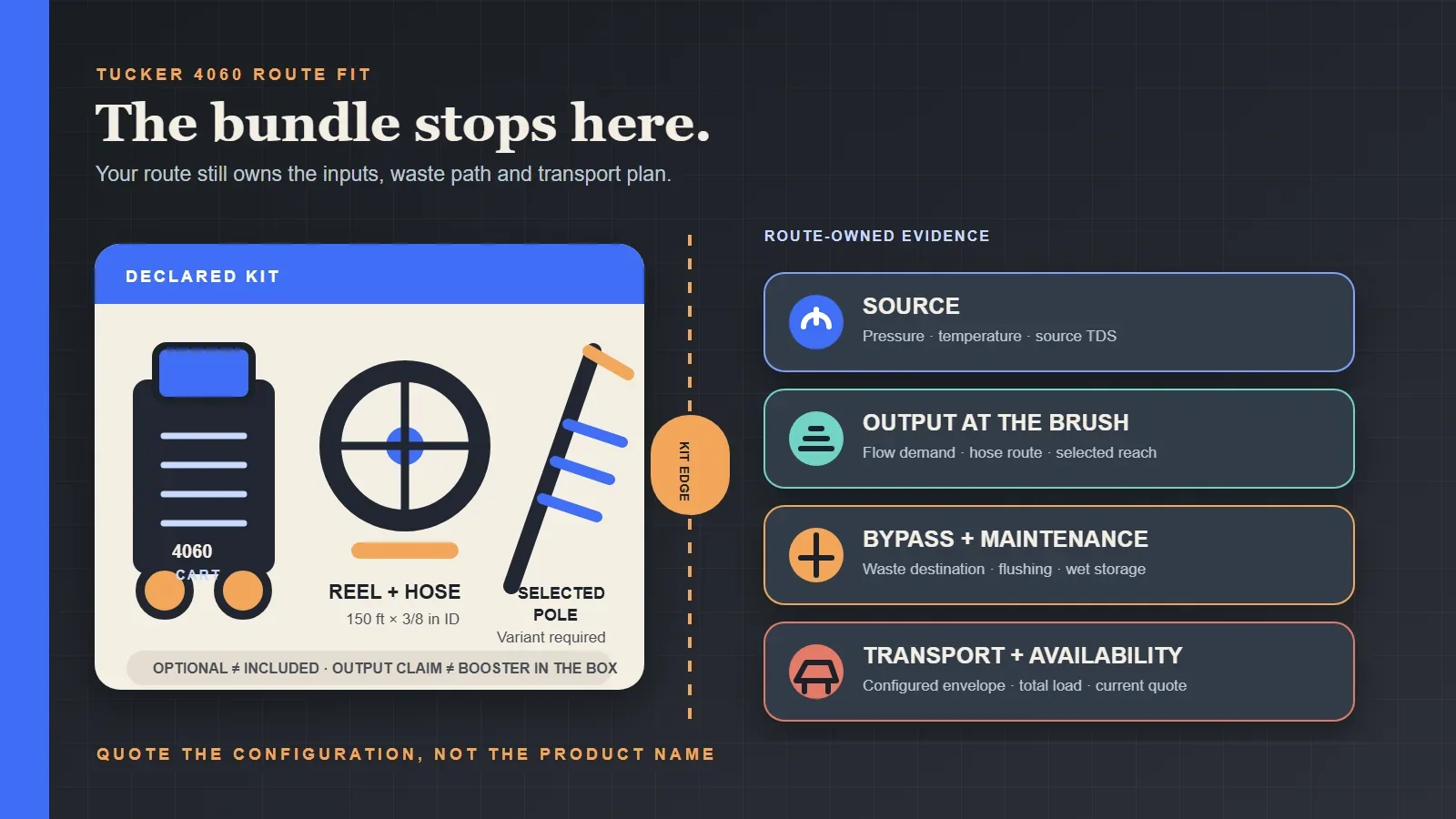
Does the Tucker Water-Fed Pole 4-Stage Kit Fit Your Route?
Check the Tucker 4060 kit’s pressure, temperature, output, pole, hose, waste route, transport and maintenance fields before ordering.
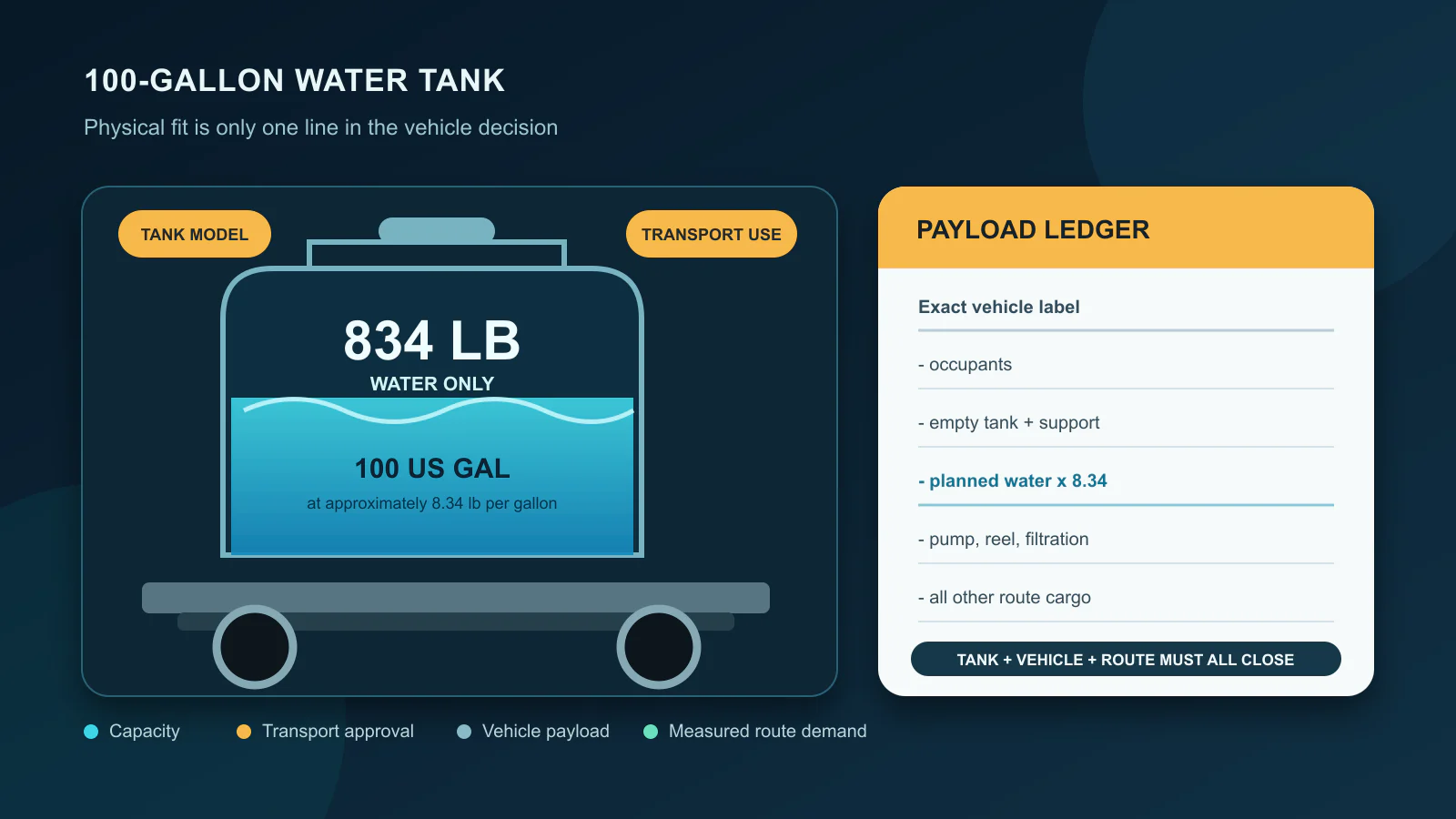
Before You Load a 100 Gallon Water Tank, Check the Payload Label
Use tank specs, the vehicle payload label and measured route demand to check transport, support, venting and delivery before carrying 100 gallons.