
A starter kit is useful only when it covers a defined kind of work. A bundle built for traditional storefront glass solves a different problem from a pure-water setup for upper residential windows. Counting pieces can hide the expensive omissions: compatible handles and channels, replacement rubber, towels, safe ground-based reach, hose fittings, water testing or a way to carry the system between jobs.
Use this section to build from the job outward. Identify the surface, access method, water path, production target and routine replacements first. Then check which tools a bundle genuinely replaces and which items still have to be bought separately.
The goal is not the largest kit. It is a compact, serviceable setup whose parts fit one another and whose missing items are known before the first job.
Starter tool guides
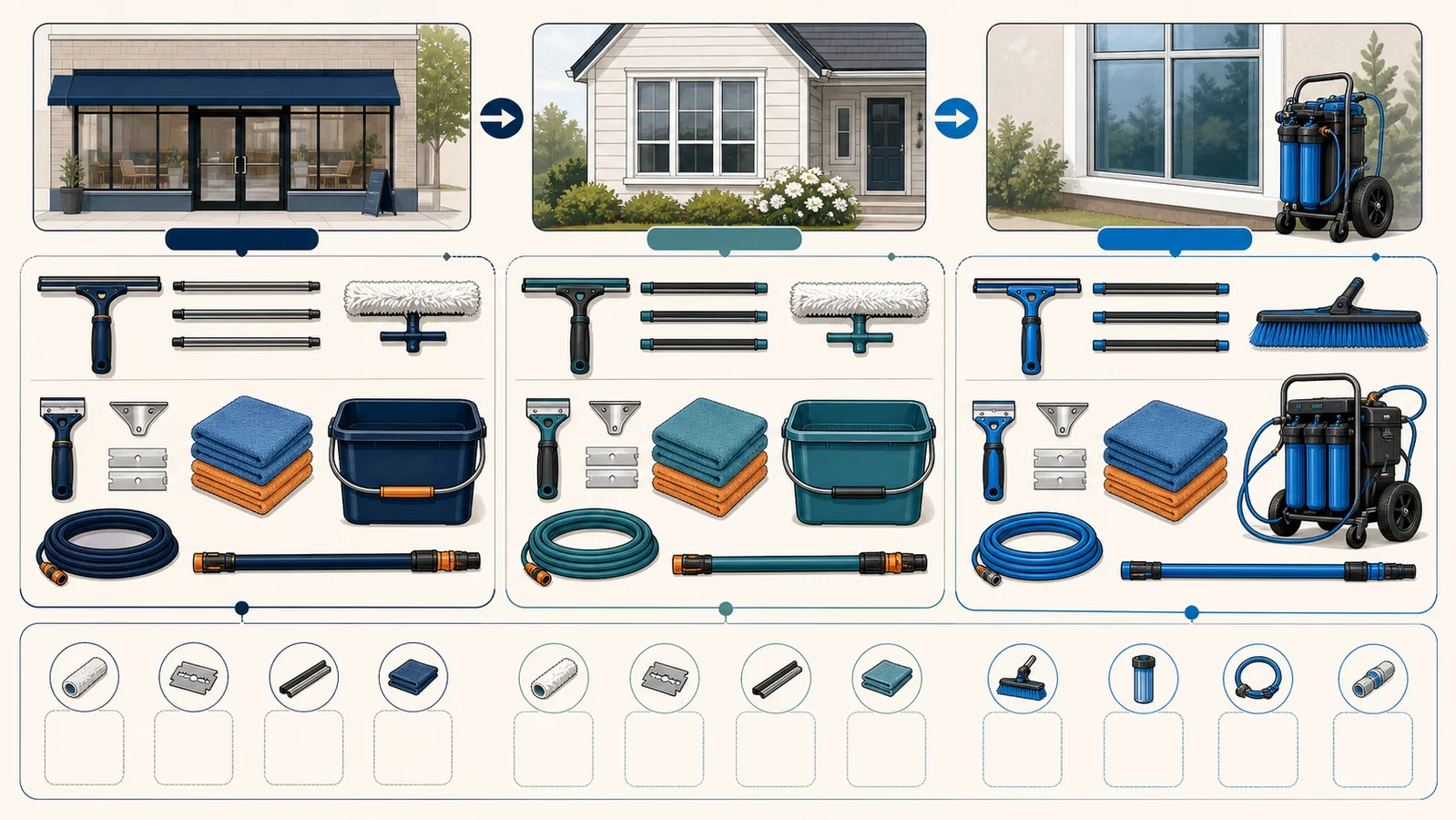
Professional Window Cleaning Tools: Build a Job-Ready Setup
Build a job-ready window cleaning tool stack by storefront, first-clean and pure-water work; expose consumables, replacements and access gaps kits omit.
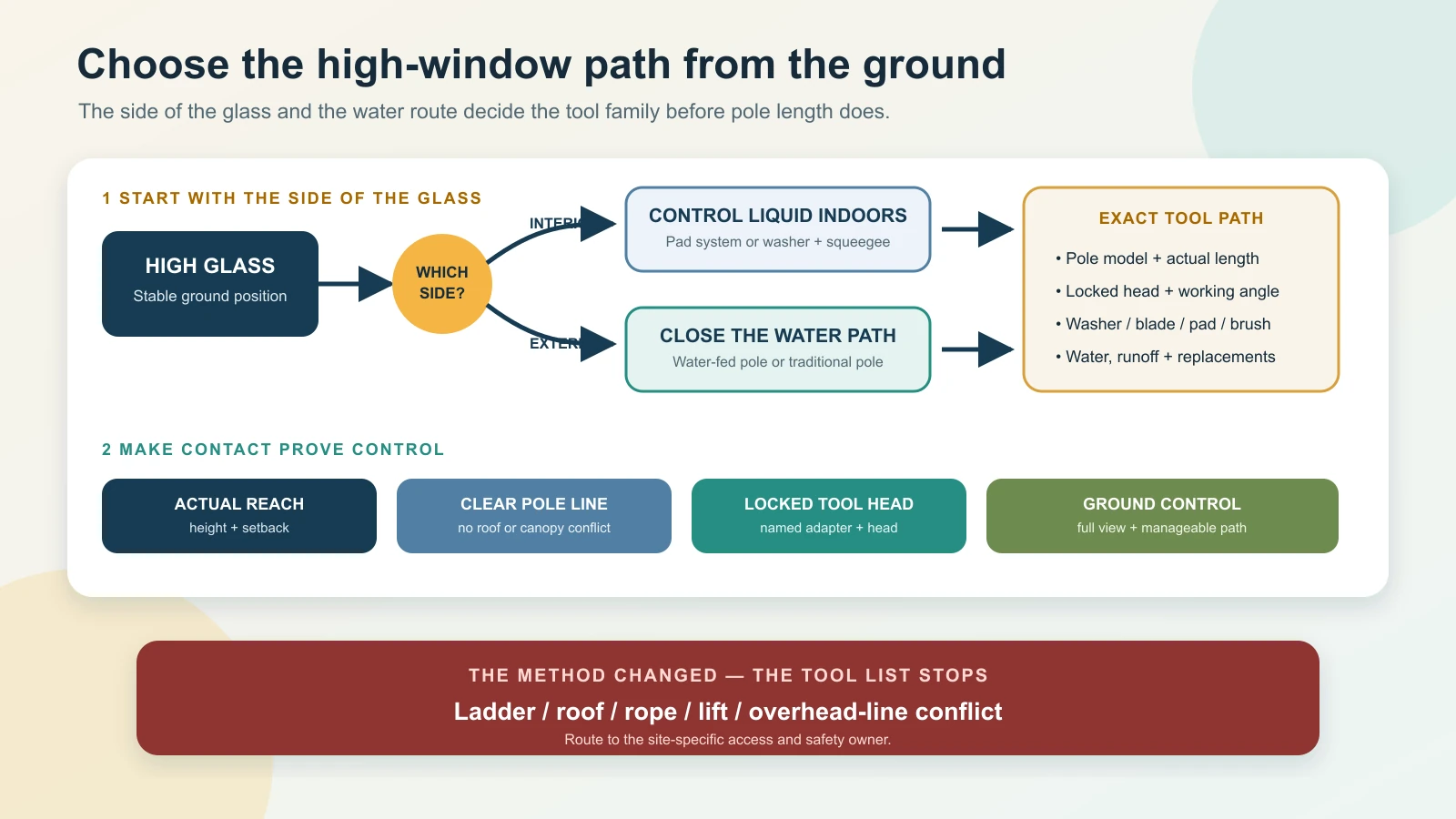
Window Cleaning Tools for High Windows: Ground-Based Options First
Choose an indoor pad, washer-and-squeegee pole or water-fed system by glass side, reach, obstruction and water route—then know when ground access ends.
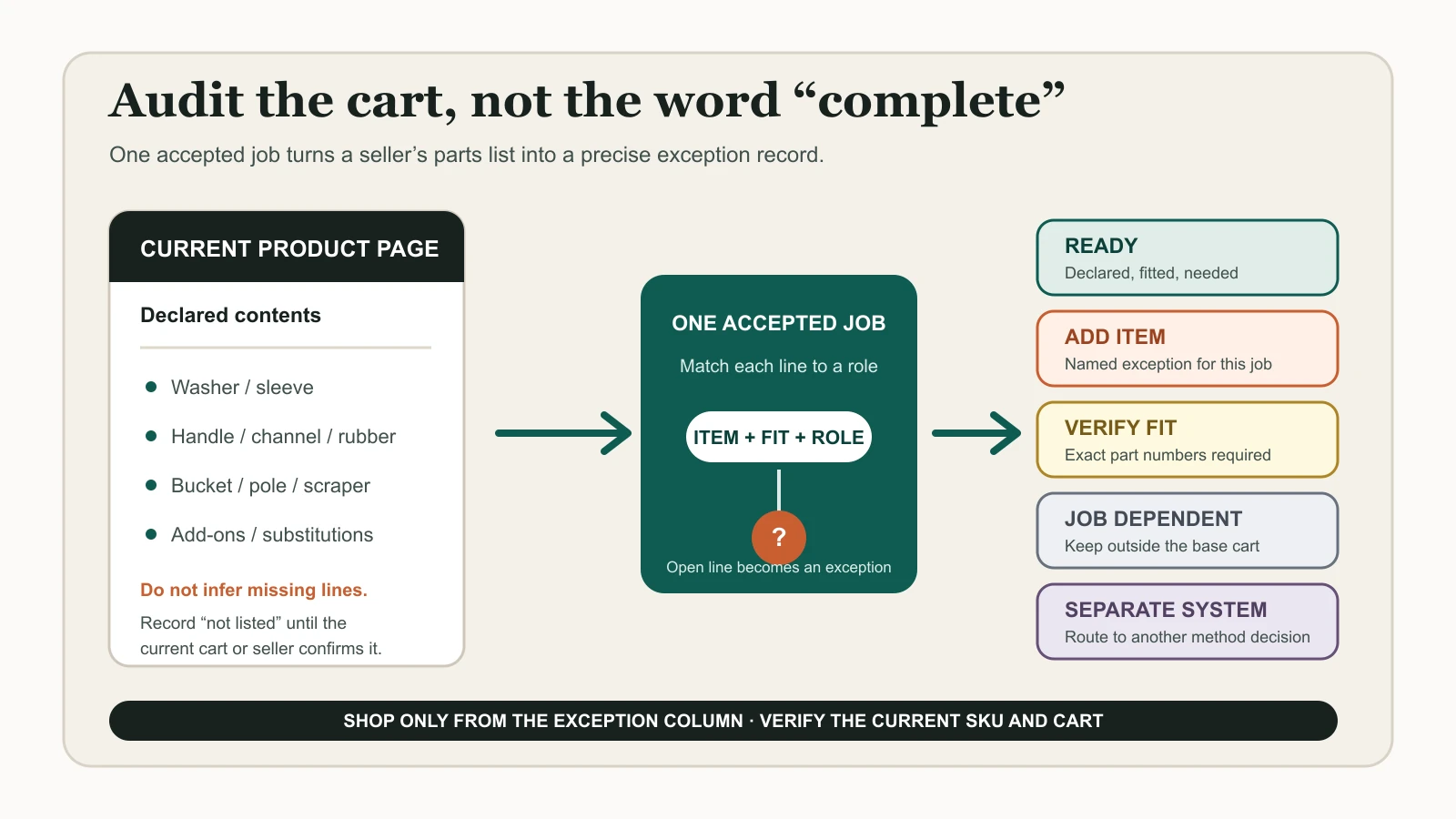
Window Cleaning Starter Kit: Check What the Bundle Leaves Out
Audit pole connections, replacement rubber, cloths, carrying gear and job-specific add-ons before calling a window cleaning starter kit complete.
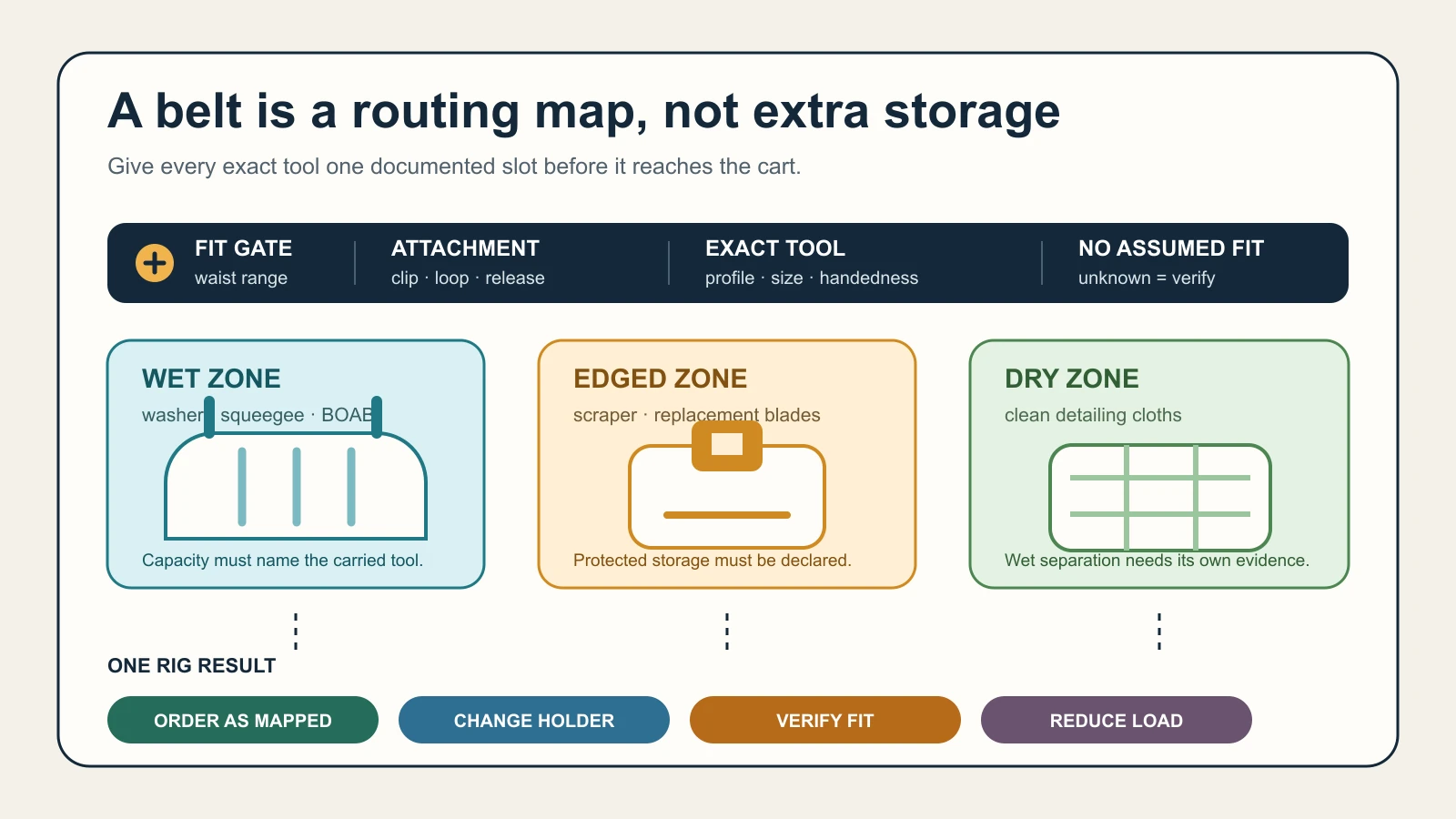
Window Cleaning Tool Belt Setup: Check Every Slot Before You Buy
Map your squeegee, washer, scraper, towels and BOAB to exact holders, moisture zones and attachment checks before ordering a window cleaning tool belt.
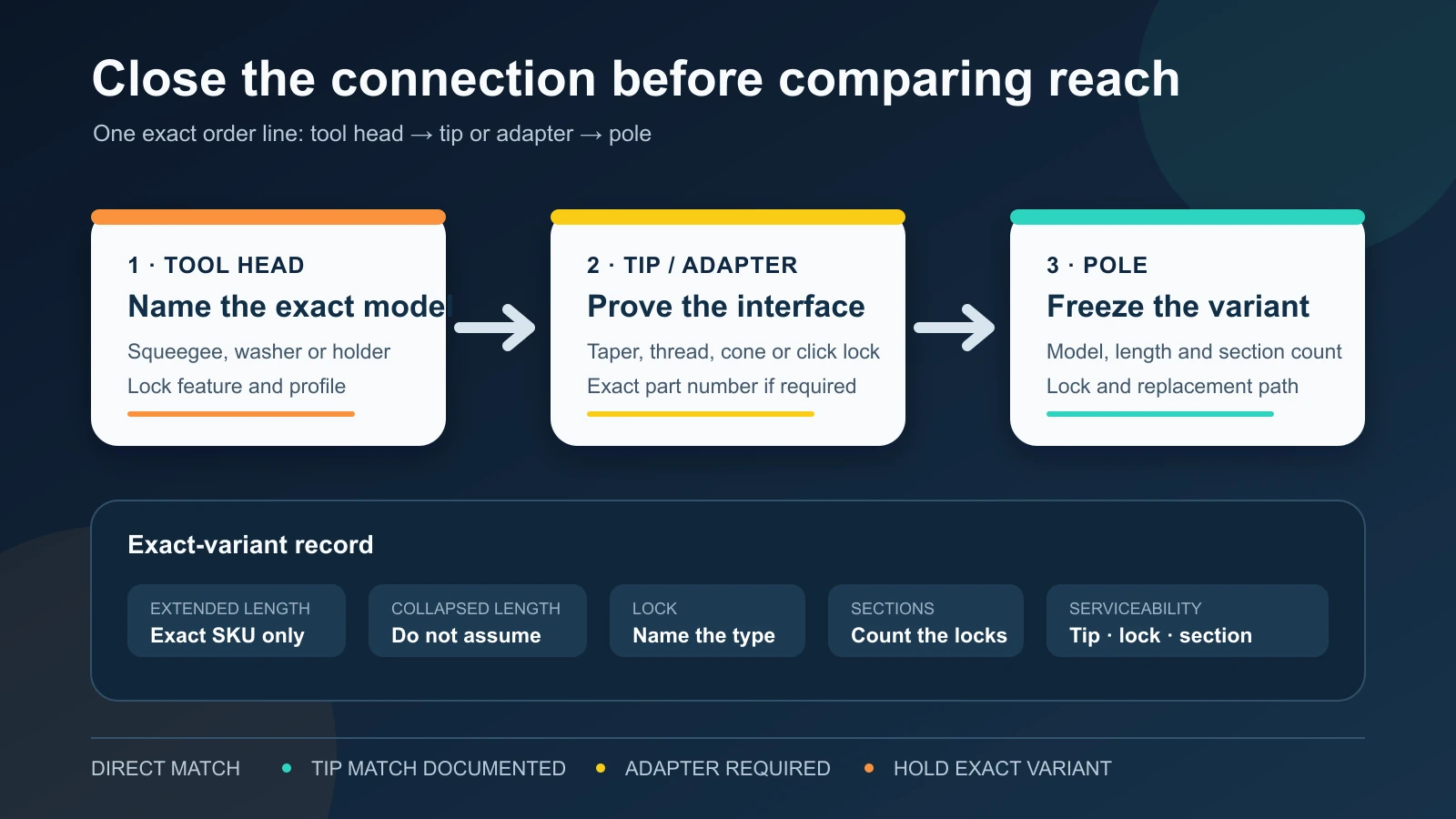
Choosing a Window Cleaning Extension Pole Starts at the Tool Tip
Match the exact tool head, tip or adapter, collapsed and extended length, lock and replaceable parts before buying a window cleaning extension pole.
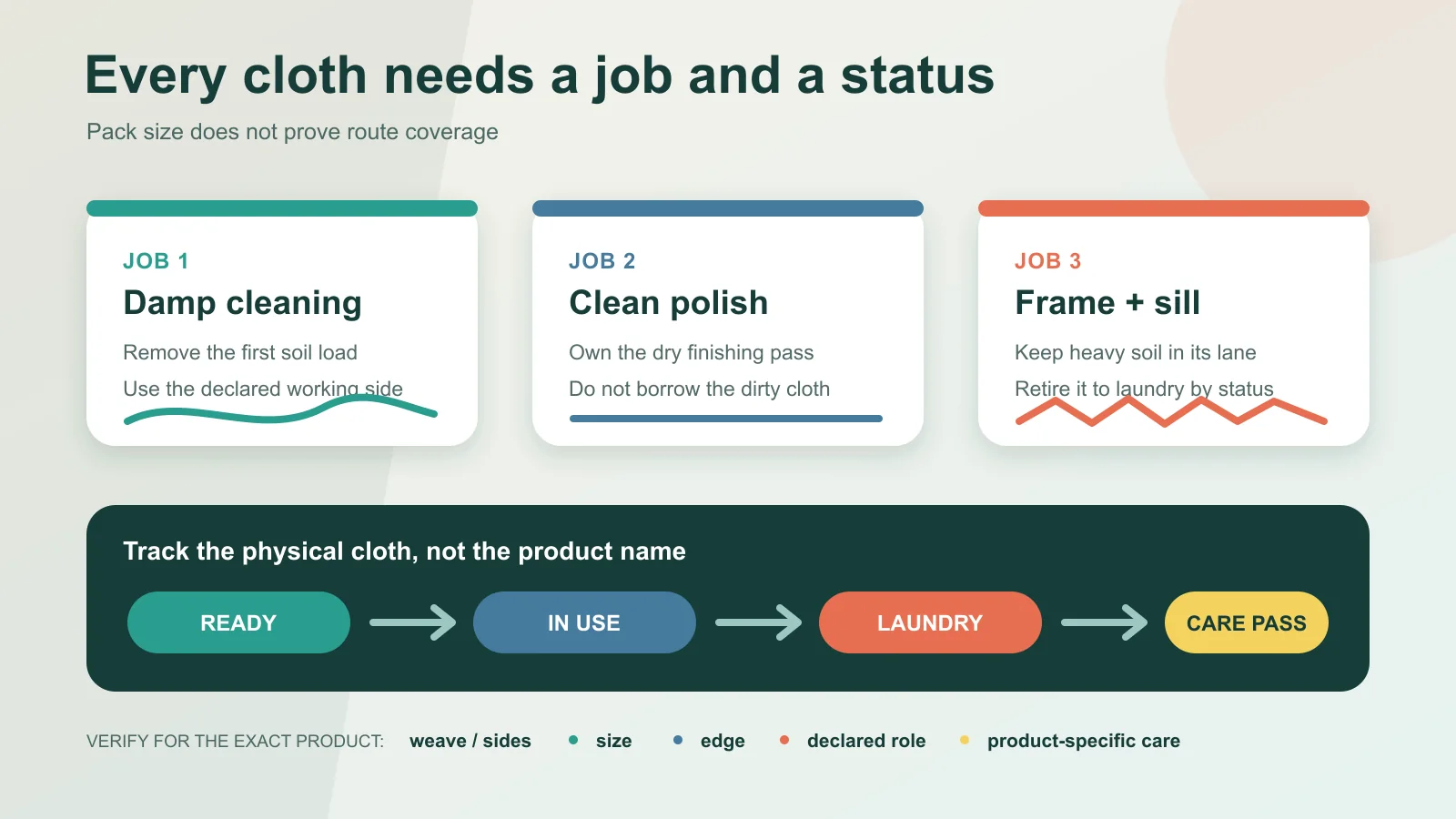
Buy Window Cleaning Microfiber Cloths by Job, Not by Pack Size
Match weave, size, edge and care instructions to damp cleaning, dry polishing and dirty frame or sill work before buying microfiber cloths.
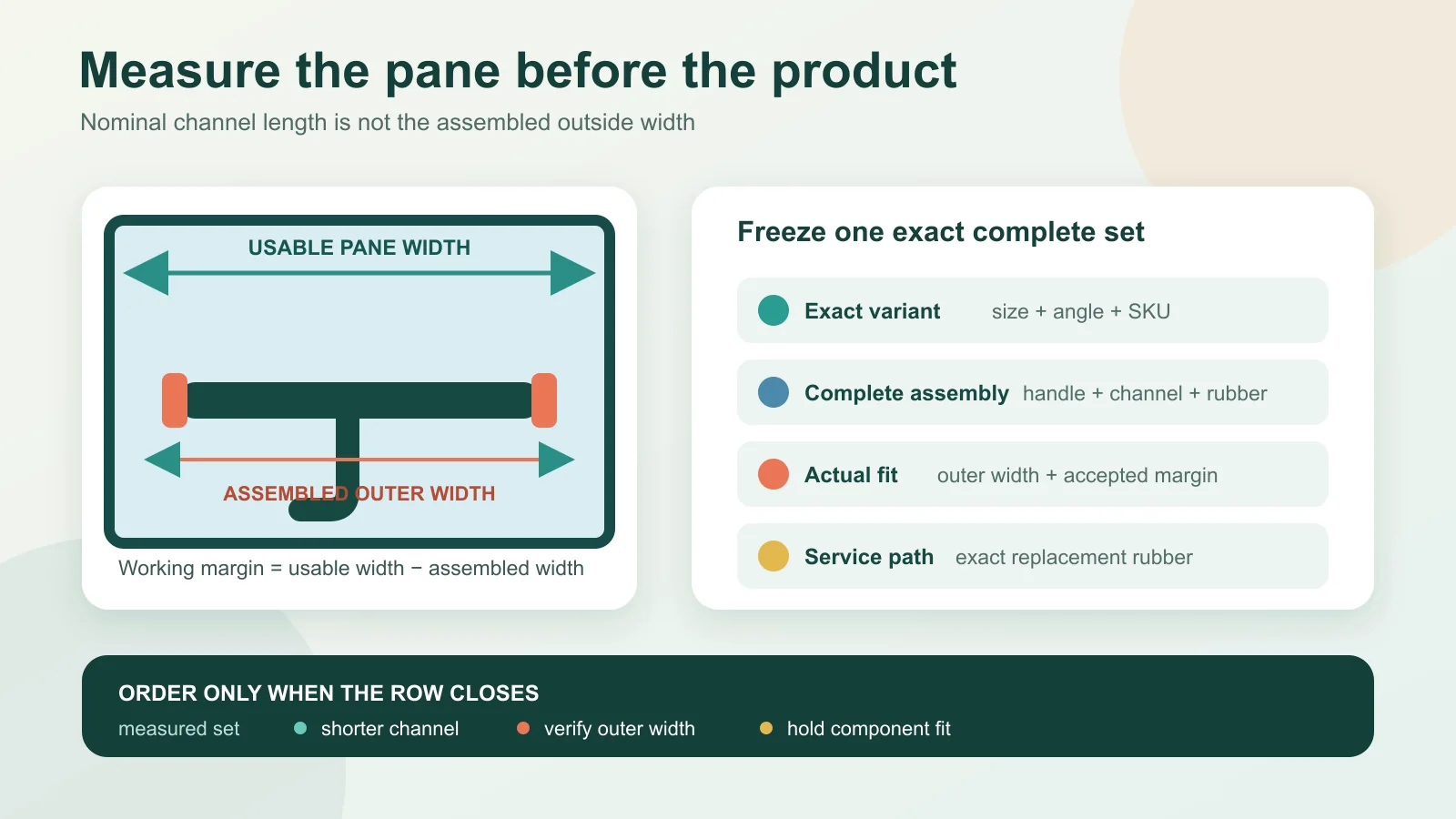
Measure the Pane Before Buying a Window Cleaning Squeegee
Use pane width, assembled channel width, component fit and replacement rubber evidence to choose one serviceable professional window squeegee.
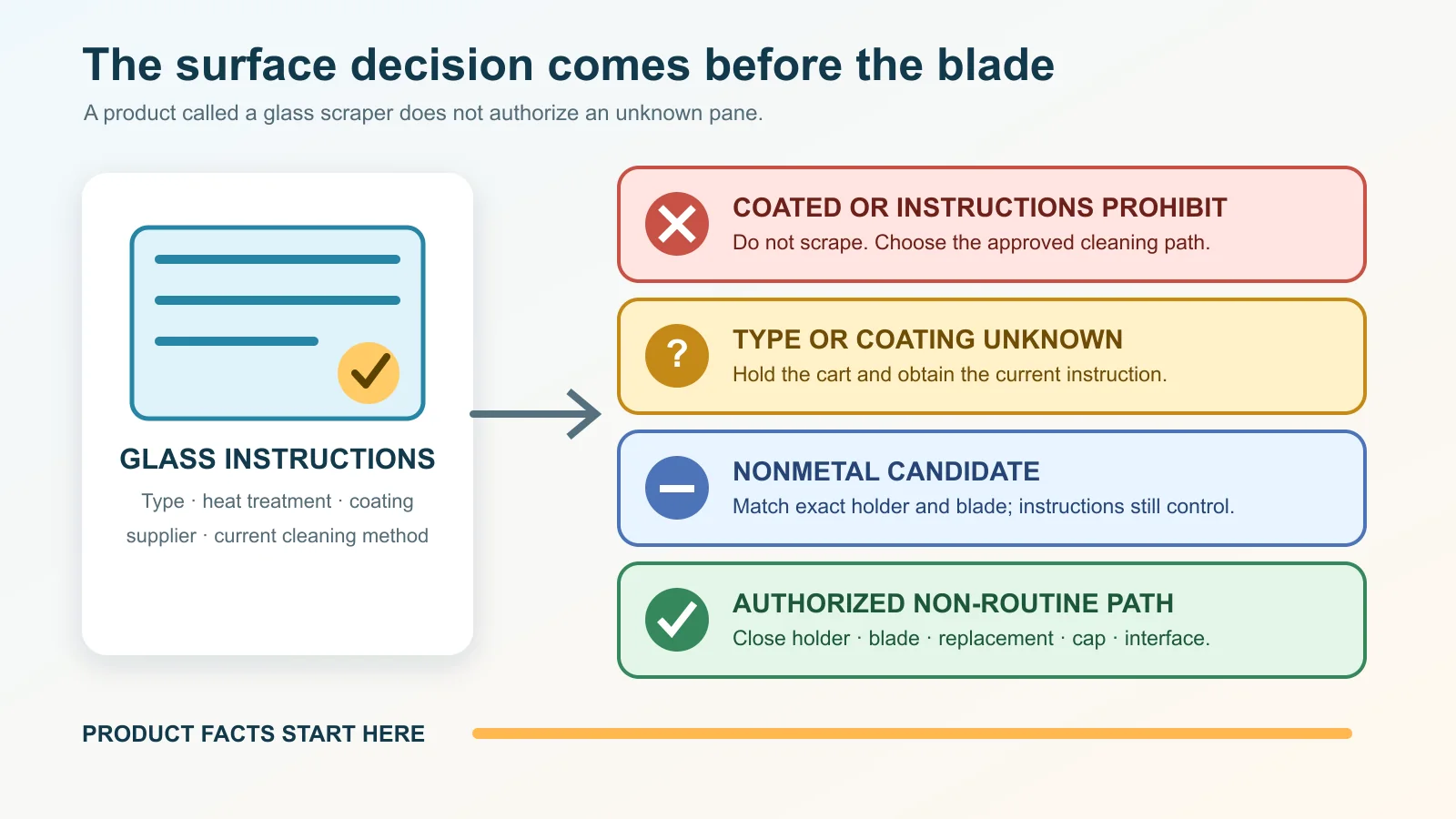
Before Buying a Window Scraper, Identify the Glass Surface
Check glass and coating instructions before choosing a window scraper. Then match blade material, width, replacement family, cap and pole interface.
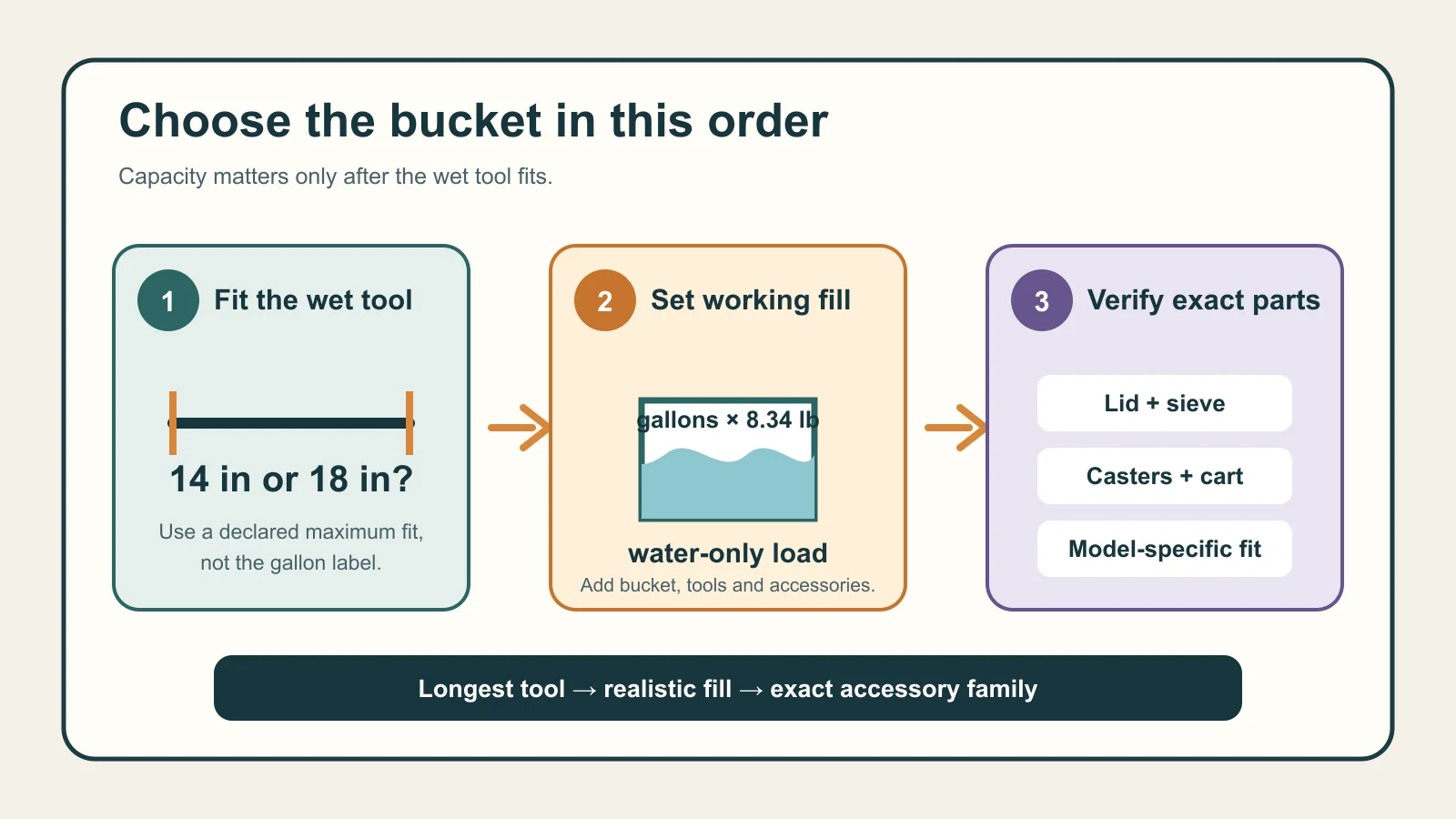
Choose a Window Cleaning Bucket by Tool Length and Carry Load
Match 14- or 18-inch tools to a window cleaning bucket, estimate the water-only load, and verify the exact lid, sieve, caster or cart family.
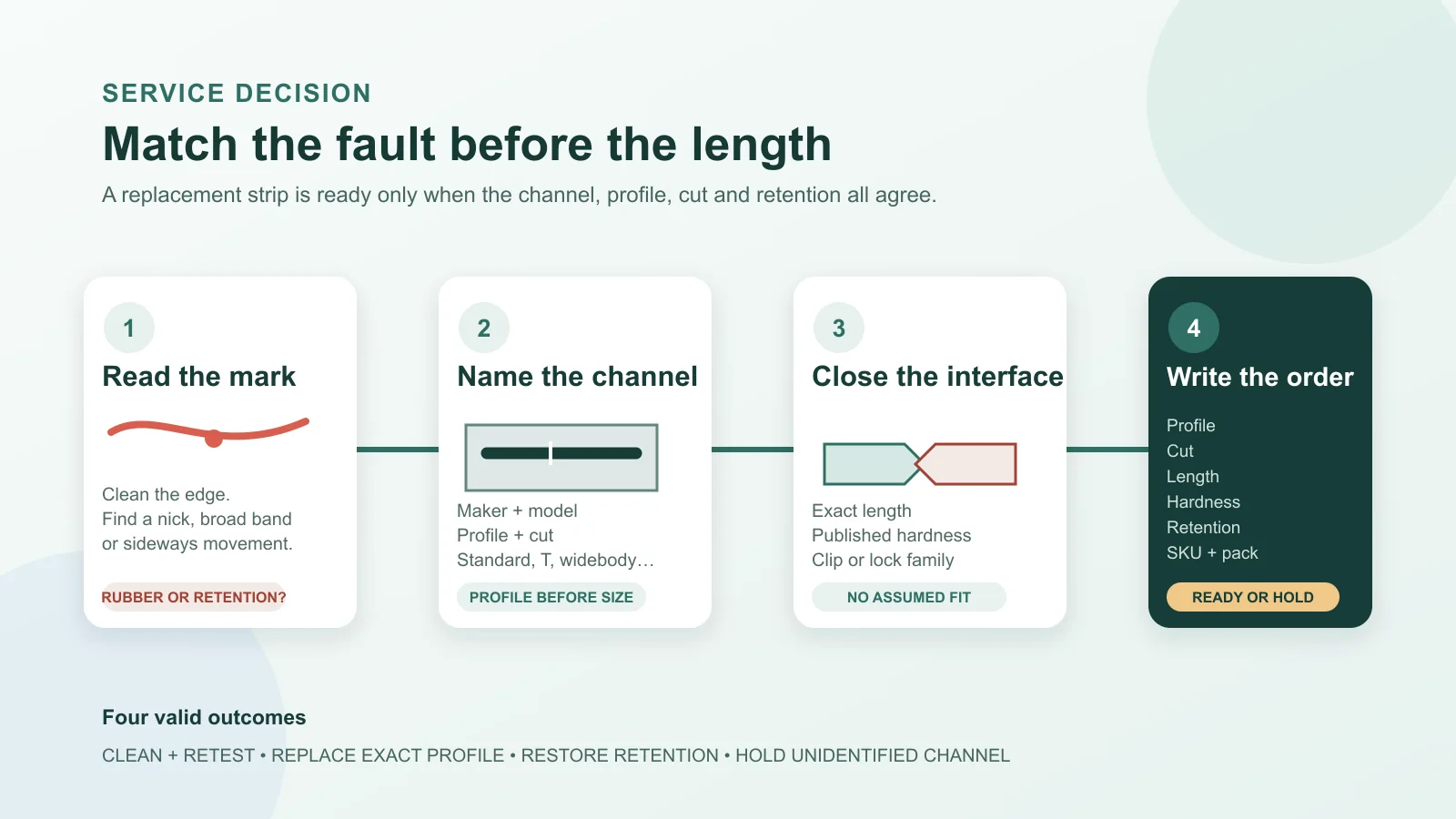
Match Squeegee Rubber Replacement to the Channel, Not Just Length
Identify a damaged edge, loose clip or dirty channel, then match profile, cut, length and hardness to the exact squeegee before ordering rubber.
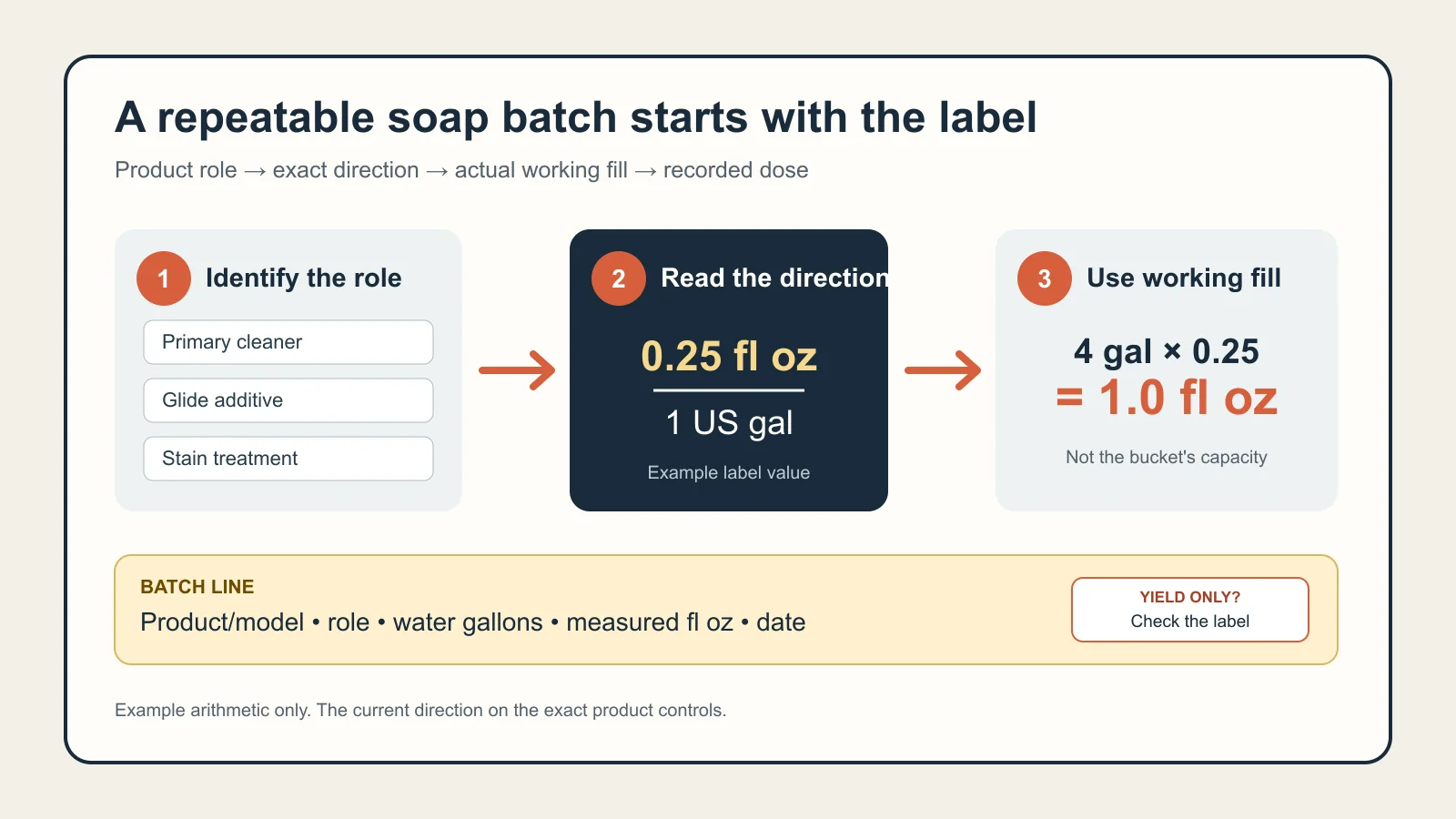
Build a Repeatable Batch Sheet for Window Cleaning Soap
Calculate each bucket from the product's stated ounces per gallon and actual working fill, while keeping cleaners, additives and stain treatments separate.
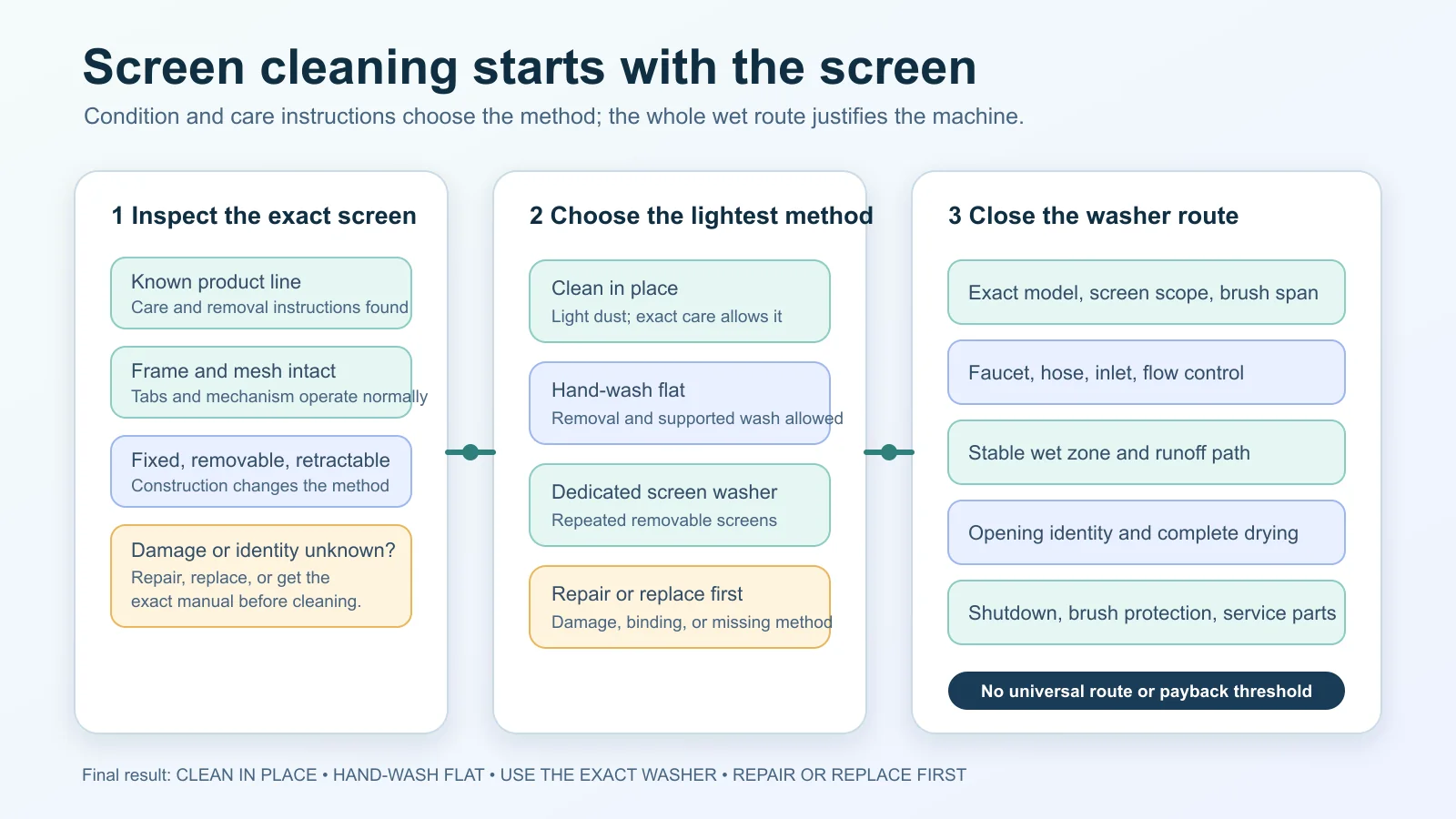
Window Screen Cleaning: Choose Hand Cleaning or a Screen Washer
Inspect the screen and frame first, then choose vacuuming, flat hand washing or a dedicated washer by care limits, water control and route volume.