Window Cleaning Starter Kit: Check What the Bundle Leaves Out
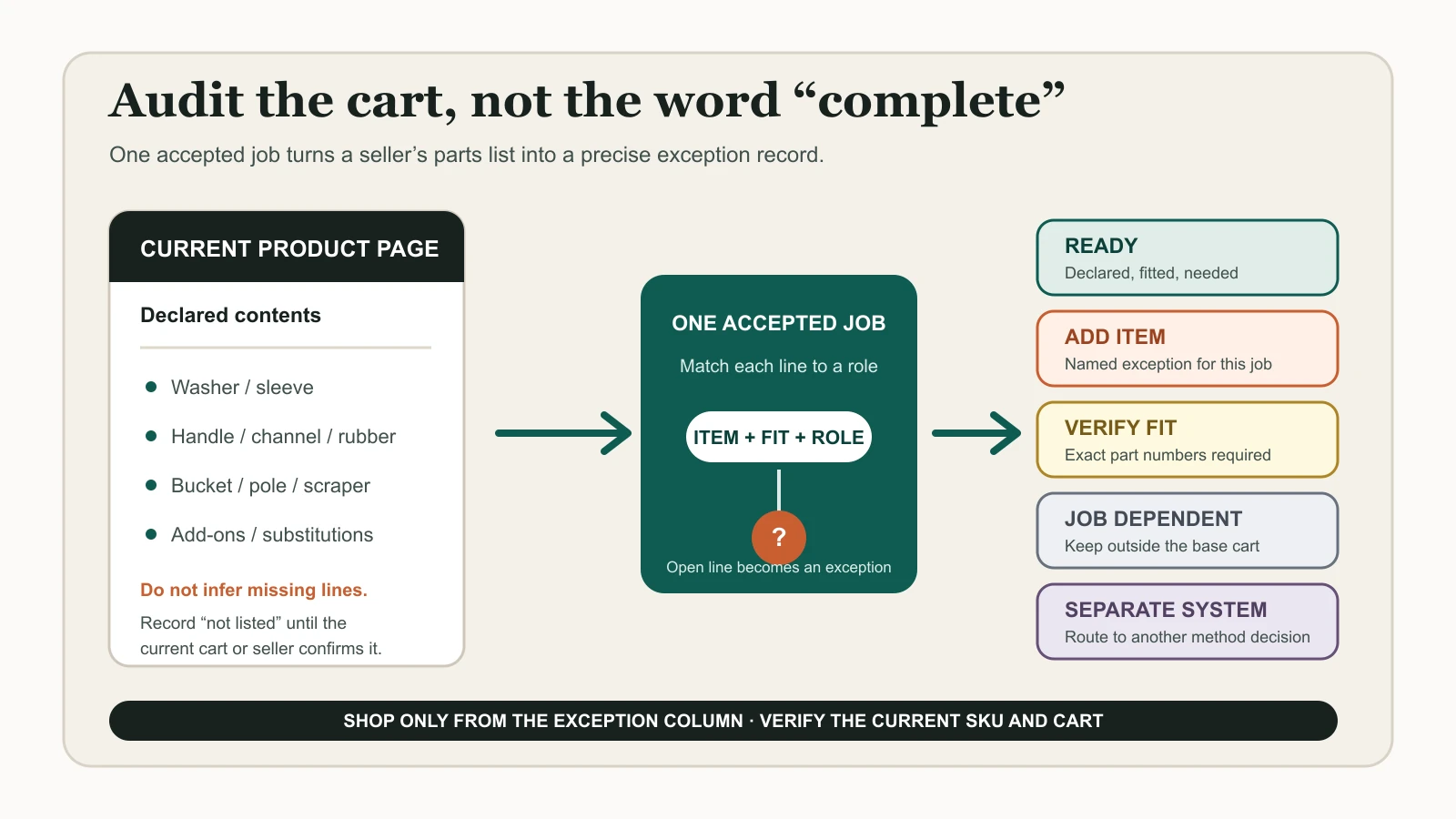
Audit pole connections, replacement rubber, cloths, carrying gear and job-specific add-ons before calling a window cleaning starter kit complete.
 windowcleaning
 Audit pole connections, replacement rubber, cloths, carrying gear and job-specific add-ons before calling a window cleaning starter kit complete.
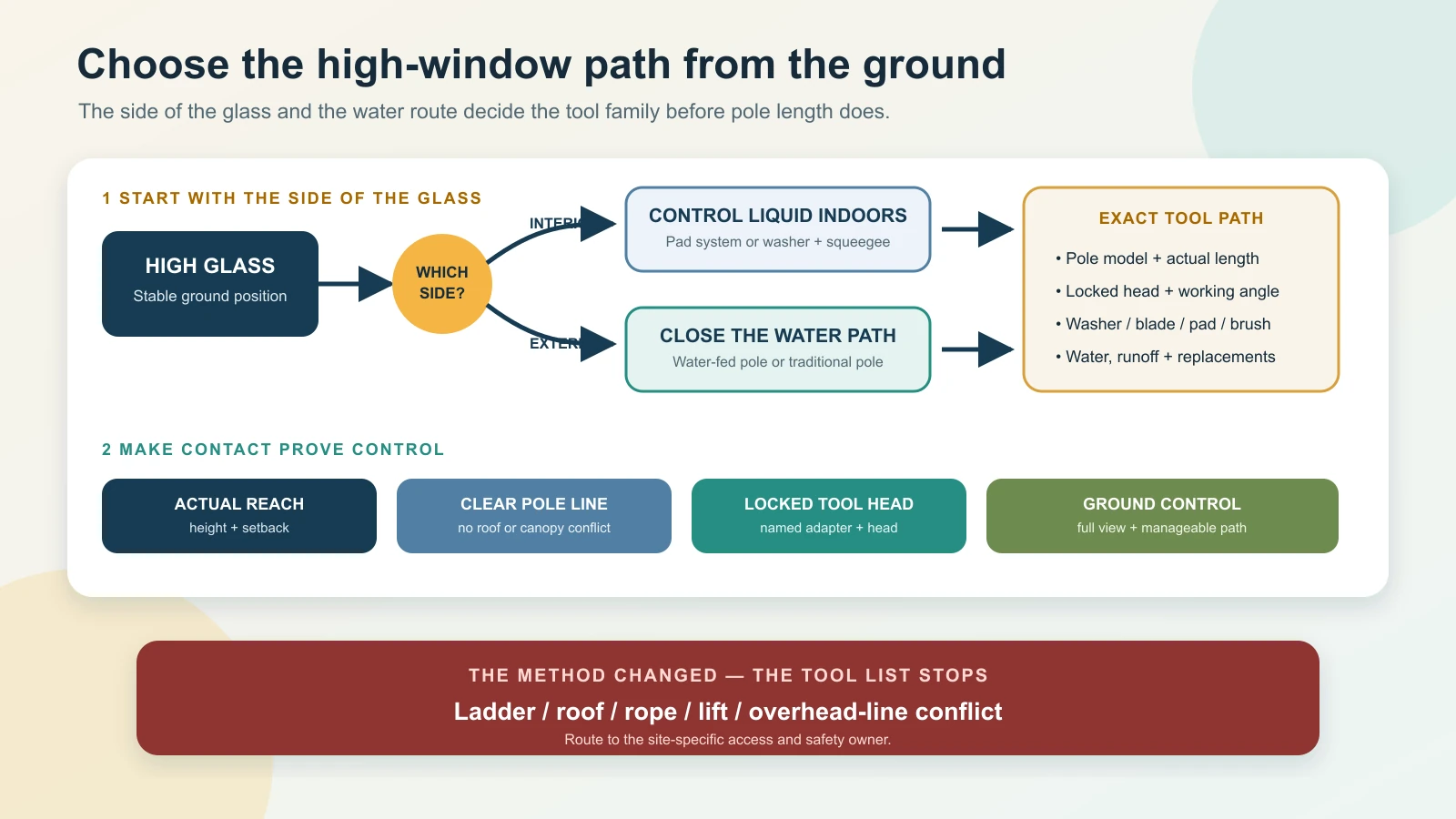
Choose an indoor pad, washer-and-squeegee pole or water-fed system by glass side, reach, obstruction and water route—then know when ground access ends.
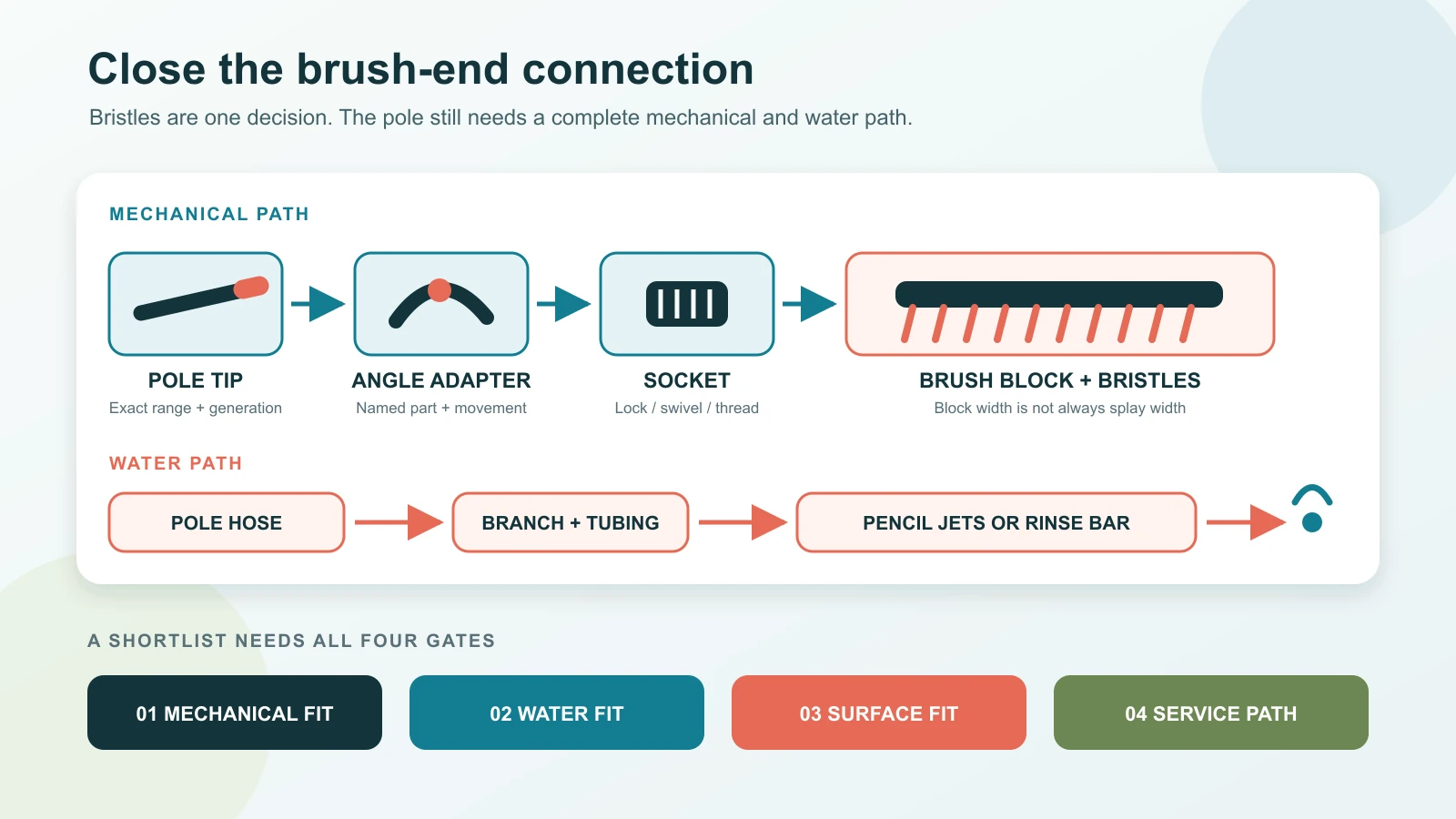
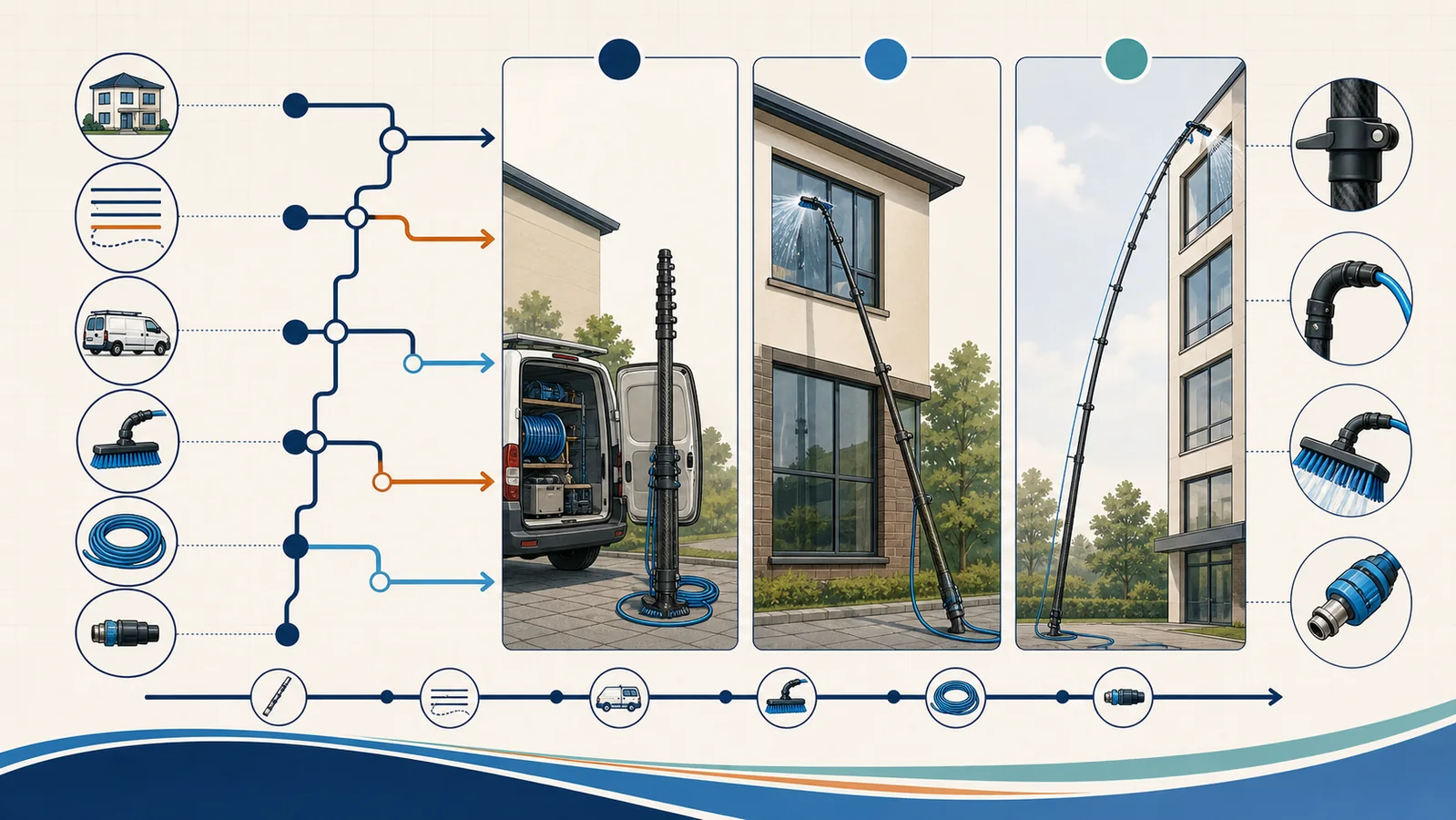
Trace socket, angle adapter, jet or rinse-bar feed, hose size, brush width and service parts before assuming a water-fed pole brush fits.
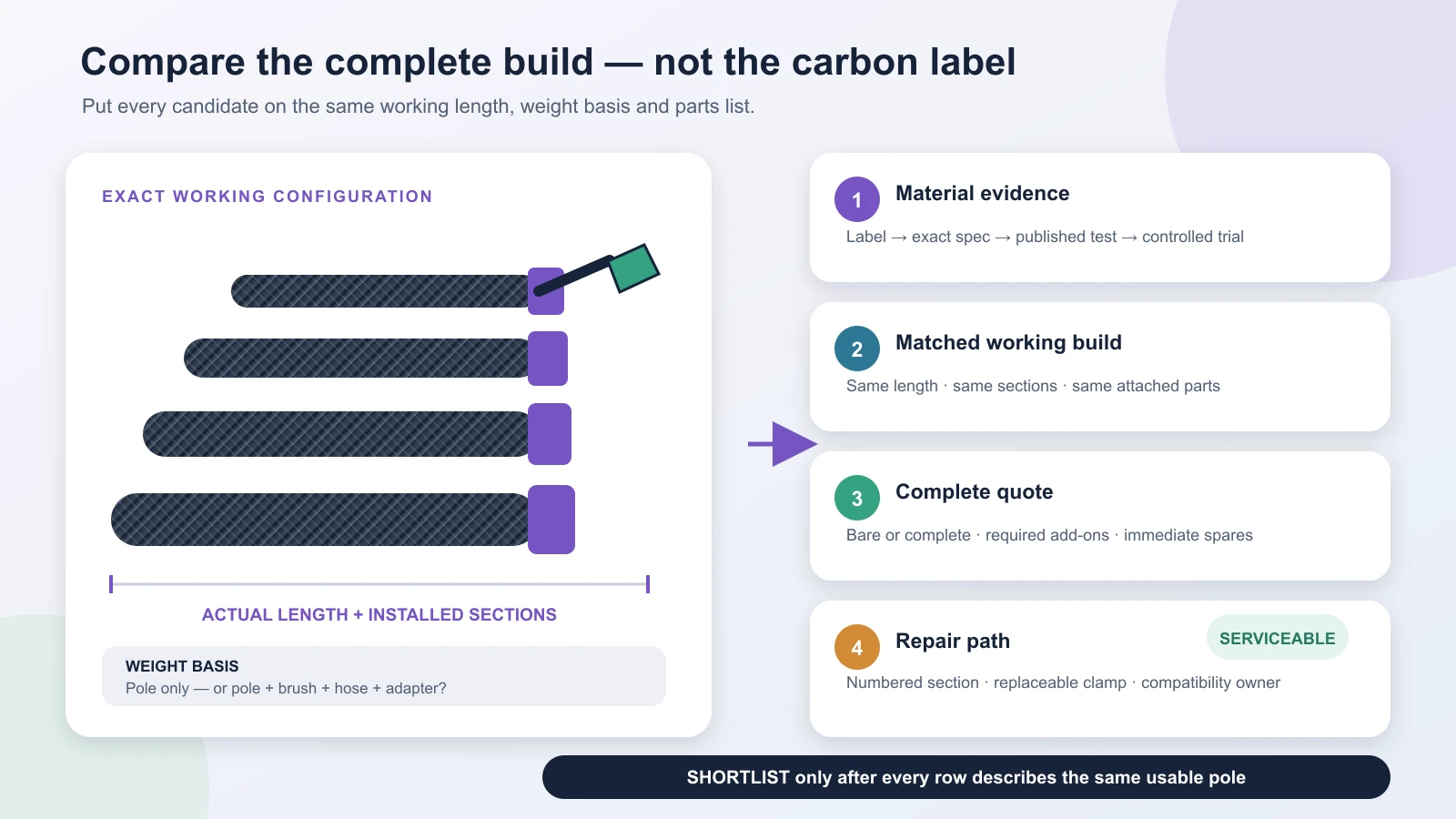
Normalize actual length, pole-only weight, sections, included parts, repair options and material claims before paying for a carbon label.
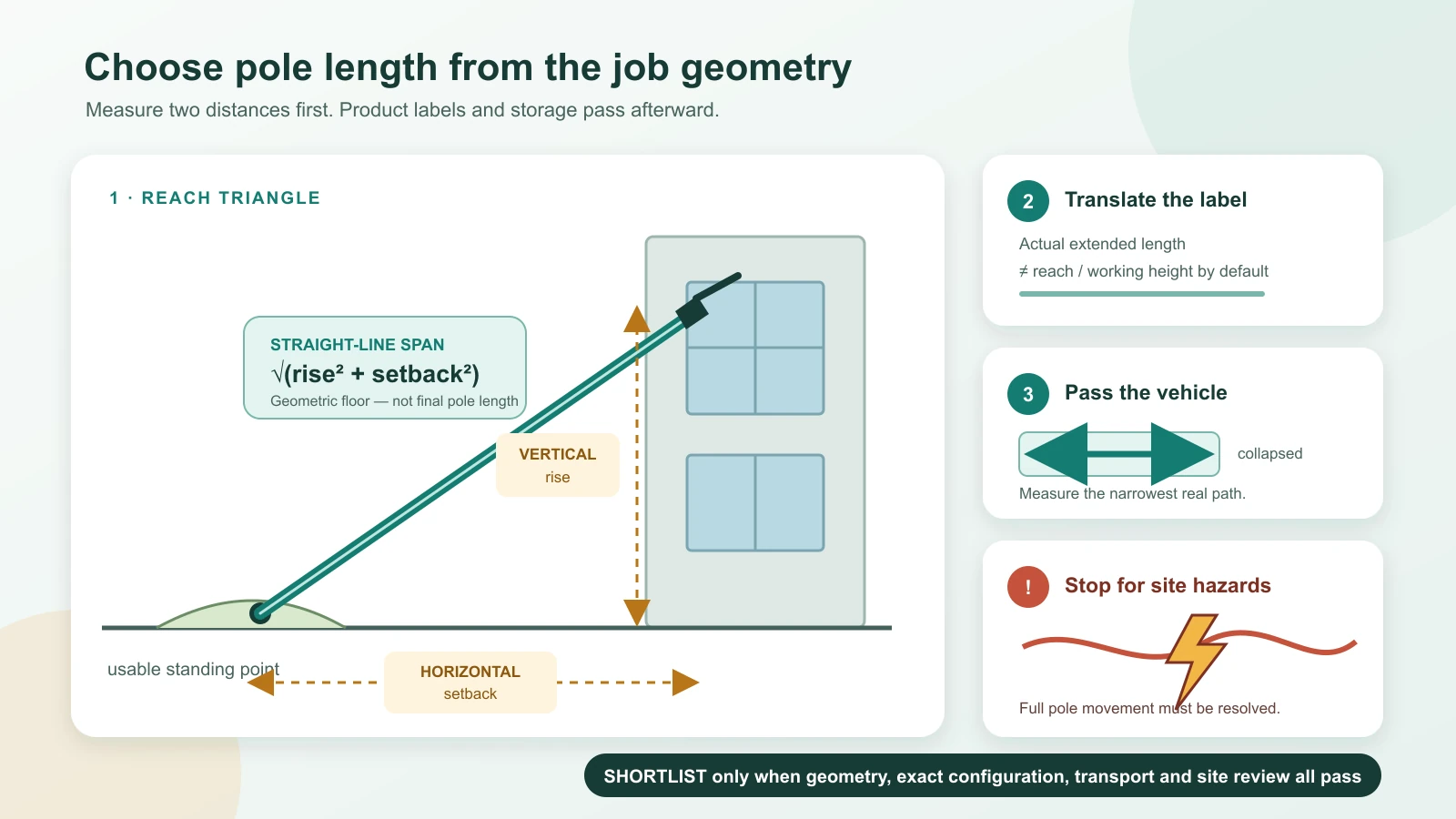
Use target height, ground setback, actual extended length and collapsed size to rule out poles that only fit on the product page.
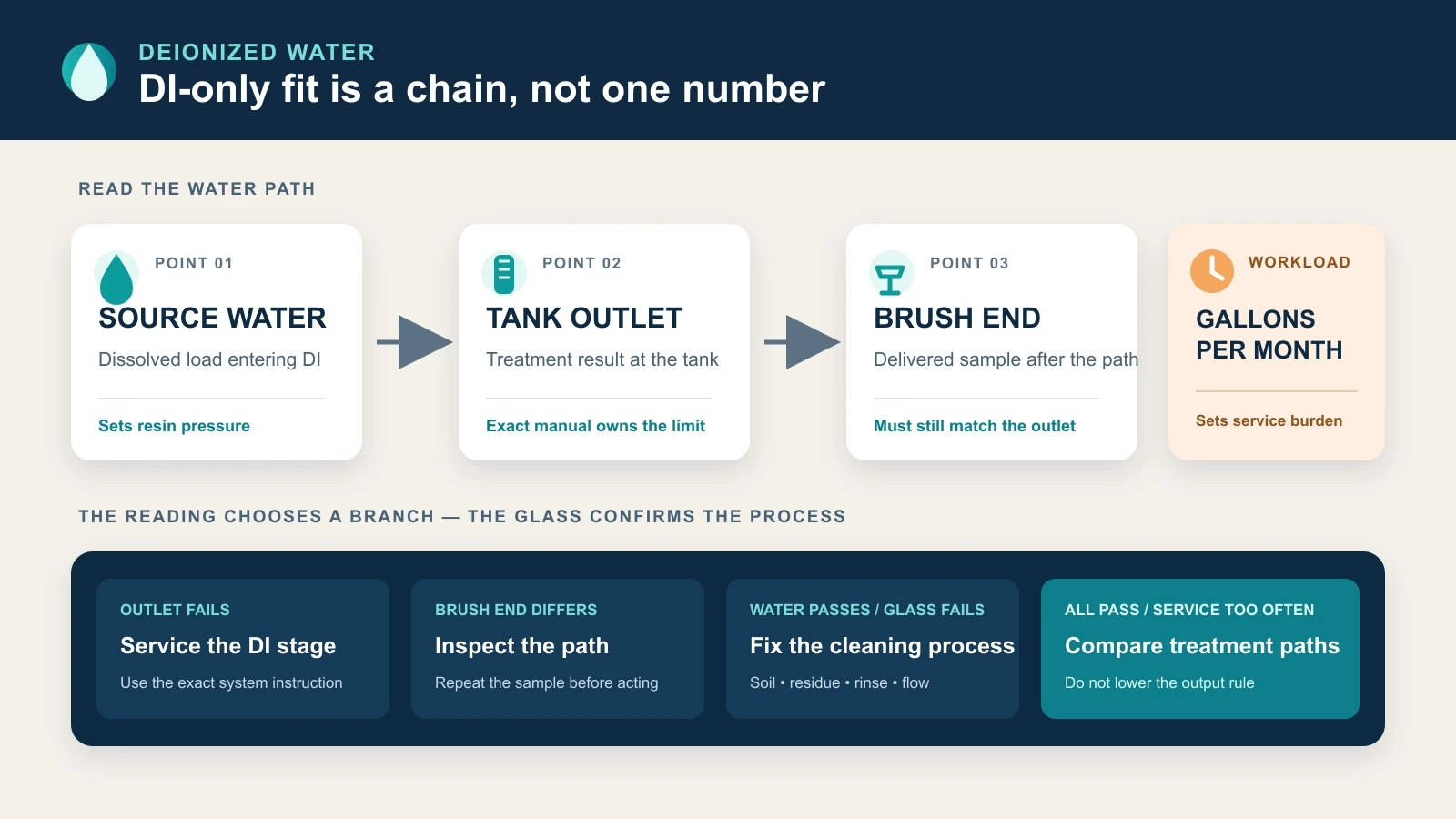
Separate what a TDS meter proves from what it cannot, then use source water, monthly gallons and outlet-to-brush readings to decide whether DI-only fits.
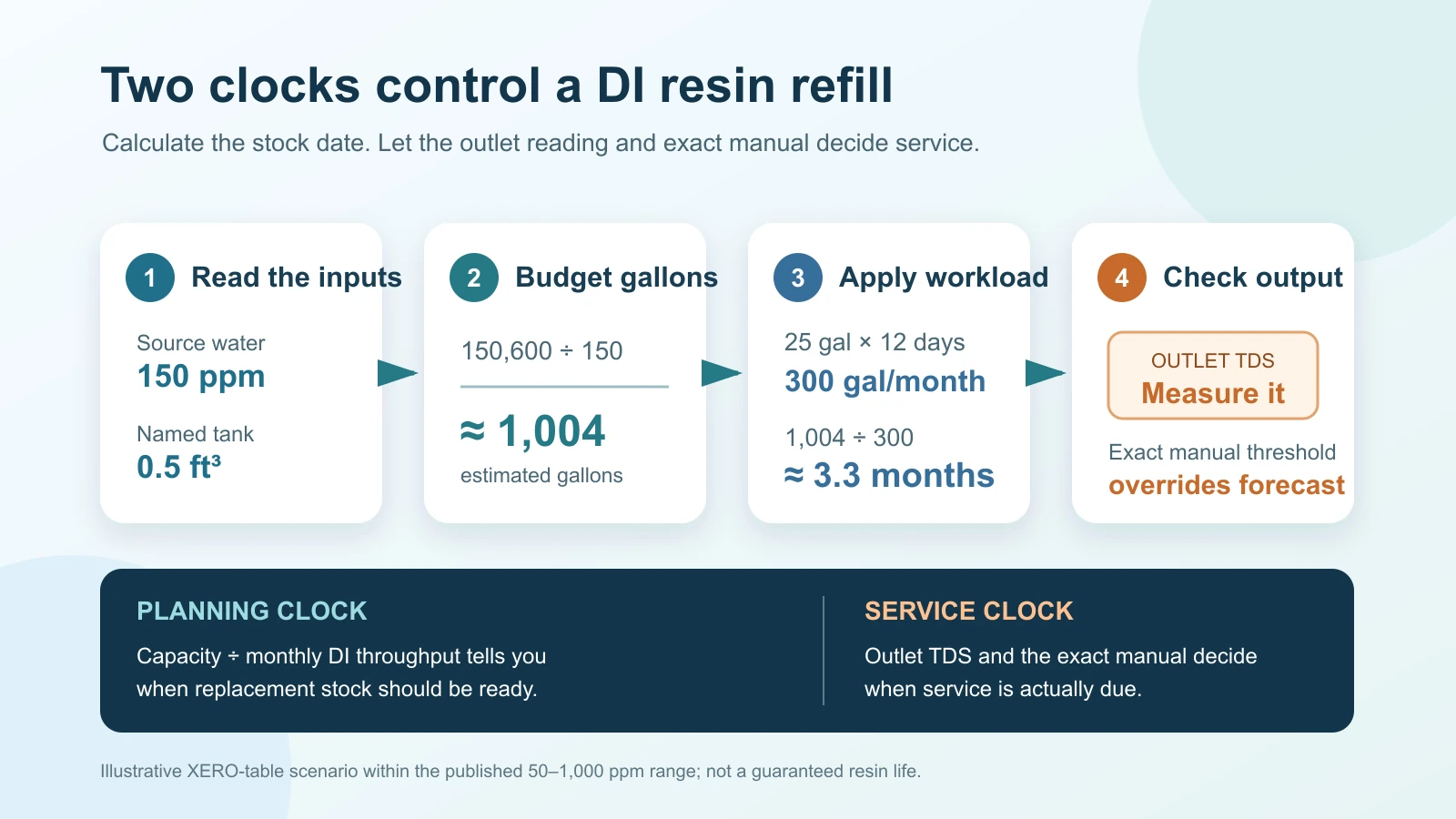
Use source-water TDS, 0.5- or 1.0-ft³ capacity and monthly gallons to estimate a refill interval—then let measured output TDS override the forecast.
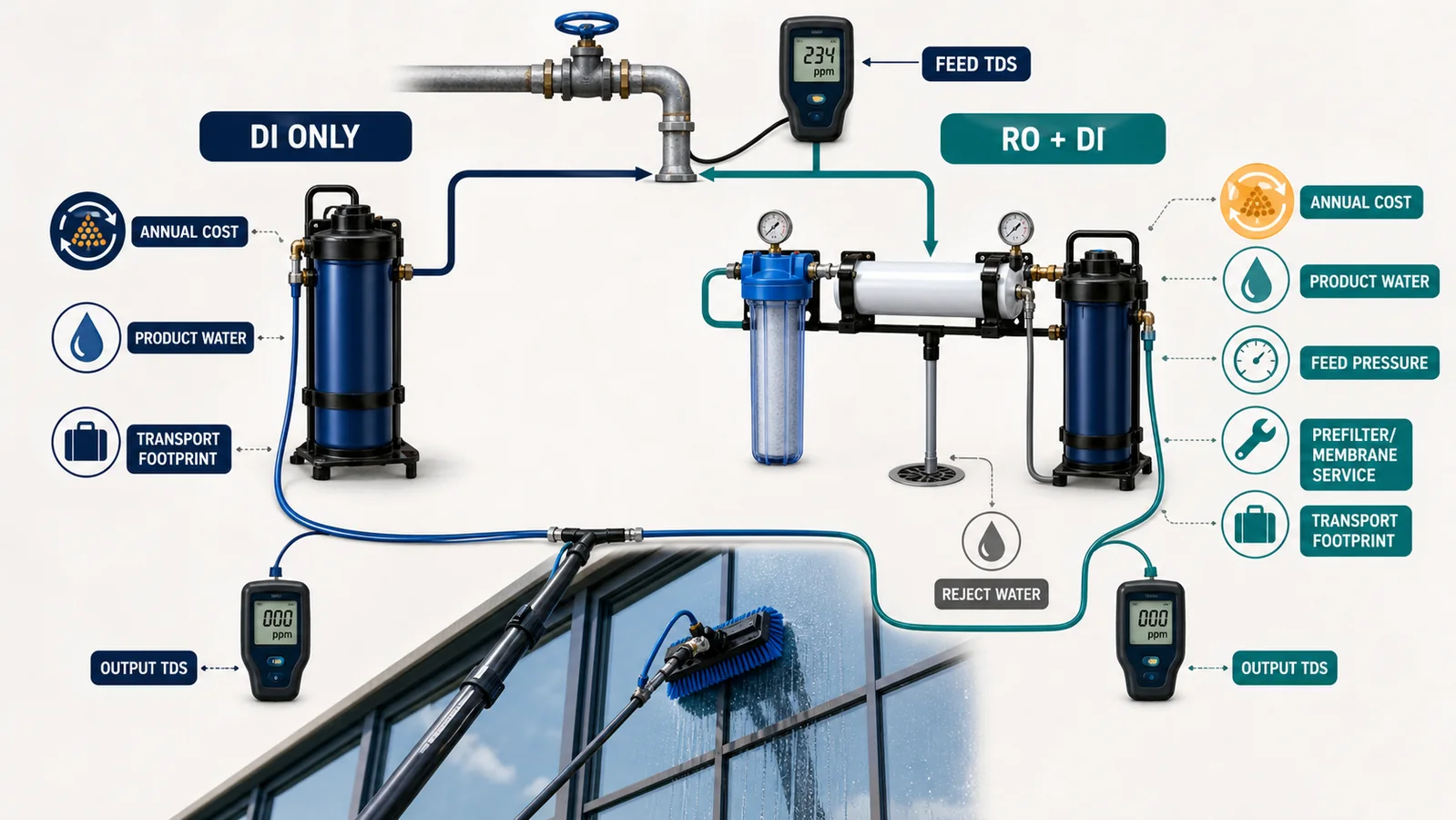
Compare DI-only with RO/DI using feed TDS, measured resin yield, product-water demand, pressure, reject water and full annual operating cost.
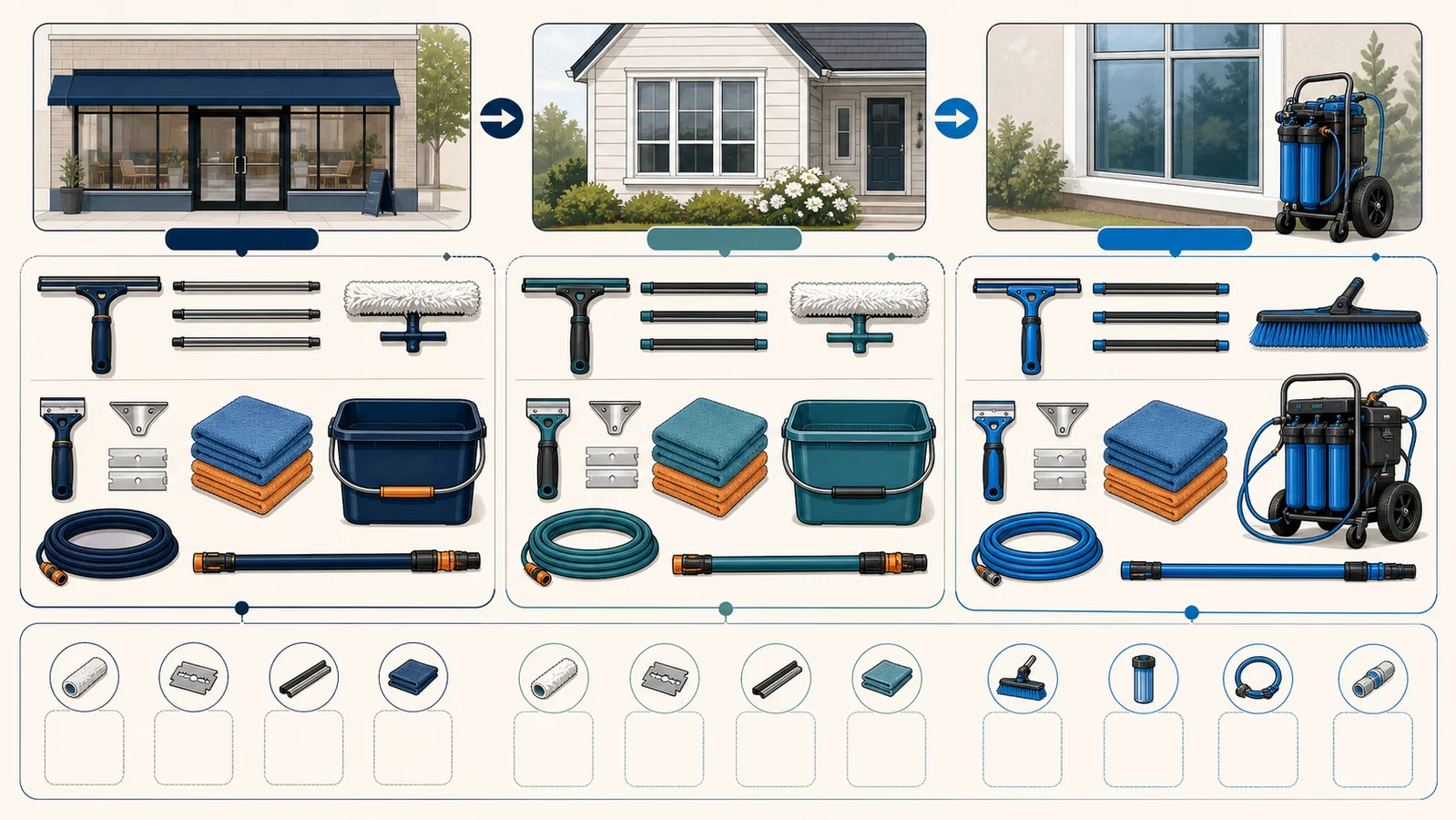
Build a job-ready window cleaning tool stack by storefront, first-clean and pure-water work; expose consumables, replacements and access gaps kits omit.
Measure highest glass, setback and transport space, then compare pole material, stiffness, collapsed length, brush, hose and connectors before buying.