Specify the Whole Deionized Water Tank Before You Order
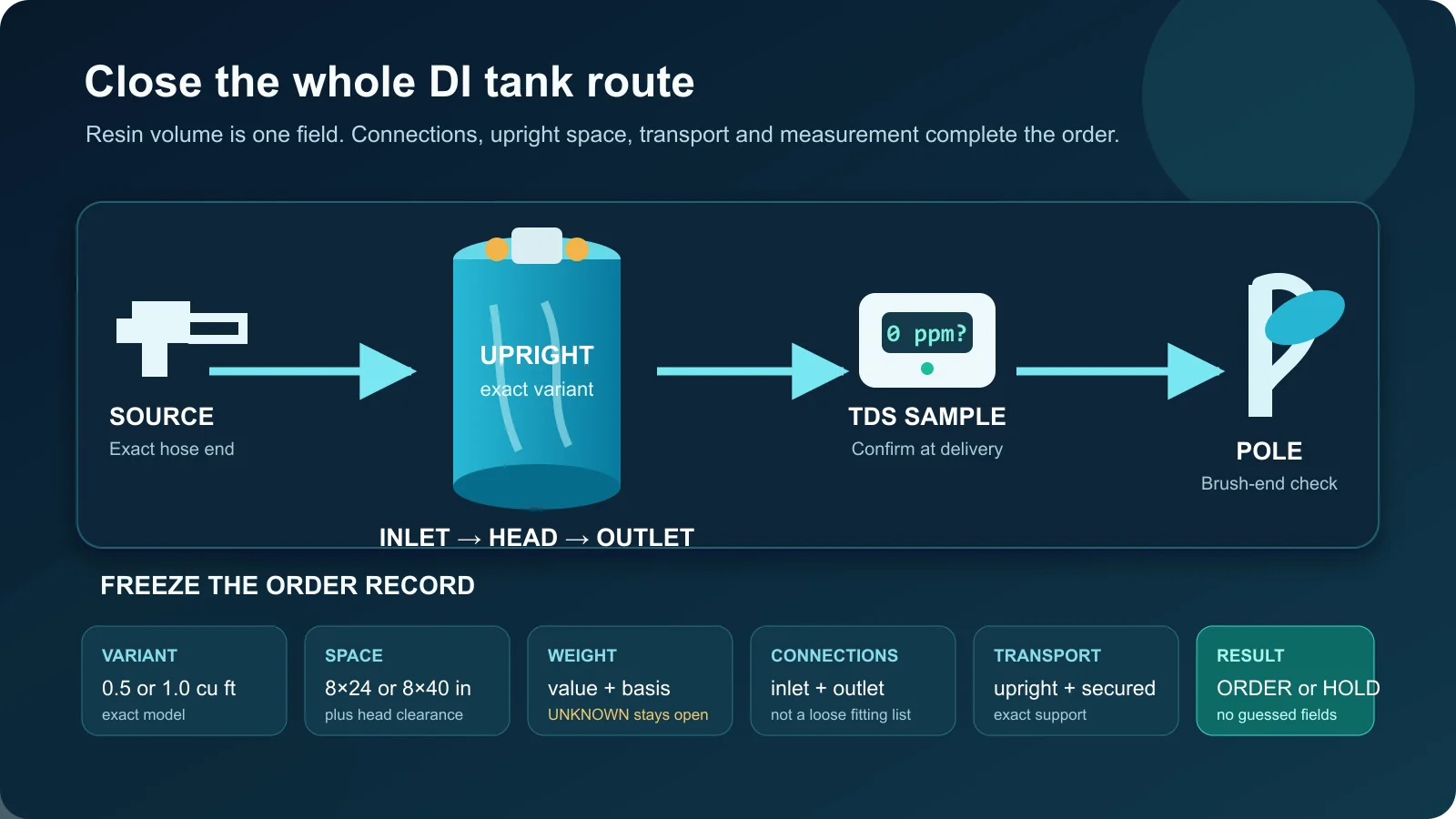
Choose a DI tank by confirming the system path, exact vessel, fittings, upright space and route transport—without mistaking volume for output.
Choose a DI tank by confirming the system path, exact vessel, fittings, upright space and route transport—without mistaking volume for output.
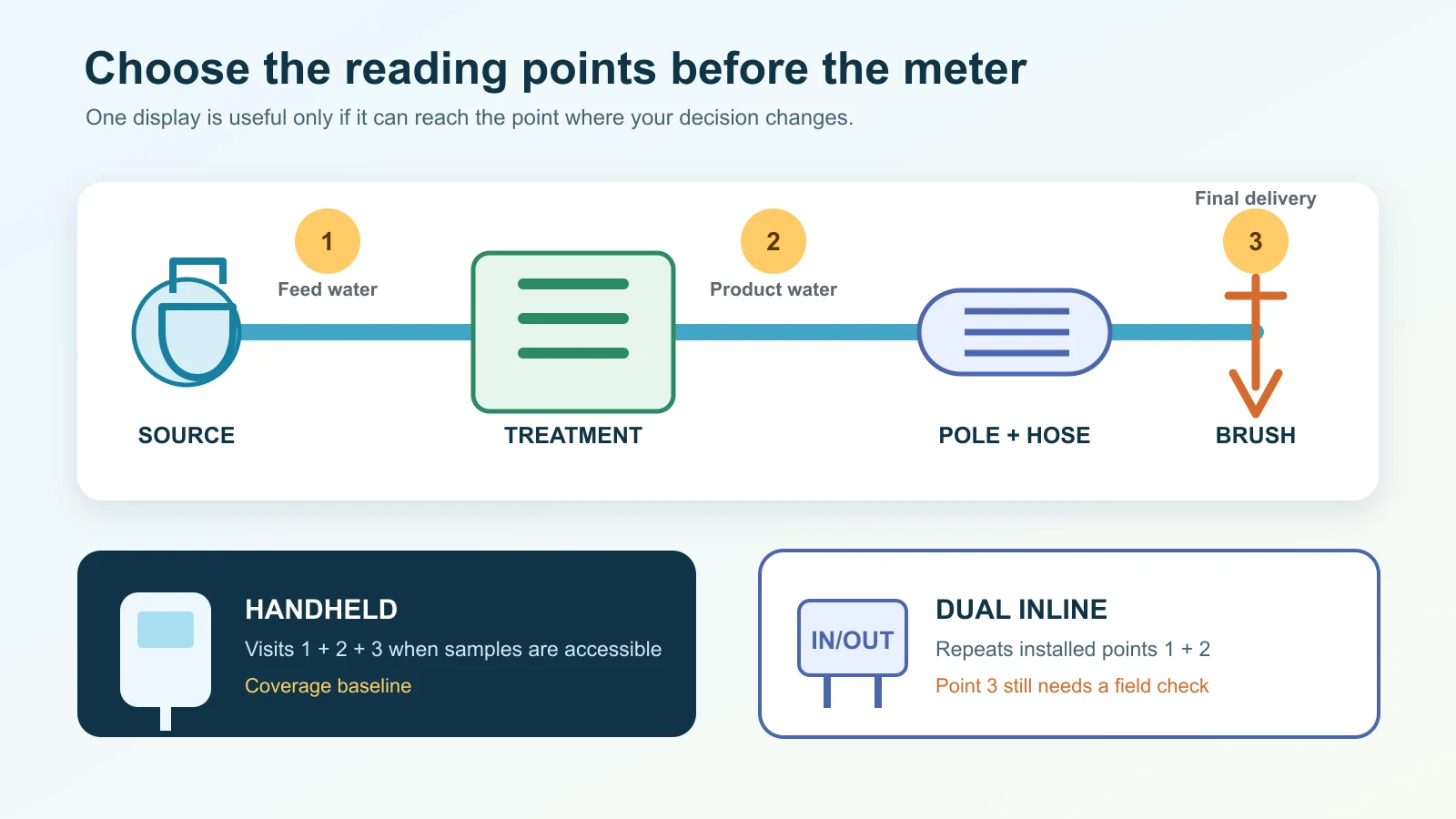
Map feed, product-water and brush-end readings before choosing a handheld or inline TDS meter. Compare low-end resolution, scale and calibration.
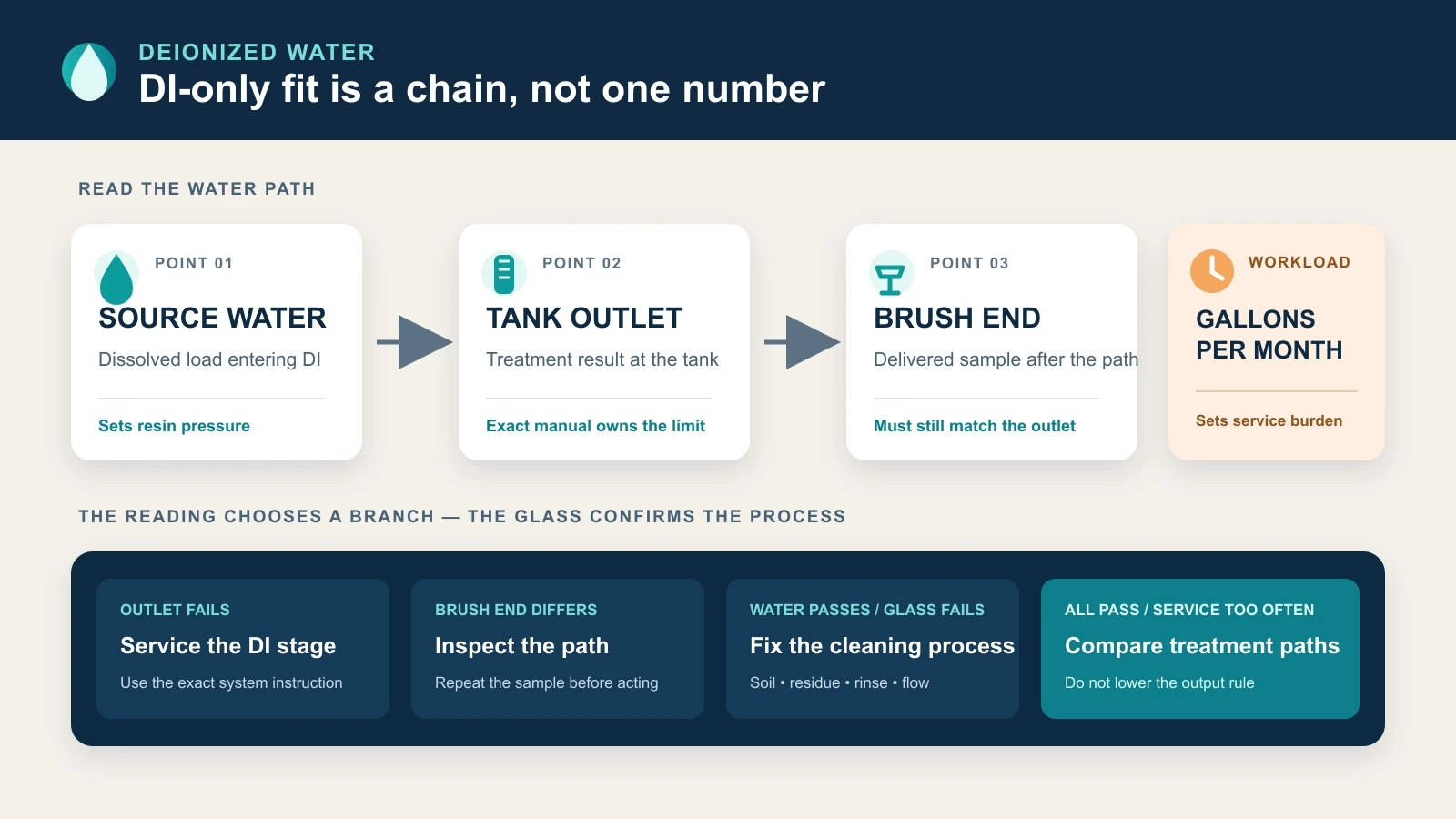
Separate what a TDS meter proves from what it cannot, then use source water, monthly gallons and outlet-to-brush readings to decide whether DI-only fits.
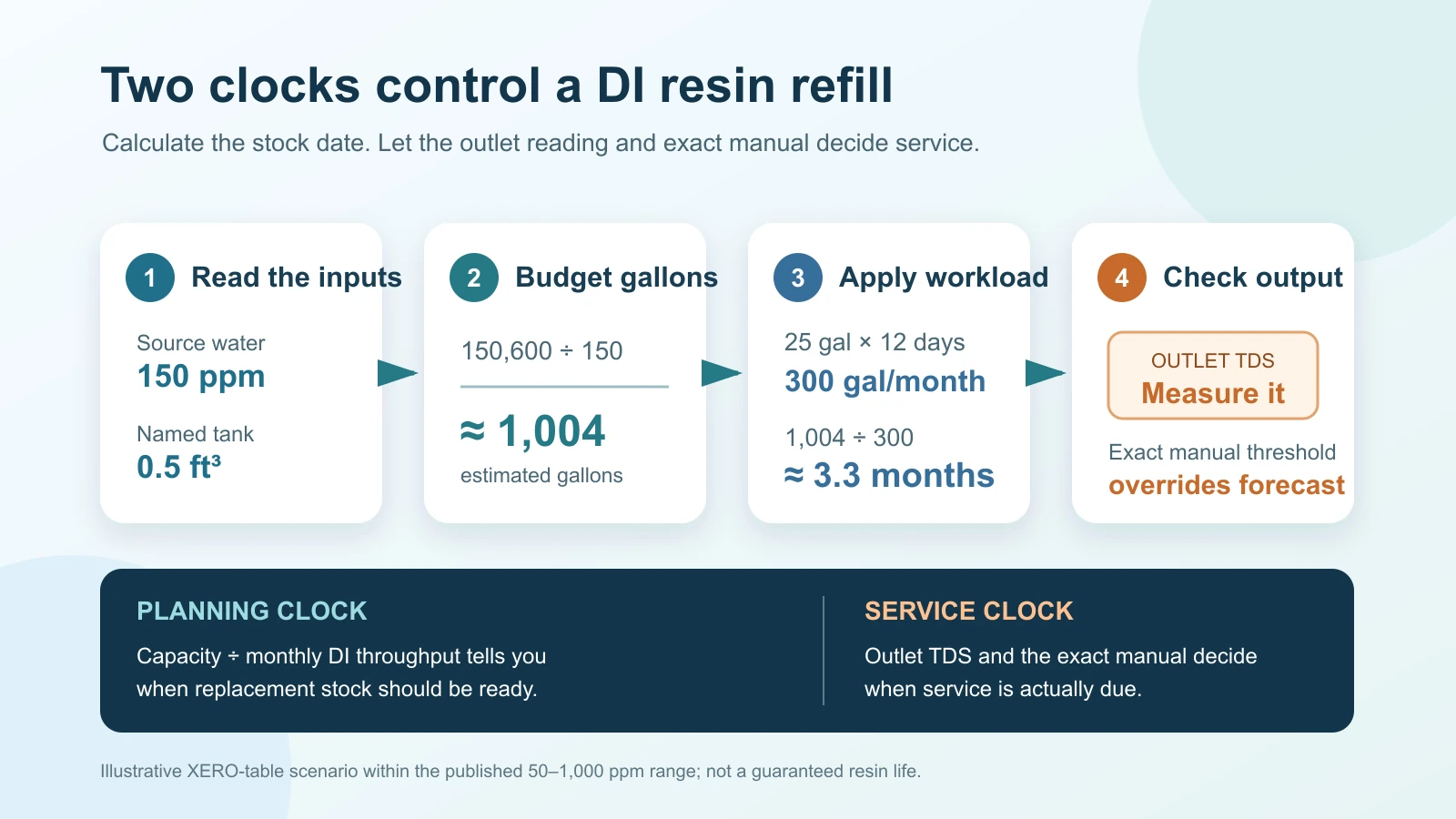
Use source-water TDS, 0.5- or 1.0-ft³ capacity and monthly gallons to estimate a refill interval—then let measured output TDS override the forecast.
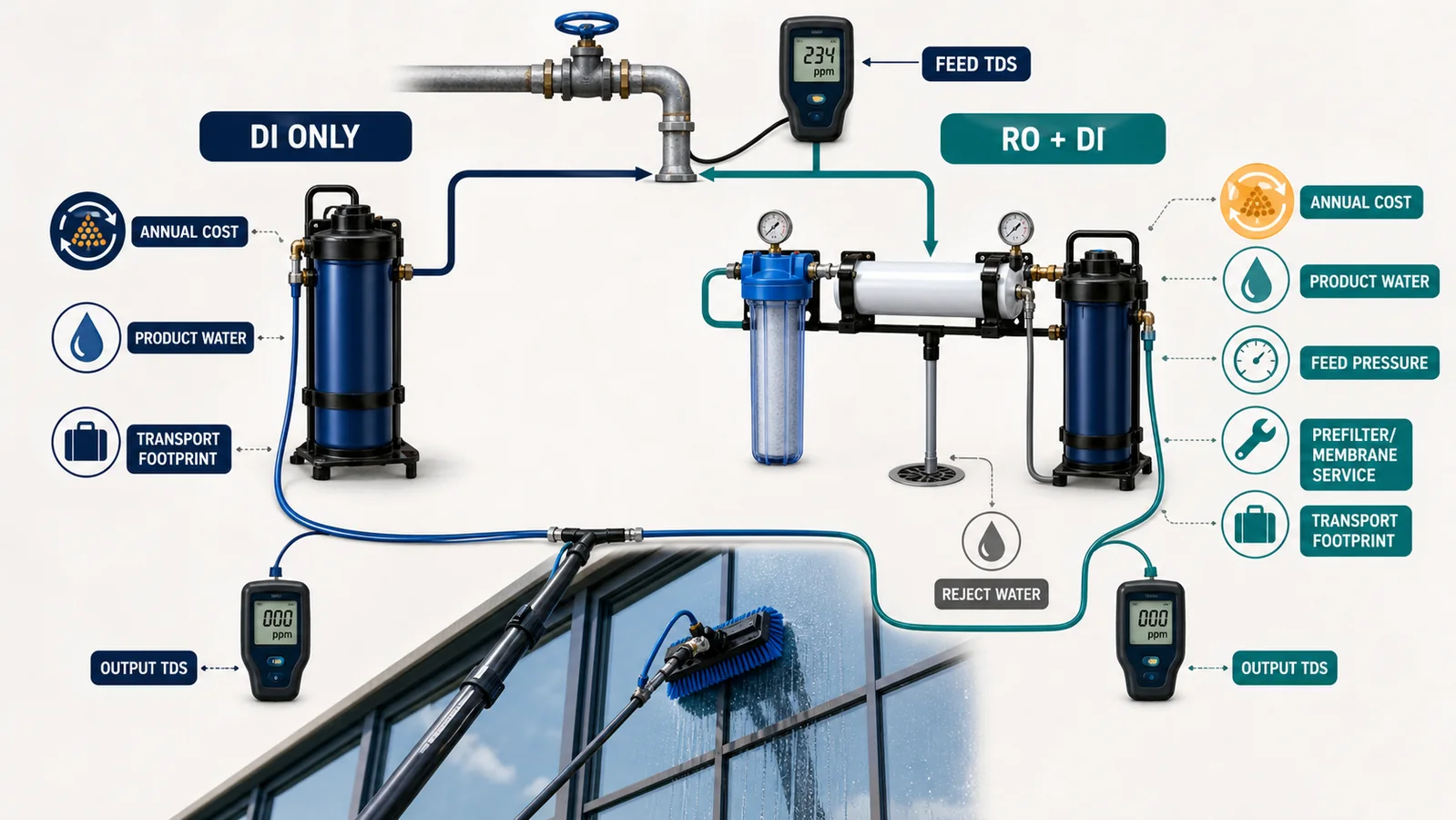
Compare DI-only with RO/DI using feed TDS, measured resin yield, product-water demand, pressure, reject water and full annual operating cost.
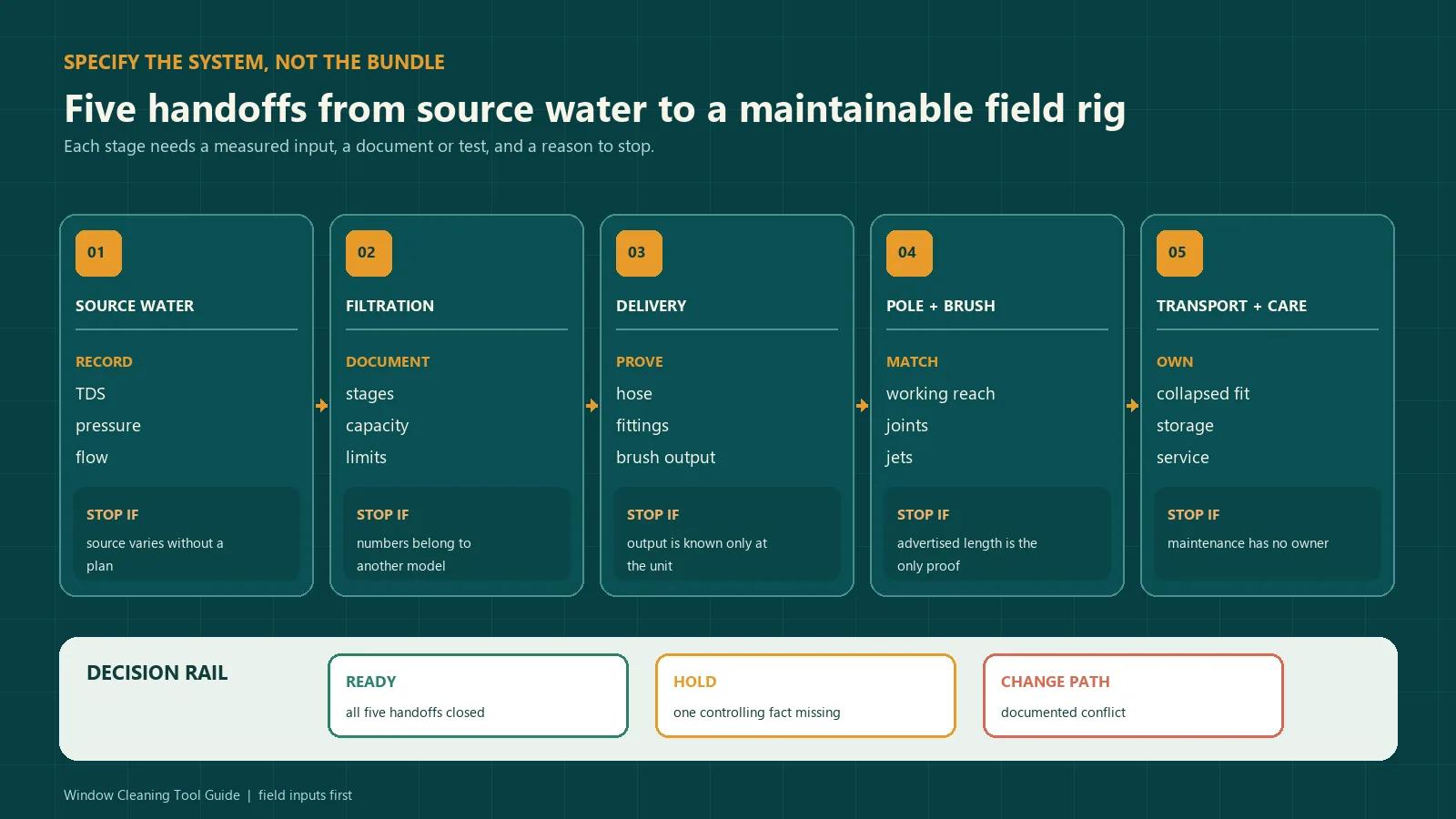
Use source-water TDS, daily gallons, brush-end output, working reach and transport limits to specify a complete water-fed pole system before buying.